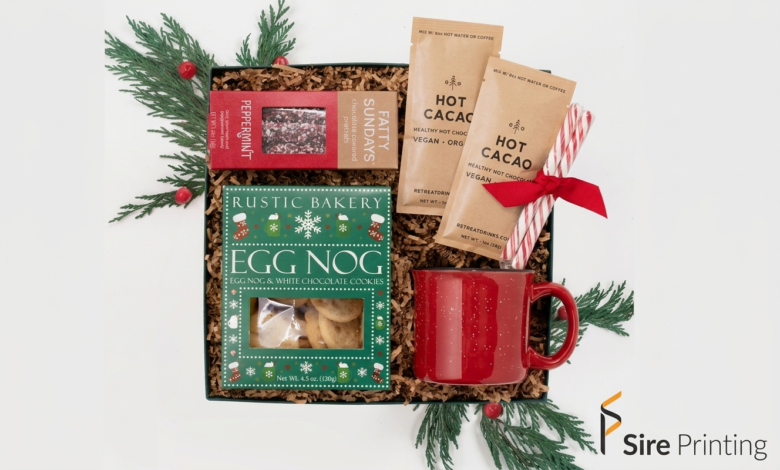
A corporate Christmas gift gets judged before anyone sees what’s inside. The box is the first thing a client or employee touches, and it decides whether the gift feels considered or rushed. Choosing the right branded gift box comes down to four things: who is receiving it, how many you need, what goes inside, and how much time you have before the holidays.
This guide covers each of those, plus the shipping and policy details that tend to catch teams off guard in December.
Start With the Recipient List, Not the Box
Most gifting programs go wrong because one box is chosen for everyone. A new hire, a regional distributor, and a client who signed a seven-figure contract don’t need the same packaging, and treating them the same either overspends on some people or underwhelms others.
Split your list into tiers first, then match a packaging style to each one:
| Recipient group | Typical gift contents | Box style that fits |
| All employees | Snacks, mugs, branded apparel, candles | Printed mailer or folding carton |
| Key partners and vendors | Gourmet food sets, desk accessories, wine accessories | Two-piece rigid box or magnetic closure box |
| Top clients and executives | Watches, pens, glassware, leather goods | Rigid box with a fitted, lined insert |
| Remote team members | Any of the above | Same inner box, plus a sturdy outer shipper |
Once the tiers are set, the budget conversation gets much easier. You aren’t deciding what one box should cost. You’re deciding what each group’s experience should be worth.
Ordering in Volume Without Losing the Personal Touch
Once you’re gifting more than a few dozen people, unit cost becomes a real factor. Buying Christmas gift boxes wholesale brings the per-box price down significantly, since printing setup costs are spread across the whole run. It also keeps quality consistent across every recipient, which is hard to manage when you’re buying retail boxes in small batches. Packaging manufacturers like Sire Printing let businesses mix box sizes within a single seasonal order, which makes tiered gifting programs far easier to run.
To get the most out of a bulk order:
- Use one design across several sizes. A shared print design across two or three box sizes lets you cover different gift tiers in a single production run.
- Order 5–10% extra. Late additions to the list, damaged units, and last-minute client wins always show up.
- Ask about price breaks. Unit costs often drop noticeably at 250, 500, and 1,000 pieces. Sometimes going up one quantity tier costs less overall than you’d expect.
- Personalize at the insert level. A printed name card or a handwritten note inside a standard box makes every recipient feel singled out, without the cost of printing individual boxes.
Work Backward From the Delivery Date
Custom printed packaging takes longer than most people expect, and the weeks before Christmas are the busiest of the year for printers and carriers. If gifts need to land before teams leave for the holidays, plan from that date backward:
- Week 1: Finalize the recipient list, the quantity per tier, and the gift contents.
- Week 2: Confirm box sizes against the actual products. Request a physical sample or a printed proof.
- Weeks 3–5: Production. Most custom box orders need two to three weeks once artwork is approved.
- Week 6: Packing, kitting, and shipping, with a few days set aside for carrier delays.
If you’re reading this in November, artwork should be locked within the next week or two. Waiting until December usually means paying for rush production or falling back on generic packaging.
Branding That People Don’t Throw Away
The most common branding mistake on corporate gifts is putting the logo everywhere. A box covered in branding reads like marketing material, and marketing material gets recycled.
A few approaches that keep the box on someone’s shelf:
- A restrained exterior. One logo, placed small, often in foil or embossed instead of printed in full color.
- A message inside the lid. A short thank-you note printed under the lid feels personal and gets read every time the box opens.
- Seasonal colors that aren’t overtly Christmas. Deep green, burgundy, or winter white feel festive in December and still look good in March, so the box stays useful all year.
- A finish that invites touch. Soft-touch lamination or spot UV on the logo adds quality without adding noise.
The goal is a box the recipient wants to keep for jewelry, cables, or desk supplies, because every time they reach for it, your brand is the one holding their things.
Match the Box to What Goes Inside
The product decides the structure. A box that looks great but lets a glass candle rattle around does more harm than plain packaging would.
Mailer boxes work well for apparel, flat items, and anything that ships directly. They’re light and protective, and they can be printed inside and out.
Two-piece rigid boxes with a separate lid feel substantial in the hand. They suit food assortments and multi-item sets, where the reveal matters.
Magnetic closure boxes close with a soft click and get reused as storage long after the holidays. That reuse is quiet, ongoing brand exposure.
Drawer-style boxes slide open, which turns opening the gift into a small moment. They work nicely for smaller luxury items.
For executive gifts like watches, fountain pens, cufflinks, or crystal, satin lined boxes hold the item in place and protect polished surfaces from scratches. They also signal care in a way recipients notice right away. Pair the lining color with your brand palette, or keep it neutral in ivory or deep navy so it works with any product.
Inserts matter as much as the box. Die-cut foam, paperboard partitions, and molded pulp trays stop items from shifting in transit, and they make even a modest gift look deliberately arranged.
Shipping to a Distributed Team
With hybrid and remote work now normal, many companies are mailing gifts to dozens of home addresses instead of handing them out at an office party. That changes the packaging requirements.
A rigid presentation box isn’t built to survive a parcel network on its own. Ship it inside a corrugated outer mailer, so the inner box arrives without crushed corners. Collect home addresses early through a simple form, because chasing them in mid-December is where timelines slip. If the gift includes food, avoid shipping on Thursdays or Fridays, so nothing sits in a warehouse over the weekend.
Check Gift Policies Before You Send
A beautiful gift can still put a recipient in an awkward spot. Many companies cap the value of gifts their employees can accept, and government employees often face strict limits or outright bans. Find out about clients’ policies before you finalize the top tier.
There’s also the tax side. In the US, the IRS allows a deduction of only $25 per recipient per year for business gifts, so it’s worth confirming with your accountant how your program will be treated. Alcohol gifts come with their own shipping rules, which vary by state.
A Quick Pre-Order Checklist
Before you approve production, confirm that you have:
- ☐ A tiered recipient list with final quantities
- ☐ Box dimensions checked against the actual gift items
- ☐ A physical sample or printed proof approved
- ☐ Inserts chosen for every fragile item
- ☐ Branding kept minimal on the outside
- ☐ Outer shipping boxes for anything going by mail
- ☐ Recipients’ gift policies checked
- ☐ A delivery date with at least a week of buffer
The Short Version
Good corporate gifting is mostly planning. Sort recipients into tiers, order in volume early, keep branding understated, and choose box styles that protect what’s inside, so December’s rush doesn’t make the decisions for you. Whether you work with Sire Printing or another packaging partner, when the packaging is right, the gift keeps doing its job long after the holidays, sitting on a desk or shelf as a reminder of who sent it.