Clear Braces: A Confident, Discreet Way to Straighten Your Smile
Discover how clear ceramic braces work, their benefits, costs, treatment timeline, and essential care tips.

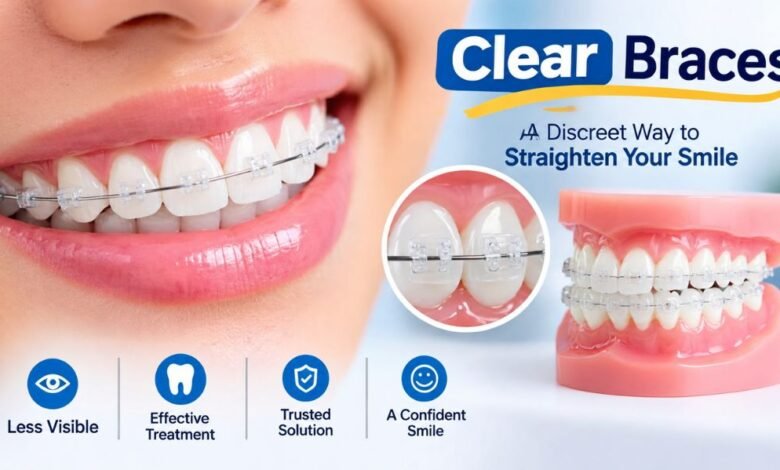
A straighter smile can improve appearance, make cleaning easier, and sometimes improve chewing. Yet visible metal brackets discourage some people from seeking orthodontic treatment. Clear braces offer a less noticeable alternative while using the same mechanics as fixed braces. Understanding their advantages and limitations helps patients make informed decisions.
What Are Clear Braces?
Clear braces are fixed orthodontic appliances that use transparent or tooth-colored ceramic brackets instead of conventional metal brackets. An archwire connects the brackets and applies controlled pressure to move teeth gradually into better positions.
The brackets stay attached throughout treatment. They blend with your tooth color, though the wires and elastic ties remain visible.
How Do They Straighten Teeth?
An orthodontist plans tooth movements based on your bite and spacing. Adjustments maintain gentle forces as the bone surrounding each tooth gradually remodels.
Clear ceramic braces can address crowded teeth, gaps, rotated teeth, and several bite problems. Their suitability depends on the complexity of each case.
Benefits of Choosing Clear Braces
Tooth-colored brackets are less prominent than metal brackets in conversation and photographs. This appeals to adults and teenagers seeking discreet treatment.
Reliable Correction Without Daily Removal
Because clear braces stay in place, patients don’t need to remember removable trays. However, appointments and cooperation remain essential.
Potential Benefits Beyond Appearance
Improved alignment may make cleaning easier and correct how teeth meet. Benefits depend on the original problem and treatment outcome.
Clear Braces vs. Clear Aligners
The names sound similar, but the treatments are different. Clear braces use ceramic brackets and wires fixed to the teeth. Clear aligners use removable, transparent plastic trays that fit over the teeth and are replaced in a planned sequence.
You remove aligners to eat and clean. They also demand consistent daily wear. Clear braces don’t rely on remembering to insert trays, but they require more attention when brushing around brackets and wires.
Which Option Is Better?
Neither is universally better. Fixed braces may provide the control needed for complex movements; aligners suit select cases and disciplined wearers. An examination helps determine suitability.
Who Is a Suitable Candidate?
Clear braces may suit adults and teenagers with crowding, gaps, or bite problems. A clinician must assess gum health, decay, dental work, and bite function.
When Treatment Should Be Delayed
Untreated cavities or active gum disease may need attention before the orthodontist fits brackets. Healthy teeth and gums provide a safer foundation for orthodontic care.
What Happens During Treatment?
Consultation and Fitting
The orthodontist examines your teeth, takes photographs, scans, or impressions, and discusses the plan, timing, alternatives, and fees.
During fitting, the orthodontist bonds brackets to your teeth and connects them with an archwire. Mild pressure or soreness is common during the first few days.
Adjustments and Progress Checks
At follow-ups, the orthodontist checks progress and adjusts components. Missed appointments or broken brackets may delay treatment. Changes develop gradually.
How to Care for Clear Braces
Good oral hygiene is essential because plaque and food particles collect around brackets. Brush thoroughly with fluoride toothpaste, clean between teeth daily with floss or interdental brushes, and keep up routine dental checkups.
Avoid biting directly into hard foods and be cautious with sticky sweets, ice, and crunchy snacks. Cut firm foods into smaller pieces to reduce the chance of damaging brackets.
Preventing Stains and Discoloration
Ceramic brackets resist discoloration, but clear elastic ties may stain from coffee, tea, colored sauces, or smoking. Rinse with water after dark drinks, brush regularly, and attend adjustment visits.
What Are the Disadvantages?
Ceramic brackets can be more brittle than metal ones, so eat carefully. They may cost more than conventional metal braces, and some patients find the brackets irritate their lips or cheeks at first.
Clear braces are not stain-proof or invisible. They also do not guarantee faster results. Before committing, ask whether ceramic brackets suit both arches and whether repairs incur extra fees.
How Long Do Clear Braces Take, and What Do They Cost?
Treatment often lasts 1 to 3 years, but a straightforward case may take less time and a complicated one longer. Timing depends on tooth movement, bite correction, appointments, and individual biology, not bracket color alone.
Prices vary substantially by country, clinic, treatment complexity, and what the quoted package includes. Request a written estimate covering consultations, adjustments, possible repairs, removal, and retainers. Comparing total treatment costs is more useful than comparing advertised starting prices.
Questions to Ask at Your Consultation
Ask which tooth movements are planned, whether metal brackets may be needed on back teeth, how the practice handles emergencies, and which retainers are included. Knowing these details early can prevent unexpected inconvenience and expense.
Why Retainers Matter After Treatment
Teeth can gradually shift after you remove braces. Retainers help maintain the new positions and are a normal part of orthodontic care. Your orthodontist will advise whether a removable or fixed retainer is appropriate and how long to use it.
Frequently Asked Questions
Are clear braces as effective as metal braces?
They can treat many of the same alignment and bite problems. The best choice depends on the required movements and your orthodontist’s clinical assessment.
Do clear braces hurt?
Temporary tenderness is common after fitting and adjustments. Your dental team should assess severe, persistent pain or a broken bracket.
Can I drink coffee while wearing clear braces?
Yes, but frequent exposure may stain elastic ties. Rinse with water afterward and keep up with thorough cleaning.
Are clear braces completely invisible?
No. Their ceramic brackets blend with your teeth, but wires and elastic ties may still show, especially up close.
Can adults get clear braces?
Yes. Adults can get orthodontic treatment when their teeth and gums are healthy enough.
Conclusion
Clear braces offer a discreet alternative to metal brackets without sacrificing the benefits of fixed orthodontics. Weigh appearance against dental needs, cost, upkeep, and time. Start with an orthodontic assessment.