HMRC Savings Tax Letter: Essential Guide to Understanding Your Tax Bill in 2026
Learn why HMRC sends savings tax letters, how the Personal Savings Allowance works, and what to do if you receive an unexpected tax calculation.

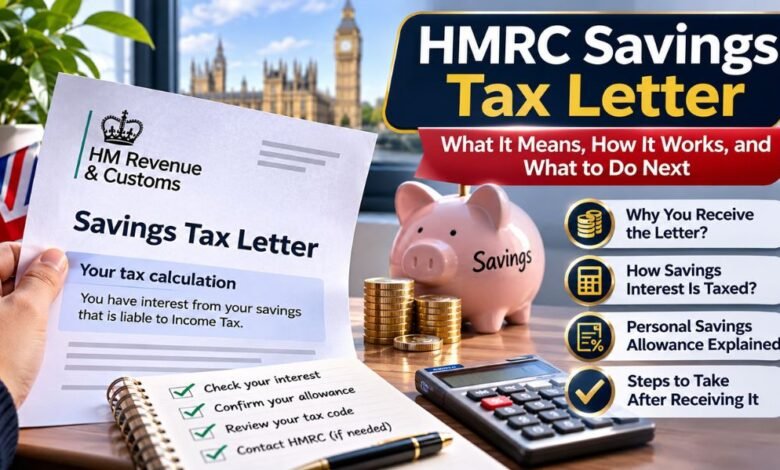
Receiving an HMRC Savings Tax Letter can be confusing, especially if you have never paid tax on your savings before. Many UK savers are surprised to discover that interest earned from ordinary bank accounts may create an additional Income Tax liability.
HM Revenue and Customs (HMRC) receives savings interest information from banks and building societies. When the information indicates that an individual may owe tax, HMRC can issue a tax calculation or adjust their tax code.
This article explains what an HMRC savings tax letter means, why you might receive one, how savings interest is taxed, and the practical steps to take before paying.
What Is an HMRC Savings Tax Letter?
An HMRC savings tax letter explains a potential Income Tax liability related to interest earned from savings accounts.
It may arrive as a P800 tax calculation, a Simple Assessment notice, or a notification concerning your PAYE tax code.
The letter generally explains the relevant tax year, the savings interest considered, and any tax HMRC believes remains unpaid.
Why Does HMRC Send These Letters?
Banks and building societies normally report savings interest to HMRC after the tax year ends on April 5.
HMRC uses this information, along with employment income, pensions, and applicable allowances, to calculate whether additional tax is payable.
A letter may be issued because:
- Your savings interest exceeded your tax-free allowance.
- Your total taxable income moved into a higher tax band.
- Your PAYE tax code did not collect enough tax.
- Updated banking information changed an earlier calculation.
- HMRC cannot collect the outstanding amount automatically.
Receiving a letter does not automatically mean you have done anything wrong.
Understanding the Personal Savings Allowance
The Personal Savings Allowance (PSA) determines how much eligible savings interest an individual can earn without paying Income Tax.
For the 2026–2027 tax year, the allowance depends on your Income Tax band.
Income Tax Band Personal Savings Allowance
Basic-rate taxpayer £1,000
Higher-rate taxpayer £500
Additional-rate taxpayer £0
These figures apply to savings interest, not the total amount held in your bank accounts.
How Is Savings Interest Tax Calculated?
Suppose a basic-rate taxpayer receives £1,300 in taxable savings interest during the 2026–2027 tax year.
Their Personal Savings Allowance is £1,000, leaving £300 of interest taxable.
At the basic savings tax rate of 20%, the calculation is:
£300 × 20% = £60
Therefore, the individual owes £60, assuming no other tax allowances or circumstances change the calculation.
Does HMRC Tax the Money You Save?
No. Savings interest tax generally applies to the interest generated by eligible savings, not the original money deposited.
For example, depositing £20,000 into a savings account does not itself create a savings interest tax charge.
The Starting Rate for Savings
Some people with relatively low non-savings income qualify for an additional tax-free savings benefit.
The starting rate for savings can provide up to £5,000 of interest taxed at 0%.
For 2026–2027, the full starting-rate band is potentially available when other taxable income does not exceed the standard Personal Allowance of £12,570.
Each £1 of non-savings income above that allowance reduces the £5,000 band by £1.
The starting rate becomes unavailable once relevant non-savings income reaches £17,570.
Eligible individuals may also benefit from their Personal Savings Allowance.
What Should You Do After Receiving the Letter?
Review any unexpected tax demand carefully before paying.
Step 1: Confirm the Letter Is Genuine
Check the communication using HMRC’s official guidance and your Personal Tax Account.
Avoid relying exclusively on telephone numbers, QR codes, or payment instructions contained in suspicious correspondence.
Step 2: Review Your Savings Interest
Gather annual interest statements from every relevant bank and building society.
Compare those amounts against the interest figures in HMRC’s calculation.
Step 3: Check Your Tax Allowances
Confirm that HMRC has applied the correct Personal Savings Allowance and any applicable starting-rate savings relief.
Step 4: Examine Your Tax Code
If you receive employment or pension income through PAYE, check whether HMRC has already adjusted your tax code to collect savings tax.
Step 5: Contact HMRC About Mistakes
If the figures are inaccurate, contact HMRC and explain the difference using supporting bank statements.
For Simple Assessment notices, HMRC generally requires disputes about incorrect information to be raised within 60 days.
How Does HMRC Collect Savings Interest Tax?
HMRC uses different collection methods depending on the taxpayer’s circumstances.
PAYE Tax Code Adjustment
For employed individuals and pension recipients, HMRC will usually collect outstanding savings interest tax through an adjusted tax code.
HMRC may also estimate current-year savings interest using information received for an earlier tax year.
Simple Assessment Tax Bill
HMRC may issue a Simple Assessment letter, commonly identified as PA302, when it cannot collect the tax through PAYE.
For the 2025–2026 tax year, a Simple Assessment issued before October 31, 2026 is generally payable by January 31, 2027.
Letters issued on or after October 31, 2026 for that year or earlier years generally have a payment deadline three months after the letter’s date.
Always check the deadline printed on your assessment.
Self Assessment Tax Return
Individuals who already complete Self Assessment must declare relevant savings interest on their tax returns.
Those receiving more than £10,000 in savings interest must generally report it through Self Assessment.
Can You Avoid Paying Tax on Savings Interest?
Legitimate tax-efficient saving arrangements can reduce the amount of taxable interest.
Consider a Cash ISA
Interest earned within a qualifying Cash Individual Savings Account is normally exempt from UK Income Tax.
Monitor Your Total Interest
Keep records of interest from different savings providers, especially when rates or account balances change.
HMRC generally combines interest from all relevant taxable savings accounts.
Understand Joint Accounts
HMRC normally divides interest from joint accounts equally between account holders unless a different ownership arrangement is established.
Accurate recordkeeping can help prevent incorrect assessments.
Common Mistakes to Avoid
Some savers assume that small interest payments never need to be considered for tax purposes.
Others forget older savings accounts or incorrectly include tax-free ISA interest in their taxable total.
Another frequent mistake is ignoring an HMRC letter because the bank has already reported the interest.
Although financial institutions provide information, taxpayers remain responsible for checking their tax position and responding to relevant notices.
Frequently Asked Questions
1. Why Have I Received an HMRC Savings Tax Letter?
You may have earned savings interest above your available tax-free allowances, or HMRC may need to correct a previous Income Tax calculation.
2. Is an HMRC Savings Tax Letter Genuine?
Genuine HMRC tax calculation letters exist, but criminals can imitate official communications. Verify unexpected correspondence independently through HMRC.
3. Do I Need to Report Savings Interest Myself?
Banks normally report interest automatically. However, Self Assessment taxpayers must declare relevant interest, and certain individuals must register to report it.
4. Can HMRC Change My Tax Code Because of Savings?
Yes. HMRC can adjust a PAYE tax code to collect outstanding tax or account for estimated savings interest.
5. What Happens If My Savings Tax Calculation Is Wrong?
Contact HMRC with your banking records and request a review. Don’t miss any payment or dispute deadlines while the issue is being addressed.
Final Thoughts
An HMRC Savings Tax Letter should not cause unnecessary alarm, but it should never be ignored.
Understanding the Personal Savings Allowance, checking bank interest statements, and reviewing tax calculations can help you avoid incorrect payments and unexpected liabilities.
As savings tax rules and rates may change between tax years, checking the rules applicable to the year shown on your letter is especially important.
A careful review and timely response will help you manage your UK savings tax obligations with confidence.