David Henty: The Incredible True Story of Britain’s Master Art Forger
From prison to respected art galleries, discover how David Henty transformed his extraordinary talent for copying famous paintings into a remarkable artistic career.

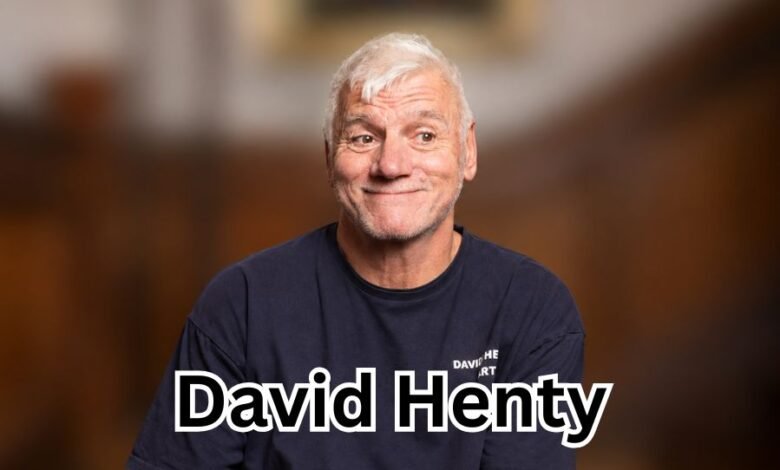
David Henty is a British artist and former art forger, born in 1958, who became famous for reproducing paintings by some of history’s greatest masters. Known as the “brushstroke alchemist,” he has developed an exceptional ability to imitate artistic techniques, colors, compositions, and brushwork.
His journey from criminal convictions to public recognition makes him an unusual figure in contemporary British art. Rather than becoming known for an entirely original style, he built his reputation by recreating the distinctive visual language of other painters.
This article explores David Henty’s biography, early life, artistic development, forgery controversy, famous reproductions, career transformation, and influence on discussions about authenticity in the art world.
Quick Bio
| Field | Details |
|---|---|
| Full Name | David Henty |
| Birth Year | 1958 |
| Nationality | British |
| Profession | Artist and professional art copyist |
| Former Occupation | Art forger |
| Known For | Reproductions of famous paintings |
| Artistic Speciality | Classical and modern masterwork reproductions |
| Notable Artists Recreated | Picasso, Van Gogh, Lowry, Modigliani, Basquiat |
| Career Base | Brighton area, England |
| Recognition | Exhibitions, commissions and media coverage |
Who Is David Henty?
David Henty is a self-taught British painter whose career challenges conventional ideas about creativity and originality.
Unlike artists who concentrate on developing a personal visual identity, Henty specializes in understanding and reconstructing the techniques of established painters.
His reproductions can closely resemble recognized masterpieces, sometimes making it difficult for viewers to distinguish a recreation from an original without examining its provenance.
Although his earlier activities attracted controversy, he subsequently established a legitimate career selling paintings openly attributed to himself.
David Henty’s Early Life and Background
Growing Up Around Antiques
David Henty grew up in Brighton, England, in a family connected to the antiques trade.
His father worked as an antiques dealer, giving him early exposure to older objects, paintings, and the commercial value attached to historical materials.
This environment helped develop his interest in craftsmanship and artistic appearance.
As a young person, Henty demonstrated an ability to draw and reproduce existing pictures. He reportedly copied prints by the English artist William Hogarth.
His early experience also introduced him to an important distinction: an object’s appearance and its claimed origin can influence its financial value in very different ways.
Early Experiences With Art
Henty did not follow a conventional route through a prestigious fine-art institution.
Instead, he developed his artistic education through observation, experimentation, and independent study.
This unconventional background later became central to his reputation as a highly skilled copyist.
How David Henty Learned Painting in Prison
A Turning Point in His Life
During the 1990s, Henty was imprisoned following criminal activity involving forged documents.
His imprisonment became an important turning point in his artistic development.
While serving his sentence, he studied painters and began practicing painting more seriously.
He became interested not merely in the finished appearance of famous artworks but also in understanding the decisions behind individual brushstrokes.
Developing His Technical Abilities
Through repeated practice, Henty learned to examine composition, perspective, texture, and color relationships.
He also developed an interest in historical painting materials and the methods used by artists from different periods.
These skills eventually enabled him to reproduce a remarkably broad range of artistic styles.
David Henty’s Art Forgery Controversy
After leaving prison, Henty attempted to sell paintings under his own name.
According to interviews, he struggled to attract buyers and began producing works resembling those of famous artists.
He subsequently sold numerous reproductions through online marketplaces, including eBay.
Some listings raised questions about authenticity because the works incorporated features associated with original paintings.
The 2014 Investigation
In 2014, an investigation by The Daily Telegraph brought significant public attention to Henty’s activities.
The reporting examined his production and sale of imitation artworks, including paintings associated with L. S. Lowry.
Following the investigation, eBay banned him from its platform.
The controversy demonstrated how convincing artistic reproductions could create serious problems when their origins were unclear or misleadingly presented.
From Art Forger to Professional Copyist
Public exposure unexpectedly helped introduce Henty’s abilities to a wider audience.
Collectors began approaching him for reproductions, which he created and sold openly under his own name.
This marked an important change in his professional career.
Rather than leaving a painting’s creator uncertain, he could openly explain that he had produced the work himself.
A New Artistic Reputation
Henty began receiving commissions and exhibiting paintings through established galleries.
His career increasingly focused on legitimate recreations of historical and modern artworks.
The distinction was essential: an accurately labeled reproduction can be appreciated for its craftsmanship without being misrepresented as an original masterpiece.
David Henty’s Famous Painting Reproductions
Henty has recreated works associated with several internationally recognized artists.
Pablo Picasso and Vincent van Gogh
His Picasso-inspired paintings demonstrate an understanding of unconventional forms, composition, and modern artistic expression.
His recreations of Van Gogh’s work require attention to expressive color and distinctive brush movements.
L. S. Lowry and Amedeo Modigliani
Henty has also produced paintings inspired by Lowry’s industrial landscapes and recognizable figures.
His Modigliani reproductions explore the Italian artist’s elongated portraits and simplified facial features.
Jean-Michel Basquiat
Basquiat-inspired paintings form another important part of Henty’s professional output.
These works require a different visual approach, incorporating energetic markings, layered imagery, and expressive compositions.
His ability to work across such contrasting styles demonstrates considerable technical flexibility.
The Technique Behind David Henty’s Paintings
Henty approaches reproduction as intensive research.
Studying Artistic Methods
Before beginning a painting, he investigates the original artist’s techniques, materials, visual habits, and historical context.
He has described the importance of understanding how another painter constructed an image rather than simply tracing its visible outlines.
Why Materials Matter
Paint texture, pigments, surfaces, and brush selection affect the appearance of a completed work.
Henty’s attention to these details contributes to the convincing visual quality of his reproductions.
However, technical accuracy alone cannot establish that an artwork was created by the historical artist it resembles.
Authenticity also depends on reliable documentation and provenance.
Collaboration With Author Peter James
In 2022, David Henty attracted attention through his connection with bestselling crime novelist Peter James.
Henty helped inspire the fictional art forger Daniel Hegarty in James’s novel Picture You Dead.
He shared insights into the art world and created a Fragonard-inspired painting connected to the story.
This collaboration brought his unusual professional experiences into popular crime fiction.
Why David Henty Remains Important
Henty’s career raises interesting questions about artistic originality, commercial value, and public perception.
His paintings demonstrate that accurately reconstructing an established masterpiece can require substantial knowledge and technical discipline.
Nevertheless, copying another artist’s work is different from creating the original, and accurately identifying the creator remains essential.
Today, his professional reputation rests on openly produced recreations rather than claims that those paintings are authentic historical masterpieces.
Conclusion
David Henty’s life represents an extraordinary transformation from criminal forgery to an established career in artistic reproduction.
His experiences illustrate both the impressive technical abilities involved in recreating great paintings and the ethical importance of clearly identifying an artwork’s true creator.
Beyond the controversy surrounding his past, his story encourages a wider discussion about what makes art valuable: originality, historical significance, craftsmanship, or the experience of viewing the finished painting.
Frequently Asked Questions (FAQ)
1. Who is David Henty?
David Henty is a British artist and former art forger known for producing highly detailed recreations of paintings by celebrated artists.
2. When was David Henty born?
David Henty was born in 1958 in Britain.
3. Why is David Henty famous?
He became famous for convincing art reproductions, his controversial online sales, and his subsequent career as a professional copyist.
4. Which famous artists has David Henty copied?
His work includes reproductions inspired by Pablo Picasso, Vincent van Gogh, L. S. Lowry, Amedeo Modigliani, and Jean-Michel Basquiat.
5. Does David Henty still produce paintings?
Yes. Henty has continued producing commissioned paintings and publicly attributed reproductions through his professional art business.