Wuschitz: The Inspiring Story of Stefanie Wuschitz and Her Remarkable Work in Art and Technology
Discover the life, education, creative achievements, and influential research of Austrian media artist Stefanie Wuschitz.

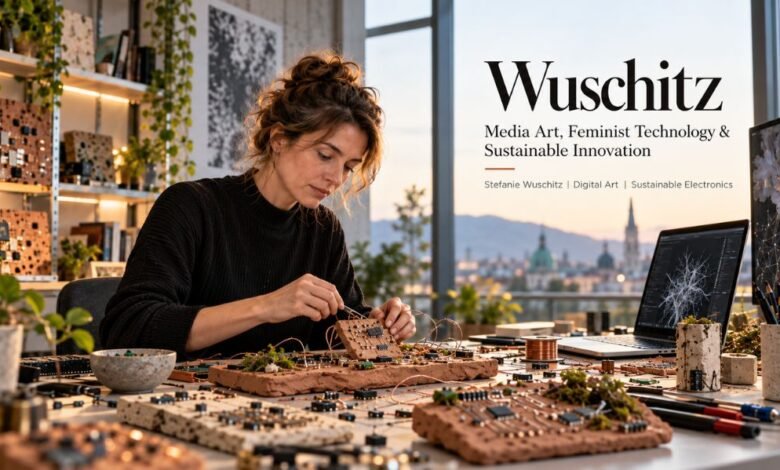
Technology has transformed how people communicate, create, and understand the world. Yet few artists explore its social and environmental consequences as closely as Stefanie Wuschitz, an Austrian media artist and researcher whose work connects creativity with technological innovation.
Wuschitz is best known for her contributions to feminist technology, experimental electronic art, and collaborative research. Through educational initiatives, artistic installations, and academic projects, she examines how technology influences society and whose perspectives shape its development.
Her professional journey shows how artistic creativity can shape conversations about digital culture, sustainability, and technological responsibility.
This article explores her background, education, artistic career, major projects, and contributions to contemporary technology research.
Who Is Wuschitz?
Stefanie Wuschitz is an Austrian artist, researcher, and educator working at the intersection of media art, digital technology, and social research. Born in Vienna in 1981, she has built a multidisciplinary career exploring the relationships among technology, gender, cultural representation, and power.
Unlike conventional artists who focus exclusively on visual expression, Wuschitz incorporates electronics, interactive installations, animation, and academic inquiry into her practice.
She is best known for founding Mz Baltazar’s Laboratory*, a Vienna-based feminist art and technology collective founded in 2009.
Her work has been presented internationally, and she has participated in research projects involving universities, cultural organizations, and artistic communities.
Early Life and Educational Background
Stefanie Wuschitz was born in Vienna, a city with an established cultural and artistic tradition. Publicly documented details about her childhood remain limited, but her academic background clearly outlines her professional development.
She studied Transmedia Arts at the University of Applied Arts Vienna and graduated with honors in 2006. This education introduced her to artistic practices combining traditional creative methods with emerging digital technologies.
Advanced Studies in New York
In 2008, Wuschitz completed a master’s program at New York University’s Tisch School of the Arts, studying through its Interactive Telecommunications Program.
Her academic experience brought together creative experimentation, electronic media, and technological systems.
She later became a Digital Art Fellow at Umeå University in Sweden, continuing her interdisciplinary artistic research.
Doctoral Research
In 2014, she completed her doctorate at the Vienna University of Technology.
Her dissertation, titled Feminist Hackerspaces: A Research on Feminist Space Collectives in Open Culture, examined how collaborative technology environments can support alternative approaches to learning, participation, and creativity.
This research became a key foundation for her later academic and artistic work.
Founding Mz* Baltazar’s Laboratory
One of Wuschitz’s most notable achievements was establishing Mz* Baltazar’s Laboratory in Vienna in 2009.
The collective created opportunities for people traditionally underrepresented in technical environments to explore electronics, programming, digital art, and experimental technology.
Encouraging Creative Participation
The laboratory emphasizes accessible technical education, collaborative experimentation, and open-source principles.
Its activities have included workshops, exhibitions, discussions, and practical projects that combine artistic expression with technical knowledge.
Rather than presenting technical expertise as something reserved for specialists, the collective encourages participants to engage with technology through creativity and shared learning.
This approach reflects Wuschitz’s broader interest in making technical spaces more inclusive while questioning established assumptions about technological production.
Wuschitz and Sustainable Technology
Environmental responsibility represents another important dimension of Stefanie Wuschitz’s artistic research.
Her projects investigate the materials used in electronics and the environmental consequences of hardware production.
The Clay PCB Project
A notable example is Clay PCB, developed with artist and researcher Patrícia J. Reis.
The project explores alternatives to conventional electronic circuit boards using locally sourced, reclaimed materials.
The experimental circuit board uses natural clay, recovered silver, and components salvaged from discarded electronic devices.
Presented at Ars Electronica Festival 2024, the project links artistic experimentation to questions of responsible manufacturing.
Why Ethical Hardware Matters
Electronic products often rely on complex global supply chains that involve resource extraction, manufacturing, and eventual waste disposal.
By experimenting with alternative materials, Clay PCB encourages audiences to reconsider how electronic equipment is designed and produced.
The work is an artistic research project rather than a commercially established replacement for conventional circuit boards.
Its importance lies in demonstrating possibilities for sustainable electronics, repair, reuse, and environmentally conscious design.
Research on Digital Colonialism in Indonesia
Wuschitz’s research also addresses how technological systems interact with political power, cultural history, and access to information.
A major example is Data Colonialism in Indonesia: Artists’ Strategies against Digital Colonialism.
The project began on November 1, 2023, and is scheduled to continue through October 31, 2027.
Supported by the Austrian Science Fund, it examines digital colonialism through artistic research and historical investigation.
Exploring Technology and Cultural Representation
The research examines how data collection and digital infrastructure may reproduce unequal power relations.
Working with Indonesian artists and researchers, Wuschitz investigates connections between historical anti-colonial movements and contemporary responses to digital control.
The project incorporates interviews, archival research, animation, and visual storytelling.
Its interdisciplinary methods help communicate complex historical and technological questions through accessible artistic forms.
Professional Career and International Recognition
Beyond individual projects, Wuschitz has worked in academic and artistic environments across several countries.
Her professional experience includes research and teaching connections with the University of Applied Arts Vienna, Vienna University of Technology, and Academy of Fine Arts Vienna.
She has also collaborated with international researchers and participated in exhibitions, conferences, and educational workshops.
Artistic Exhibitions and Achievements
Her work has appeared at international art events, including Ars Electronica and exhibitions in European and Asian cultural venues.
Wuschitz has received professional recognition associated with her research and collaborative artistic practice, including the Johanna Dohnal Prize for her doctoral work.
Her contributions demonstrate the growing relationship between contemporary art, academic investigation, and technological experimentation.
Why Wuschitz’s Work Matters
What distinguishes Stefanie Wuschitz is her willingness to connect creative production with questions that extend beyond conventional artistic boundaries.
Her projects examine who benefits from technological development, how electronics affect the environment, and why diverse perspectives matter in digital culture.
Through feminist hacking, open-source collaboration, and arts-based research, she demonstrates that technology can become a subject of cultural examination rather than simply a tool for practical tasks.
Her educational initiatives also highlight the value of giving participants opportunities to develop technical confidence through hands-on experimentation.
These ideas remain relevant to discussions about ethical technology, digital participation, and environmental sustainability.
Conclusion
Stefanie Wuschitz has built a distinctive career that combines contemporary art, technology, education, and academic research.
From founding Mz* Baltazar’s Laboratory to investigating sustainable electronics and digital colonialism, her work encourages a broader understanding of how technological systems influence society.
Her contributions demonstrate that meaningful innovation can emerge when creative thinking is combined with social responsibility and practical experimentation.
Wuschitz remains an important figure for readers interested in media art, feminist technology, collaborative education, and the future of responsible digital development.
Frequently Asked Questions
1. Who is Stefanie Wuschitz?
Stefanie Wuschitz is an Austrian media artist, researcher, and educator known for combining digital art, feminist technology, and academic research. Her projects explore how technology, society, and cultural representation relate.
2. What is Wuschitz famous for?
She is best known for founding Mz* Baltazar’s Laboratory, researching feminist hackerspaces, and developing artistic projects that examine ethical electronics and digital culture.
3. Where did Stefanie Wuschitz study?
She studied at the University of Applied Arts Vienna and New York University’s Tisch School of the Arts. She later completed her doctorate at the Vienna University of Technology in 2014.
4. What is Mz* Baltazar’s Laboratory?
Mz* Baltazar’s Laboratory is a Vienna-based feminist art and technology collective founded in 2009. It encourages accessible technological experimentation, creative learning, and collaborative artistic production.
5. What is Stefanie Wuschitz researching?
Her research includes sustainable electronics, feminist hacking, digital culture, and digital colonialism. Her ongoing research project in Indonesia examines relationships among historical political movements, artistic expression, and contemporary digital power.