Sentinel Newsletter: A Trusted Guide to FDA Safety Research and Real-World Data
Understanding how the Sentinel Newsletter helps readers follow medical product safety research, surveillance methods, public events, and developments across the FDA Sentinel System

Introduction
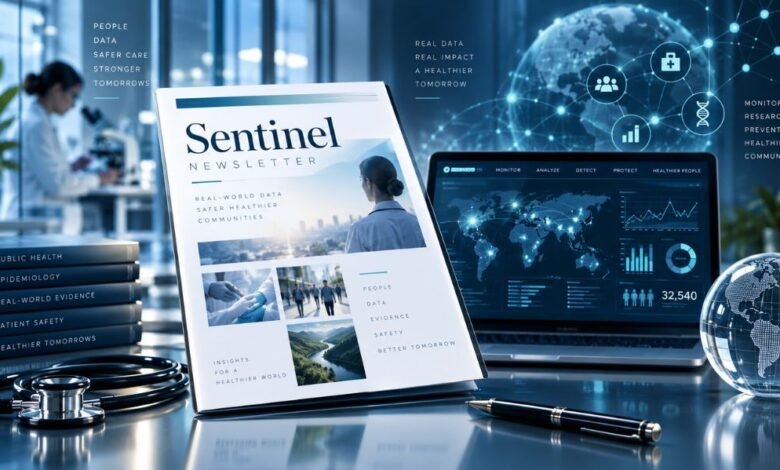
The Sentinel Newsletter is an informational resource associated with the U.S. Food and Drug Administration’s Sentinel Initiative, a program designed to strengthen monitoring of medical product safety after products reach the market. For readers interested in drug safety, real-world evidence, healthcare data, epidemiology, regulatory science, or public health, the newsletter offers a practical way to follow important developments.
Sentinel itself is broader than a newsletter. It is a national safety-surveillance system that allows the FDA to study the use and safety of medical products using data generated during routine healthcare. The newsletter has served as a communication channel for research, events, tools, training opportunities, and changes within that larger system.
This article explains what the Sentinel Newsletter is, what information it covers, how it relates to the FDA Sentinel System, who may benefit from reading it, and why its coverage of real-world data and medical product safety matters.
What Is the Sentinel Newsletter?
The Sentinel Newsletter is a public-facing publication connected with the FDA Sentinel Initiative. It presents selected developments in a format that is easier to understand than a large collection of technical reports, study pages, presentations, and research papers.
Earlier Sentinel communications described it as a quarterly resource created to improve awareness of Sentinel data, research, tools, events, and stakeholder activities. Issues have included study highlights, webinar information, workshop announcements, methodological developments, and explanations of Sentinel resources.
The Newsletter and the Sentinel System Are Different
The Sentinel System is the research and surveillance infrastructure. The Sentinel Newsletter is a communication tool used to explain activity taking place within that infrastructure.
The system can support detailed medical product safety analyses, while newsletter content presents selected developments in a more accessible form.
Why This Difference Matters
A newsletter issue should not be treated as a complete record of every Sentinel analysis or FDA safety decision. View it as an overview or starting point.
Readers interested in a particular finding should consider the full research context before reaching conclusions about a medicine, treatment, or safety concern.
What Does the Sentinel Newsletter Cover?
Medical Product Safety Research
A major subject is post-market safety surveillance. Clinical trials provide important evidence before approval, but some questions may become clearer only after larger and more diverse populations use a medical product.
Sentinel helps the FDA investigate such questions using real-world healthcare data. Newsletter content may highlight studies, analytical projects, safety questions, or new approaches to studying health outcomes.
This makes medical product safety one of the most important related topics for readers searching for Sentinel updates.
Real-World Data and Evidence
Real-world data is another major area covered by Sentinel activities. It can include information obtained from healthcare claims, electronic health records, and other sources generated through routine healthcare.
Sentinel uses a distributed data approach in which participating data partners retain control of their data. Standardized analytical methods can then support research across participating sources while maintaining important privacy protections.
Training, Webinars, and Public Workshops
The Sentinel Newsletter has also highlighted educational activities such as webinars, public workshops, training sessions, conference presentations, and demonstrations of research tools.
These updates can help researchers, healthcare professionals, students, regulators, and other interested readers better understand modern medical product surveillance.
Why the Sentinel Newsletter Matters
The value of the Sentinel Newsletter goes beyond simply collecting news. It helps make a technically complex public-health program easier to understand.
It Makes Specialized Research More Accessible
Subjects such as pharmacoepidemiology, causal inference, distributed healthcare databases, safety signals, and active surveillance can be difficult for non-specialists.
Newsletter summaries can introduce these subjects in clearer language before readers move on to more detailed scientific material.
It Helps Readers Follow an Evolving Program
The Sentinel Initiative continues to develop as researchers explore new data sources, analytical methods, and medical product safety questions.
In 2026, Sentinel continues to support studies, conference presentations, research publications, and methodological work. Following Sentinel-related communications can therefore help readers understand how post-market safety research is changing.
It Supports Greater Transparency
Public communication gives stakeholders greater visibility into the types of safety questions being studied and the methods researchers are using.
However, readers should remember that a research update is not automatically an FDA warning. A research finding, safety signal, safety communication, and regulatory decision can represent different stages or types of information.
Who Should Read the Sentinel Newsletter?
Healthcare and Research Professionals
Doctors, pharmacists, epidemiologists, researchers, data scientists, and public-health professionals may find Sentinel updates valuable for following developments in medical product safety and real-world evidence.
Professionals working with healthcare databases can also gain insight into methods used for large-scale safety surveillance.
Students and General Readers
Students studying medicine, pharmacy, epidemiology, public health, biostatistics, or health-data science may use Sentinel topics as introductions to wider areas of research.
Members of the public can also benefit when they want to understand how medical products may continue to be studied after approval.
The newsletter is educational, however, and should not replace individual medical advice from an appropriate healthcare professional.
How to Read Sentinel Newsletter Information Carefully
Readers should understand the difference between a study question, research result, possible safety signal, and formal regulatory conclusion.
Look at the Purpose of the Research
Some Sentinel studies describe patterns of medication use. Others investigate possible safety outcomes, evaluate research methods, or identify signals that may require further investigation.
A potential safety signal does not by itself prove that a particular medical product caused an outcome.
Check the Context Before Drawing Conclusions
The population studied, time period, comparison group, data source, analytical method, and study limitations can influence how you interpret findings.
A Sentinel Newsletter summary may provide a useful introduction, but complex findings often require examining the full study context.
The Broader Role of Sentinel in Medical Product Safety
The Sentinel Initiative strengthens active post-market surveillance by supporting structured analyses across large healthcare datasets.
This gives regulators another way to investigate medical product safety under real-world conditions, rather than relying on a single source of information.
Sentinel does not replace clinical trials, adverse-event reporting, observational research, or scientific review. Instead, it adds another important source of evidence to the broader medical safety-monitoring system.
The Sentinel Newsletter helps connect this technical work with people who want to understand what researchers are studying and why those studies matter.
Frequently Asked Questions
What is the Sentinel Newsletter?
The Sentinel Newsletter is a public-facing informational resource associated with the FDA Sentinel Initiative. It has covered research, system developments, events, tools, and medical product safety surveillance.
Is the Sentinel Newsletter an FDA safety warning?
No. A newsletter article may discuss medical product safety research, but that does not automatically make it an official FDA safety warning or regulatory action.
What is the FDA Sentinel System?
The Sentinel System is an active surveillance infrastructure led by the FDA. It uses real-world healthcare data to help evaluate the use and safety of medical products.
Who can benefit from Sentinel updates?
Healthcare professionals, researchers, students, public-health specialists, regulators, data scientists, industry professionals, and interested members of the public may find Sentinel information useful.
Does Sentinel protect patient privacy?
Sentinel uses a distributed data approach in which data generally remain with participating data partners. The system uses privacy-protective processes and standardized analytical methods.
Conclusion
The Sentinel Newsletter provides a useful window into the work of the FDA Sentinel Initiative. By bringing together research highlights, educational opportunities, system developments, real-world data topics, and medical product safety information, it makes a complex surveillance program easier to understand.
Its greatest value is as a guide to ongoing research, not a substitute for complete scientific studies or formal FDA decisions. Used carefully, it can help readers understand real-world evidence, post-market surveillance, drug safety research, healthcare data, and the Sentinel System’s ongoing development.