Smart Tubing: The Powerful Technology Transforming Modern Fluid and Data Systems
Smart Tubing brings sensors, connectivity, monitoring, and intelligent functionality into tubing systems, creating new opportunities for safer, more efficient, and data-driven applications.

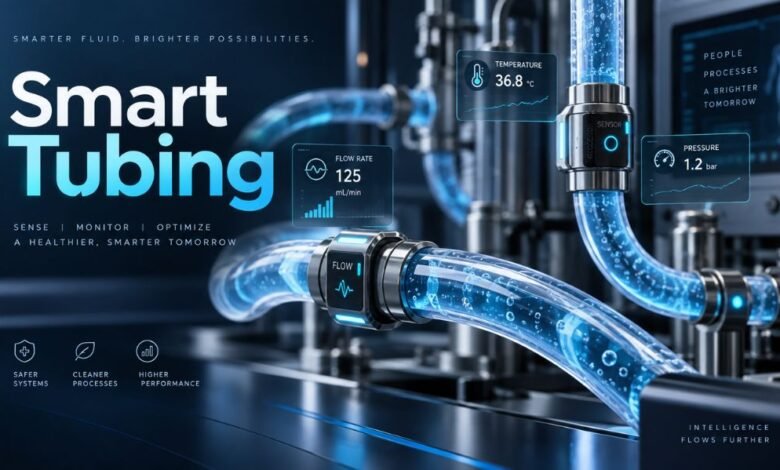
Smart Tubing and the Evolution of Modern Tubing Technology
Smart Tubing represents an important development in the way tubing systems are designed and used. Traditional Tubing primarily performs a straightforward function: carrying liquids, gases, chemicals, or other materials from one location to another. Modern applications, however, increasingly require more than simple transportation. Engineers and manufacturers may also need information about pressure, temperature, flow conditions, system performance, or equipment status.
Smart Tubing addresses this need by integrating Tubing with technologies such as sensors, electronics, connectors, monitoring equipment, and data-transmission components. In some applications, electronic functionality can even be integrated directly into tubing materials or associated connectors. The result is a tubing system that can perform its physical role while also serving as part of a broader digital monitoring or control system.
This concept is particularly relevant to medical technology, industrial automation, fluid handling, and other environments where accurate information can improve reliability and decision-making.
Smart Tubing: What Does It Actually Mean?
The term Smart Tubing does not refer to a single universal product or material. Instead, it broadly refers to tubing systems that incorporate intelligent capabilities beyond basic fluid or gas transfer.
Smart Tubing Combines Physical Transport With Digital Functions
A conventional tube provides a pathway. Smart Tubing can potentially add sensing, identification, communication, measurement, or monitoring capabilities to that pathway.
Depending on the application, the tubing system may work with sensors that detect operating conditions or connectors that transfer electronic information. Medical technology manufacturers, for example, have developed concepts that combine polymers with sensors and electronic components.
This integration can reduce the need for separate cables or additional equipment in certain designs while making Tubing a more functional part of the overall system.
Smart Tubing Is Part of Connected System Design
Modern equipment increasingly depends on information. Machines, medical devices, and automated systems can use real-time measurements to identify changes and help operators understand what is happening inside a process.
Smart Tubing can contribute to this connected environment by linking the physical transfer system to digital monitoring technology.
Smart Tubing Technology and How It Works
No single design fits all Smart Tubing applications. The exact construction depends on the material being transported, the operating environment, the required measurements, and the equipment’s purpose.
Smart Tubing Sensors and Electronic Components
Sensors are among the technologies that can make tubing systems intelligent. They can be designed to collect information on selected operating conditions and relay it to associated equipment.
Possible measurements in connected fluid systems can include pressure, temperature, flow, position, or other application-specific parameters.
The sensor itself does not necessarily need to be positioned throughout the entire tube. Depending on the engineering design, measurement technology may be incorporated into connectors, tubing assemblies, catheters, external monitoring components, or dedicated sections of a system.
Smart Tubing Data Transmission
Collecting information becomes far more useful when it can reach another device.
Some advanced tubing concepts integrate data transmission and power-related technology into tubing structures or connectors. This approach can help simplify applications that would otherwise require separate cables for data communication.
Depending on the application, the information can then be available to monitoring equipment, controllers, or other connected systems.
Smart Tubing in Medical Technology
Medical technology is one of the clearest examples of how intelligent tubing concepts can be developed.
Tubing already plays an essential role in many healthcare applications, including fluid delivery, oxygen-related systems, catheters, laboratory equipment, and other medical devices. Adding electronic or sensing functionality could give manufacturers additional ways to monitor equipment operation.
Smart Tubing for Medical Monitoring
Medical tubing manufacturers have explored integrating electronics, sensors, and polymers into tubing systems. Some concepts allow tubing or associated connectors to serve as data conductors, eliminating the need for a separate communication pathway.
This can be particularly valuable where designers want to reduce system complexity while maintaining reliable information transfer.
Any medical Smart Tubing product, however, must be engineered for its intended use and comply with the relevant medical-device requirements for the market in which it is sold.
Smart Tubing in Industrial Applications
The underlying idea behind Smart Tubing may also be relevant to industrial processes.
Industrial facilities commonly rely on Tubing and piping to transport chemicals, gases, water, lubricants, and other process fluids. Monitoring these systems can help operators understand equipment performance and identify unusual operating conditions.
Smart Tubing and Real-Time Process Information
When sensors are incorporated into a tubing-related system, operators can access process-condition information faster.
Rather than relying entirely on scheduled inspections, appropriately designed monitoring technology can provide measurements while equipment is operating. This information can support process control, preventive maintenance, troubleshooting, and operational analysis.
The exact benefits depend heavily on sensor quality and accuracy, installation, software, and the broader control system.
Smart Tubing Benefits for Modern Systems
Smart Tubing is attracting attention because it reflects a broader shift toward connected and data-driven equipment.
Smart Tubing Can Improve System Visibility
One of its biggest advantages is better visibility into operating conditions. Tubing is often installed inside complex equipment where internal changes may not be obvious from the outside.
Sensors and monitoring technology can provide additional information about what is happening within the system.
Smart Tubing Can Support Earlier Problem Detection
Continuous or frequent monitoring can make abnormal operating conditions easier to recognize. When appropriate sensors detect a significant change, the system may alert operators or provide information for further investigation.
This does not eliminate equipment failures, but better information can improve maintenance decisions.
Smart Tubing Can Reduce System Complexity
Certain integrated tubing technologies combine fluid handling and data-related functionality. When manufacturers can incorporate electronic components directly into Tubing or connectors, they may be able to simplify parts of the overall equipment architecture.
Smart Tubing Challenges and Design Considerations
Despite its advantages, Smart Tubing introduces additional engineering challenges.
Smart Tubing Must Remain Reliable
A tube must still perform its primary mechanical function. Adding sensors or electronics cannot compromise essential requirements such as flexibility, durability, chemical compatibility, pressure resistance, cleanliness, or, where applicable, biocompatibility.
Smart Tubing Requires Accurate Data
An intelligent system is only useful when its measurements are dependable. Sensor calibration, installation, environmental conditions, software, and system integration can all influence data quality.
Designers therefore need to evaluate the complete system rather than simply adding electronic components to conventional Tubing.
Smart Tubing Cost and Maintenance Considerations
More sophisticated technology can also increase development, manufacturing, and maintenance requirements. Organizations must determine whether the additional monitoring capabilities provide enough operational value to justify the complexity for a particular application.
Smart Tubing is therefore not automatically the best solution for every tubing system.
Smart Tubing and the Future of Connected Equipment
The development of Smart Tubing fits naturally within the wider movement toward connected devices, industrial automation, digital healthcare, embedded sensors, and real-time monitoring.
As sensors and electronic components become smaller and easier to integrate into manufactured products, Tubing may increasingly serve as more than a passive transportation component.
The most meaningful progress will likely come from applications where intelligent monitoring solves a genuine problem—such as reducing equipment complexity, providing critical operating information, supporting medical device functionality, or helping operators identify abnormal conditions.
Smart Tubing, therefore, represents less a single invention and more a new approach to designing Tubing as an active part of a connected system.
Smart Tubing Frequently Asked Questions
What is Smart Tubing?
Smart Tubing generally refers to tubing systems that incorporate intelligent features such as sensors, electronic components, monitoring capability, identification technology, or data transmission alongside their traditional transport function.
How does Smart Tubing work?
Its operation depends on the application. Sensors or electronic components may collect information from a tubing system and transmit that data to monitoring or control equipment.
Where is Smart Tubing used?
Smart Tubing concepts are particularly relevant to medical technology, fluid-handling equipment, industrial systems, automation, and other connected applications requiring both physical transport and information.
What are the main benefits of Smart Tubing?
Potential advantages include better system visibility, real-time or frequent monitoring, improved troubleshooting, earlier identification of abnormal conditions, and greater integration between physical equipment and digital systems.
Is Smart Tubing the same as ordinary Tubing?
No. Ordinary Tubing primarily transports material. Smart Tubing adds sensing, electronics, communication, monitoring, or other intelligent functionality to the tubing system.
Smart Tubing Conclusion
Smart Tubing is changing the traditional idea of what a tube can do. Instead of serving only as conduits for fluids or gases, intelligent tubing systems can become integrated components that support measurement, monitoring, and data communication.
The technology is especially promising in applications where accurate information and compact system design are important. Medical and industrial developments already demonstrate how sensors, polymers, electronics, and intelligent connectors can work together.
Smart Tubing will not replace conventional Tubing everywhere. In many simple applications, standard Tubing remains entirely appropriate. Where monitoring and connectivity provide genuine value, intelligent Tubing offers engineers another way to build safer, more transparent, more efficient, and more digitally connected systems.