Sally Hurst: The Australian Paleontologist Bringing Fossils, Archaeology and Science to Life
How Sally Hurst turned a fascination with the ancient world into a career in paleontology, archaeology, heritage conservation and public science communication

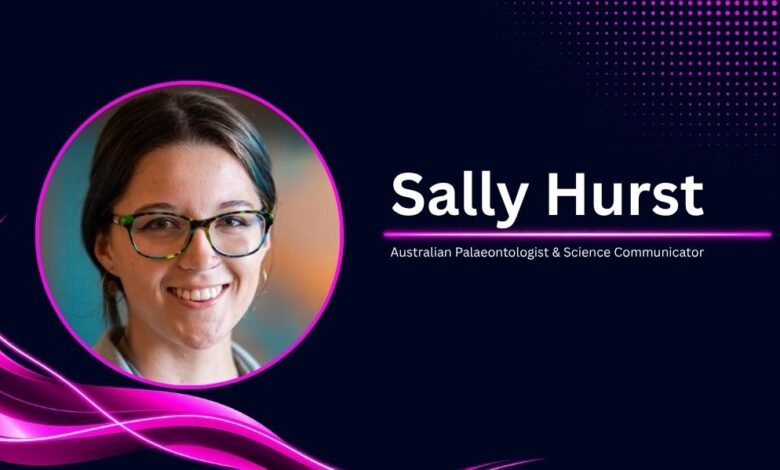
Sally Hurst is an Australian paleontologist, archaeologist, researcher, author and science communicator known for making complex scientific ideas easier for the public to understand. Her work sits at the intersection of paleontology, archaeology and science communication, with a particular focus on the relationship between people, fossils and cultural heritage.
She is best known for creating the Found a Fossil Project, an educational initiative designed to help ordinary Australians understand what to do when they discover fossils or heritage objects. Her work has helped bring discussions about fossil conservation, responsible discovery and Australia’s ancient past beyond universities and museums and into the wider community.
Quick Bio
| Detail | Information |
|---|---|
| Full Name | Sally Hurst |
| Profession | Palaeontologist, Archaeologist, Author, Science Communicator |
| Nationality | Australian |
| Based In | Sydney, Australia |
| Education | Macquarie University |
| Field of Study | Palaeobiology and Ancient Egyptian Archaeology |
| Higher Education | Master of Research |
| Known For | Found a Fossil Project |
| Project Founded | Found a Fossil Project (2022) |
| Notable Book | Found a Fossil: Digs, Discoveries & Australia’s Deep Past |
| Main Interests | Fossils, Palaeontology, Archaeology, Heritage Conservation |
| Public Role | Science Education and Communication |
| Active In | Research, Museums, Education and Public Outreach |
Who Is Sally Hurst?
Sally Hurst is a Sydney-based Australian scientist whose professional interests include paleontology, archaeology, heritage protection and public education.
Rather than limiting herself to a single scientific discipline, Hurst has developed a career that connects natural history with human history. Paleontology lets her investigate ancient life through fossils, while archaeology offers another way to understand how people and cultures interacted with the world around them.
Science communication has become an equally important part of her career. Hurst regularly works to translate specialist scientific information into language that students, families, community members and people without formal scientific training can understand.
Sally Hurst’s Early Interest in Paleontology
Hurst grew up on a farm, away from the major scientific institutions found in large Australian cities. Like many children, she developed an early fascination with dinosaurs and the prehistoric world.
Her interest became more serious after gaining work experience at the National Dinosaur Museum in Canberra. The experience showed her that paleontology could be more than a childhood interest and encouraged her to pursue scientific study.
Her rural background has also influenced her interest in science education. Hurst has spoken publicly about the importance of exposing young people, particularly those from rural communities, to scientists and possible careers in STEM.
Sally Hurst’s Education at Macquarie University
Hurst studied at Macquarie University in Sydney, where she completed a combination of science and humanities subjects that reflected her broad interests.
She completed a Bachelor of Science in Palaeobiology alongside studies in Ancient Egyptian Archaeology. Her university education included subjects related to dinosaurs, evolution, extinction, archaeological methods, heritage, ancient civilizations and Egyptian history.
Master of Research
After completing her undergraduate studies, Hurst continued at Macquarie University with a Master of Research.
Her postgraduate research combined paleontology, archaeology and science communication rather than treating them as completely separate subjects.
During this period, the idea behind the Found a Fossil Project developed.
Combining Science With Public Education
An important question influenced Hurst’s research: what should an ordinary person actually do after discovering a fossil?
She realized that even someone who had studied paleontology and archaeology might not immediately know which authority, museum, or specialist to contact.
That problem became the foundation for a project focused on making information about heritage discoveries easier for the public to access and understand.
The Found a Fossil Project
The Found a Fossil Project is one of Sally Hurst’s central achievements.
Created as part of her postgraduate research, the project examines interactions between people and fossils while providing practical information about responsible fossil and heritage discoveries.
Australia has an enormous landscape containing significant geological, palaeontological and cultural material. Scientists are not always the first to discover these objects. Farmers, construction workers, bushwalkers, beachgoers and families may unexpectedly encounter something unusual.
Why the Project Matters
A fossil removed without recording its location can lose valuable scientific context. Similarly, cultural heritage objects can carry legal, historical and cultural significance that requires respectful handling.
The project therefore encourages people to avoid treating discoveries simply as souvenirs.
Instead, it promotes responsible identification, reporting and preservation.
For Hurst, protecting fossils is not only about keeping interesting objects in museums. It is about preserving information that can help researchers understand ancient environments, extinct animals and the geological history of Australia.
Sally Hurst as a Science Communicator
Science communication has become a major part of Sally Hurst’s professional identity.
She has delivered educational presentations, participated in public events and discussed paleontology through media appearances. Her experience includes working with museums, schools, students and community audiences.
Hurst has also worked as an education presenter at the Australian Museum and has maintained connections with Macquarie University.
Making Science Accessible
One of Hurst’s strengths is explaining scientific concepts without assuming that an audience already understands specialist terminology.
This approach is particularly valuable in paleontology. People may be fascinated by dinosaurs and fossils but know little about geological processes, fossil identification or heritage regulations.
By turning technical information into engaging stories, Hurst helps connect scientific research with everyday curiosity.
Supporting Young People in STEM
Hurst has also been involved in mentoring and educational programs aimed at improving access to science and higher education.
Her experience growing up in a rural area adds relevance to this work. Seeing scientists with relatable backgrounds can help students see careers in research, museums, archaeology, and paleontology as achievable possibilities rather than distant professions.
Fieldwork and Research Experience
Paleontology is not limited to laboratories and museum collections, and Hurst has gained field experience in Australia and internationally.
Her professional background includes fossil-related research, archaeological interests, and educational work. She has also participated in dinosaur fieldwork in Canada and traveled widely for study, research, and personal exploration.
These experiences shape the stories she shares with audiences about how paleontologists investigate the past.
Sally Hurst as an Author
In 2026, Hurst expanded her science communication work by publishing Found a Fossil: Digs, Discoveries & Australia’s Deep Past.
The book explores fossil discovery, Australian paleontology, fieldwork and the responsibilities that come with encountering heritage material.
It also builds on ideas developed through the Found a Fossil Project, giving readers practical information while introducing them to Australia’s prehistoric past.
The publication represents a natural extension of Hurst’s wider goal: making scientific knowledge useful to people outside traditional academic settings.
Why Sally Hurst’s Work Is Important
Sally Hurst represents a generation of researchers who see communication as essential to science.
Discovering fossils is exciting, but preserving their scientific context can be even more important. By teaching people what to do when they encounter possible fossils or heritage objects, Hurst connects public curiosity with responsible conservation.
Her combination of paleontology, archaeology, education, and public communication also demonstrates how different disciplines can work together.
Rather than simply studying the past, her work asks how people living today understand, discover and protect it.
Frequently Asked Questions About Sally Hurst
Who is Sally Hurst?
Sally Hurst is an Australian paleontologist, archaeologist, researcher, author, and science communicator. She is particularly known for creating the Found a Fossil Project.
What is Sally Hurst known for?
She is best known for her work explaining what members of the public should do when they discover fossils or heritage material and for making paleontology accessible to wider audiences.
What did Sally Hurst study?
Hurst studied palaeobiology and Ancient Egyptian archaeology at Macquarie University before completing a Master of Research involving paleontology, archaeology and science communication.
What is the Found a Fossil Project?
The Found a Fossil Project is an educational and research initiative created by Sally Hurst to improve public understanding of fossil and heritage discoveries and encourage responsible reporting and preservation.
Has Sally Hurst written a book?
Yes. Her book Found a Fossil: Digs, Discoveries & Australia’s Deep Past was published in 2026 and explores fossil discoveries, paleontology, fieldwork and Australia’s ancient heritage.
Conclusion
Sally Hurst has built a distinctive career by bringing together paleontology, archaeology, heritage conservation and science communication. From studying ancient life at Macquarie University to developing the Found a Fossil Project and communicating science through museums, public appearances and writing, her work consistently focuses on making knowledge accessible.
Her career shows that paleontology is about much more than discovering dinosaurs. It also involves documenting evidence, protecting heritage, educating communities and helping people understand why discoveries from the distant past still matter today.
Through research, education, and public engagement, Sally Hurst continues to encourage curiosity about Australia’s deep history while promoting responsible ways to protect it for future generations.