Amelia Kallman: The Futurist Making AI and Emerging Technology Understandable
How Amelia Kallman turns complex conversations about artificial intelligence, innovation, emerging technology, and the future of business into practical insights for leaders and organisations.

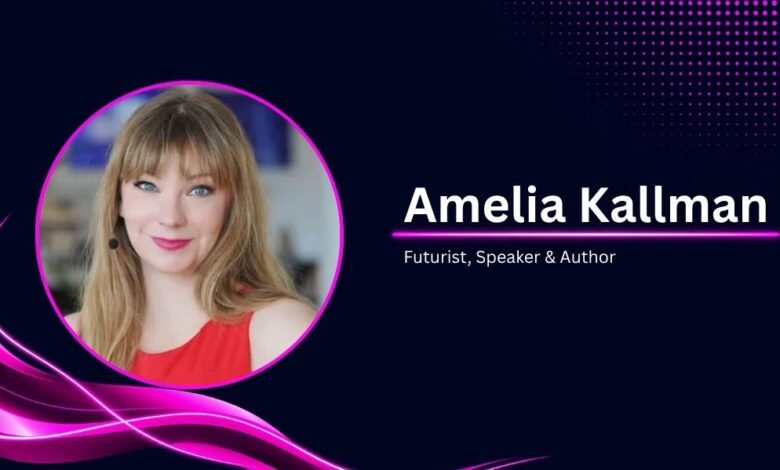
Amelia Kallman isn’t the kind of futurist who relies on buzzwords, vague predictions, or dramatic warnings about machines taking over the world. Her strength lies in something far more useful: making complicated technological change easier to understand.
At a time when business leaders are surrounded by constant discussion of artificial intelligence, automation, digital transformation, immersive technology, and the future of work, Kallman brings a practical, human-centred perspective to the conversation.
She is a London-based futurist, speaker, author, researcher, host, and technology communicator whose work examines how emerging technologies may influence businesses, employees, customers, and society at large. Rather than simply asking what technology can do, much of her work considers how organisations can understand change, prepare for it, and use innovation responsibly.
Who Is Amelia Kallman?
Amelia Kallman is an independent futurist known for explaining emerging technology and its potential impact on business and everyday life.
Her professional work covers subjects including artificial intelligence, digital transformation, customer experience, immersive technology, innovation, sustainability, robotics, and future business strategy.
What sets Kallman’s career apart from that of many traditional technology specialists is her unconventional route into the industry. She did not begin her professional life as an engineer or computer scientist. She worked in performance and theatre before moving into technology and innovation.
That combination of communication experience and technological research later became central to her work as a futurist.
Amelia Kallman’s Journey From Theatre to Technology
Entering the Technology Industry
Kallman has described entering the technology industry in 2013 after joining a creative technology agency. She progressed through the organisation and eventually became Global Head of Innovation.
The position placed her close to emerging technologies at a time when devices and platforms such as virtual reality headsets, wearable technology, artificial intelligence systems, and mixed-reality products were beginning to attract significant commercial attention.
Her work also involved innovation labs created for major professional organisations. This gave her practical exposure to the question businesses continue to face today: how can new technology move from an interesting demonstration to something genuinely valuable?
Becoming an Independent Futurist
Kallman became an independent futurist in 2017.
That move allowed her to develop a broader role researching technological change while communicating its opportunities and risks to organisations and audiences.
Her approach focuses on translating complex ideas into language decision-makers can understand. Instead of treating technology as an isolated subject, she examines its relationship with people, culture, strategy, customers, sustainability, and long-term business development.
Why Amelia Kallman’s Work Focuses on More Than Technology
The term “futurist” can sometimes suggest someone attempting to predict exactly what the world will look like decades from now. Kallman’s work is more closely connected to identifying current technological trends and considering where those developments could lead.
Making Artificial Intelligence Understandable
Artificial intelligence has become one of the most important areas of her recent work.
Businesses are increasingly under pressure to understand generative AI, automation, data-driven systems, and changing employee expectations. Yet implementing AI successfully involves much more than purchasing software.
Leadership, trust, workforce skills, organisational culture, ethics, and customer expectations all influence whether technological transformation creates lasting value.
Kallman’s work on humanising AI reflects this wider perspective. It considers the relationship between people and increasingly intelligent systems rather than presenting artificial intelligence purely as a technical tool.
The Human Side of AI Transformation
A key question around AI is not simply whether organisations can automate more processes. It is whether they can introduce new systems while maintaining trust among employees and customers.
Technology can improve efficiency, but poorly managed transformation can also create uncertainty.
For business leaders, understanding this human dimension is becoming essential to AI strategy.
Amelia Kallman as a Speaker and Technology Communicator
Public speaking has become a major part of Kallman’s professional profile.
According to her professional biography, she has appeared at more than 100 conferences across over 20 countries. Her speaking experience has also included engagements connected with institutions such as the House of Lords and the United Nations.
She has lectured at Cambridge University, Oxford University, and the University of California, Berkeley. She has worked with organisations across industries including technology, finance, retail, manufacturing, property, hospitality, healthcare, education, and the arts.
Her wider client experience has included globally recognised businesses and institutions.
The scale of this work reflects the growing demand for people who can explain complicated technological developments without separating them from commercial and social realities.
Key Subjects Amelia Kallman Explores
AI and Future Business Strategy
Artificial intelligence is increasingly changing how organisations approach productivity, customer service, decision-making, communication, and workplace design.
Kallman’s work considers both the opportunities AI creates and the responsibilities that come with adoption.
Customer Experience and Emerging Technology
Another important theme is the changing customer experience.
AI-powered personalisation, immersive environments, digital services, and evolving expectations among younger generations are changing the relationship between businesses and consumers.
Organisations must therefore consider not only which technologies they adopt but whether those technologies actually improve customer relationships.
Sustainability and Responsible Innovation
Kallman has also explored the environmental implications of emerging technologies.
Her 2022 TEDx talk examined environmental questions surrounding the metaverse. Her later research has included the footprint associated with generative AI and broader questions about responsible technology.
This reflects an increasingly important debate: technological advancement should be evaluated not only by speed and capability but also by its wider social and environmental consequences.
Why Amelia Kallman’s Perspective Matters
The technology industry produces enormous amounts of information every day. New AI models, platforms, devices, predictions, and marketing claims can quickly make it difficult for business leaders to separate genuine transformation from temporary hype.
A futurist’s value therefore comes not simply from identifying what is new.
The more important task is providing context.
Kallman’s professional approach centres on examining emerging developments, identifying possible opportunities and risks, and translating those findings into practical conversations about the future.
That ability is especially relevant as artificial intelligence becomes part of mainstream business operations.
Companies now need to answer difficult questions about productivity, employment, customer trust, privacy, sustainability, skills, and responsible implementation. These are not purely technical questions. They involve people.
Amelia Kallman’s Influence on Conversations About the Future
Amelia Kallman’s career demonstrates that understanding the future does not require pretending to know exactly what will happen.
It requires studying what is changing now.
Her path from a theatrical background to innovation leadership and, eventually, independent futurism also gives her an unusual professional perspective. Communication remains as important to her work as technology itself.
As artificial intelligence, automation, immersive systems, and other emerging technologies continue to develop, the demand for understandable and responsible analysis is unlikely to disappear.
Kallman’s work sits directly within that space: between technological possibility and human reality.
Frequently Asked Questions About Amelia Kallman
Who is Amelia Kallman?
Amelia Kallman is a London-based futurist, author, speaker, researcher, host, and technology communicator. Her work focuses on emerging technologies and their potential effects on businesses, people, and society.
What is Amelia Kallman known for?
She is best known for communicating complex subjects including artificial intelligence, innovation, digital transformation, customer experience, immersive technology, sustainability, and future business trends.
When did Amelia Kallman become a futurist?
Kallman entered the technology industry in 2013 and became an independent futurist in 2017 after developing experience in innovation and emerging technologies.
What does Amelia Kallman say about artificial intelligence?
Her work presents AI as more than a technical issue. She explores how artificial intelligence affects leadership, employees, organisational culture, customers, equality, sustainability, trust, and long-term business strategy.
Is Amelia Kallman an author and public speaker?
Yes. In addition to her work as a futurist, Amelia Kallman is an author and international speaker. Her professional biography states that she has spoken at more than 100 conferences in more than 20 countries and lectured at several major universities.
Final Thoughts on Amelia Kallman
Amelia Kallman’s relevance comes from her ability to make emerging technology understandable without losing sight of the human questions surrounding it.
Artificial intelligence and digital transformation will continue to reshape industries, but technology alone does not determine whether transformation succeeds. Leadership, trust, ethics, skills, sustainability, and human behaviour remain equally important.
By focusing on both technological possibilities and their real-world consequences, Amelia Kallman offers a practical perspective on what the future of technology may mean for businesses and the people inside them.