Provascin: A Complete Guide to Its Ingredients, Uses, Benefits, Safety, and Availability
Understanding the cardiovascular support supplement, its formula, potential benefits, precautions, and what consumers should know before using it

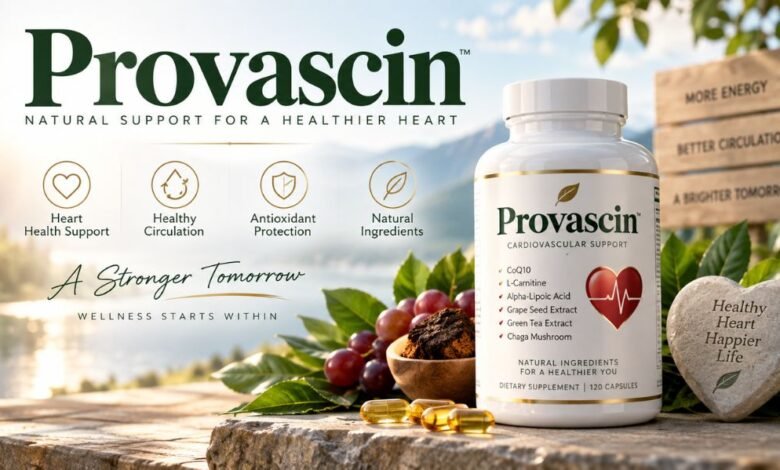
Provascin frequently appears in searches related to cardiovascular health, circulation, antioxidants, and nutritional heart support. The best-documented version is PURICA Provascin, a multi-ingredient natural health supplement that was marketed to adults interested in supporting heart and blood-vessel health.
However, Provascin should not be confused with prescription cardiovascular medicines. It is important to separate nutritional support claims from medically proven treatment. While several ingredients in the formula have been independently studied, that does not automatically mean the full Provascin formula can prevent, diagnose, or treat cardiovascular disease.
This article explains what Provascin is, its ingredients, potential benefits, possible side effects, safety considerations, availability, and the important differences between a supplement and medical treatment.
What Is Provascin?
Provascin is best known as a cardiovascular support supplement formerly associated with the Canadian natural-health brand PURICA.
The supplement was formulated using nutrients, antioxidants, mushroom material, amino-acid-related compounds, and plant extracts. Its overall purpose was to provide nutritional support for cardiovascular function, circulation, cellular energy, and antioxidant protection.
Provascin was commonly available in capsule form.
It should be understood as a dietary or natural health supplement, not a prescription medication.
Why Do People Search for Provascin?
Interest in Provascin usually comes from people researching subjects such as:
- Cardiovascular support
- Healthy circulation
- Heart health supplements
- Antioxidant protection
- CoQ10 supplements
- L-carnitine
- Natural vascular support
- Provascin ingredients
- Provascin side effects
- Provascin availability
Some consumers may also encounter old product listings and wonder whether Provascin is still manufactured or whether newer products contain the same ingredients.
Provascin Ingredients Explained
Historical information about PURICA Provascin describes a formula containing several active ingredients rather than relying on one compound.
L-Carnitine
L-carnitine is a naturally occurring compound involved in energy metabolism. One of its main functions is helping transport fatty acids into mitochondria, where cells can use them for energy.
Because the heart requires a continuous energy supply, L-carnitine has attracted considerable scientific interest in cardiovascular and metabolic research.
However, the presence of L-carnitine in a supplement does not, by itself, mean the product treats heart disease.
Coenzyme Q10
Coenzyme Q10, commonly known as CoQ10, is another key ingredient in Provascin.
CoQ10 occurs naturally in the body and helps produce energy in mitochondria. It also has antioxidant properties.
Why Is CoQ10 Used in Heart Health Supplements?
Heart muscle requires substantial amounts of cellular energy. For this reason, CoQ10 is commonly included in supplements marketed for cardiovascular wellness and energy support.
Individual research involving CoQ10 should not be interpreted as direct clinical proof for every supplement containing it.
Chaga Mushroom
The documented Provascin formula also contained micronized Chaga.
Chaga is a fungus traditionally associated with wellness practices and is known for containing naturally occurring antioxidant compounds.
Research into Chaga continues, but consumers should avoid assuming that traditional use automatically proves a specific cardiovascular benefit.
Alpha-Lipoic Acid
Alpha-lipoic acid is a compound involved in cellular metabolism and antioxidant activity.
It has attracted scientific attention because it participates in several metabolic processes in the body.
Its inclusion in Provascin appears to be linked primarily to antioxidant and metabolic support.
Grape Seed and Green Tea Extracts
Grape seed extract contains plant compounds known as polyphenols, while green tea naturally contains catechins and other antioxidant substances.
These extracts are widely found in nutritional products marketed for antioxidant protection and general wellness.
Again, evidence relating to individual plant compounds should be distinguished from evidence for the finished Provascin formula.
What Was Provascin Used For?
Historical marketing positioned Provascin as a broad cardiovascular support supplement.
Rather than acting like a prescription medicine aimed at one diagnosed condition, the formula combined several ingredients intended to support different biological functions.
Cardiovascular Support
Provascin was primarily associated with maintaining general heart and blood-vessel wellness.
This does not mean it should be considered a treatment for coronary artery disease, hypertension, heart failure, or other cardiovascular conditions.
Circulation Support
The product was also promoted in connection with healthy circulation and vascular function.
Blood circulation depends on numerous factors, including heart function, blood vessels, physical activity, diet, medications, age, and underlying health conditions.
A nutritional supplement should therefore never be viewed as a complete solution to circulation problems.
Antioxidant Support
Several Provascin ingredients, including CoQ10, Chaga, alpha-lipoic acid, grape seed extract, and green tea extract, have antioxidant activity.
Antioxidants help protect cells against oxidative stress.
Does Antioxidant Activity Mean Provascin Prevents Disease?
No. Demonstrating antioxidant activity in an ingredient is different from demonstrating that a finished supplement prevents a particular disease.
This distinction is especially important when evaluating health-product marketing.
Is Provascin a Blood Pressure Medicine?
Provascin should not be treated as prescription blood pressure medication.
Its name may sound similar to pharmaceutical products, confusing consumers researching it online.
People diagnosed with high blood pressure should continue following the treatment plan their healthcare professional provides.
Stopping prescribed medication in favor of a supplement can carry serious health risks.
Potential Provascin Side Effects and Interactions
Natural does not automatically mean risk-free.
Multi-ingredient supplements can cause unwanted effects, especially when combined with medication or other supplements.
Potential concerns depend on the individual ingredients, dosage, medical history, and medicines a person is already taking.
Who Should Be Particularly Careful?
Professional medical advice is especially important for people who:
- Take blood-thinning medication
- Take blood-pressure medication
- Use diabetes medication
- Have liver or kidney conditions
- Have seizure disorders
- Have autoimmune conditions
- Take immunosuppressive medication
- Are pregnant or breastfeeding
- Use several supplements simultaneously
Interactions can occur even when each product appears harmless on its own.
Is Provascin Still Available?
Consumers may encounter older PURICA Provascin product pages while searching online.
Historical listings show that it was sold in capsule bottles, including 120-capsule and 240-capsule formats. However, some established retailers now identify the older product as discontinued or no longer carried.
Be Careful With Old Provascin Listings
An old webpage in search results does not prove the product is still manufactured.
Before purchasing anything labeled Provascin, confirm:
Manufacturer
Make sure the manufacturer is clearly identified.
Ingredient List
Compare the complete formula rather than relying only on the product name.
Expiration Information
Never assume an older supplement is safe simply because the container remains sealed.
Seller Reputation
Products from unknown sellers deserve extra caution.
A modern product using the Provascin name may not necessarily contain the same formula as the historically documented PURICA supplement.
Provascin and a Heart-Healthy Lifestyle
Supplements should be considered secondary to established cardiovascular health practices.
Regular exercise, appropriate body weight, adequate sleep, avoiding tobacco, managing stress, and eating a balanced diet remain important foundations of cardiovascular wellness.
Anyone who already has high cholesterol, high blood pressure, diabetes, circulation problems, chest discomfort, or diagnosed cardiovascular disease should seek professional healthcare rather than relying on supplements.
Frequently Asked Questions About Provascin
Is Provascin a prescription medicine?
No. The best-documented PURICA Provascin product was a natural health supplement, not a prescription cardiovascular medicine.
What ingredients were found in Provascin?
Historical formulations included L-carnitine, alpha-ketoglutaric acid, Chaga, CoQ10, betaine hydrochloride, alpha-lipoic acid, grape seed extract, and green tea extract.
Is Provascin good for heart health?
It was marketed as a cardiovascular support supplement. However, this should not be interpreted as proof that Provascin prevents or treats heart disease.
Can Provascin replace blood pressure medication?
No. A nutritional supplement should not replace prescribed blood-pressure or cardiovascular medication unless a qualified healthcare professional specifically changes the treatment plan.
Can Provascin cause side effects?
Side effects and interactions are possible because Provascin contains multiple active compounds. People taking medicines or managing medical conditions should discuss supplement use with a doctor or pharmacist.
Conclusion
Provascin is best understood as a multi-ingredient natural health supplement historically associated with PURICA and cardiovascular wellness. Its documented formula combined L-carnitine, CoQ10, Chaga, alpha-lipoic acid, grape seed extract, green tea extract, and other compounds linked with cellular energy, antioxidants, and general nutritional support.
The most important distinction is between support and treatment. Although individual Provascin ingredients have been researched for various biological functions, that does not establish that the finished supplement can prevent or cure cardiovascular disease.
Consumers should also be cautious about current products using the Provascin name because historical PURICA versions appear to have limited availability. Before considering any supplement, check the manufacturer, ingredients, label, expiry information, and potential medical interactions.
For people with diagnosed cardiovascular conditions or those taking prescription medications, professional medical advice should always take priority over supplement marketing.