Pravi Celer: A Complete Guide to True Celery, Nutrition, Uses, and Everyday Benefits
Discover what Pravi Celer really means, how this traditional celery is used in cooking, its nutritional profile, wide varieties, storage methods, growing requirements, and practical ways to enjoy it.

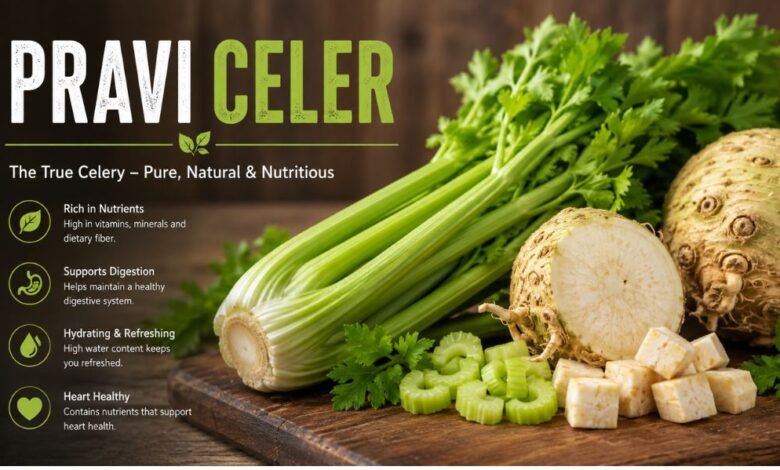
Pravi Celer is a name associated with celery, scientifically known as Apium graveolens, a familiar aromatic vegetable used in kitchens across Europe and many other parts of the world. Although the phrase may sound like the name of an unusual new plant, it should not be confused with a newly discovered superfood or a separate modern species.
Celery belongs to the Apiaceae family, which also includes carrots, parsley, fennel, and related aromatic plants. Different cultivated forms of celery are valued for their stalks, leaves, or enlarged root. That versatility explains why celery appears in everything from fresh salads and vegetable snacks to soups, stocks, sauces, and slow-cooked dishes.
This article explains Pravi Celer, its meaning, varieties, nutrition, culinary uses, storage, cultivation, and important safety considerations without exaggerated wellness claims.
Pravi Celer Meaning and Botanical Identity
Pravi Celer is connected with the common celery species Apium graveolens. In Croatian usage, “celer” means celery, while “pravi” conveys the idea of something true, genuine, or proper.
The plant belongs to the family Apiaceae and is generally grown as a vegetable for one or more of its edible parts. Depending on the cultivated form, growers may focus on thick leaf stalks, aromatic leaves, or the enlarged lower portion commonly called celeriac or celery root.
This distinction matters because celery sold in one country may look quite different from the celery commonly used in another. The underlying plant species, however, remains closely connected.
Pravi Celer and the Main Types of Celery
Several culinary forms of Pravi Celer can be encountered.
Stalk celery is grown mainly for its long, crisp leaf stalks. This is the type commonly found in supermarkets and used for salads, snacks, soups, and stocks.
Celeriac, often called celery root, has a large, rounded lower portion. It has a firm texture and an earthy, celery-like flavor, and can be roasted, mashed, boiled, grated, or added to soups.
Leaf celery is grown primarily for its strongly aromatic foliage. Its leaves are often used more like a herb or seasoning than a crunchy vegetable.
Although their appearance and kitchen roles vary, they are connected to the same celery species.
Pravi Celer Nutrition and Food Value
Pravi Celer can be a useful component of a balanced diet because fresh celery contains a high proportion of water while providing relatively few calories.
Celery also contains dietary fiber and small amounts of several vitamins and minerals, including potassium and vitamin K. Its nutritional value should be considered as part of an overall diet rather than as evidence that celery alone can prevent or cure disease.
Pravi Celer as a Hydrating Vegetable
Fresh celery stalks contain a large amount of water. This makes it a refreshing ingredient for salads, snacks, and vegetable dishes.
Because it contains both water and a crisp, fibrous structure, whole celery can increase food volume without adding much energy. Combining it with other vegetables, whole grains, protein sources, and healthy fats can create a more complete meal.
Pravi Celer and Dietary Fiber
Eating whole celery provides fiber, although celery should not be treated as an exceptionally concentrated fiber source.
Fiber is an important part of a balanced diet and supports normal digestive function. Using whole celery rather than relying exclusively on strained celery juice also preserves more of the vegetable’s natural fiber.
Pravi Celer Uses in Everyday Cooking
One of the greatest strengths of Pravi Celer is its versatility. Different parts of the plant can bring texture, aroma, or flavor to a wide variety of recipes.
Raw celery stalks have a fresh crunch that works well in salads and vegetable platters. Chopped celery can also be cooked with onions, carrots, herbs, and other vegetables to create an aromatic foundation for soups, sauces, casseroles, and stews.
Pravi Celer in Soups and Stocks
Celery is a classic ingredient in vegetable and meat-based stocks. Its distinctive aroma softens during cooking and pairs particularly well with carrots, onions, parsley, potatoes, and other root vegetables.
Celery leaves can also be added to broth. Because they may have a stronger flavor than the stalks, smaller quantities are often sufficient.
Pravi Celer Root in Cooked Dishes
Celeriac offers a different experience from stalk celery. After removing its rough outer surface, the pale interior can be cut into cubes, slices, or strips.
It can be roasted alongside other root vegetables, boiled and mashed, incorporated into soup, or grated for salads. Its flavor is recognizably related to celery but generally deeper and more earthy.
Pravi Celer Selection and Storage Tips
Good-quality stalk celery should usually look fresh and firm rather than soft, heavily wilted, or badly damaged. Leaves, when present, should appear reasonably fresh.
Store fresh celery under refrigeration. Keeping it properly chilled helps maintain its crisp texture for longer.
Proper Celery Preparation Before Eating
Wash celery carefully before eating or cooking it, particularly around areas where soil or debris may collect.
Damaged sections can be trimmed away. Tough outer fibers on large stalks may also be removed if a smoother texture is preferred, although this is largely a matter of personal preference.
Pravi Celer Growing Conditions
Pravi Celer can be grown in home gardens, but producing thick, tender celery usually requires patience and reliable growing conditions.
Celery generally performs best in fertile soil, with regular moisture and enough time to develop. Severe water stress can reduce quality, so consistent watering is particularly important.
Proper Celery Harvesting at Home
Harvest timing depends on the type being grown. Stalk celery is collected when the stalks have developed sufficient size, while celeriac is left longer so its enlarged base can mature.
Home gardeners should follow the specific instructions provided with their chosen celery cultivar, as growth periods and ideal conditions can vary.
Pravi Celer Safety and Allergy Awareness
Pravi Celer is a normal food for many people, but celery can cause allergic reactions in susceptible individuals.
Celery is significant enough as a food allergen to be included among the allergens that must be declared under European Union food-labeling rules.
People with a known celery allergy should avoid celery, celery root, celery leaves, celery seeds, and foods containing celery unless appropriate medical advice indicates otherwise.
Pravi Celer and Common Online Misconceptions
Online descriptions sometimes present Pravi Celer as a mysterious new vegetable with extraordinary health effects. Such descriptions should be treated cautiously.
The evidence supports a much simpler explanation: Pravi Celer is associated with celery and Apium graveolens, rather than with a scientifically established miracle vegetable.
Its real strengths are practical. Celery is versatile, aromatic, widely used in traditional cooking, naturally high in water, and available in several useful culinary forms.
Pravi Celer FAQs
What exactly is Pravi Celer?
Pravi Celer refers to celery associated with the species Apium graveolens. The term is used in Croatian and related regional contexts to refer to celery rather than to describe a newly discovered superfood.
Is Pravi Celer the same as ordinary celery?
In general, yes. It is connected to the same species of celery. However, different cultivated forms may be grown for stalks, leaves, or the enlarged root known as celeriac.
Can Pravi Celer be eaten raw?
Yes. Fresh stalk celery is commonly eaten raw after proper washing. It can be added to salads, vegetable platters, and snacks.
Can Pravi Celer root be cooked?
Yes. Celeriac or celery root can be roasted, boiled, mashed, grated, or incorporated into soups and stews.
Is Pravi Celer a medicinal superfood?
Celery is nutritious, but it should not be described as a miracle treatment. It provides water, fiber, and several nutrients, yet no single food can replace a balanced diet or appropriate medical care.
Pravi Celer Final Thoughts
Pravi Celer is far more interesting when understood accurately rather than surrounded by exaggerated claims. Behind the unusual-looking keyword is the familiar Apium graveolens, a versatile plant that can provide crunchy stalks, fragrant leaves, seeds, and the substantial root form known as celeriac.
Its usefulness comes from flexibility. Pravi Celer can add freshness to salads, aroma to stocks, depth to soups, and texture to cooked vegetable dishes. Understanding its different forms also makes it easier to select, store, prepare, and grow the right celery for a particular purpose.
For anyone searching for the true meaning of Pravi Celer, the simplest answer is also the most reliable: it is celery—a traditional, practical, and widely valued vegetable with an established place in everyday cooking.