Patrick Reid: From BBC Creative to Veteran FX Trader, Market Educator and Adamis Principle Co-Founder
The remarkable career journey of a British currency expert who moved from media into institutional trading, financial education, and professional mentoring

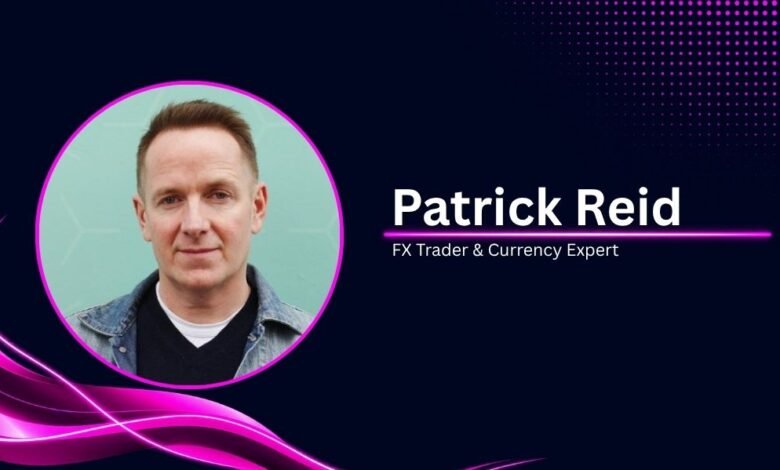
Patrick Reid is a British currency expert, professional FX trader, market educator, and co-founder of Adamis Principle, a London-based consultancy focused on global currency markets and trader development. His career stands out because he didn’t begin in finance through the conventional route of studying economics and immediately joining an investment bank. Instead, he spent years working in media before making a major career change into professional trading.
Over time, Reid developed experience across futures, derivatives, government debt, and spot foreign exchange markets. He later became increasingly involved in trading education, mentoring, macroeconomic analysis, and financial media.
It is important to distinguish him from other people with similar names. This article focuses specifically on Patrick Reid, the British FX trader and financial educator associated with Adamis Principle.
Who Is Patrick Reid?
Patrick Reid is best known professionally as an experienced foreign exchange trader and trading mentor. His background combines institutional market experience with education, financial commentary, and business leadership.
Before entering professional finance, Reid worked in the media industry. His professional biography says he worked on campaigns for BBC2 and spent about a decade in media before changing direction.
Rather than remaining in a familiar career, he entered the demanding environment of professional trading. This transition eventually became an important part of his public identity because Reid frequently discusses career change, trading discipline, and the challenges of learning markets later in life.
Patrick Reid’s Transition From the BBC to Trading
Reid has described entering professional trading while in his late thirties. He joined a futures trading environment and began learning how professional traders approached markets, risk, price action, and decision-making.
The transition was significant. Media and financial trading require very different skills, yet Reid has suggested that curiosity, adaptability, and disciplined learning helped him develop a new career.
He initially gained experience in derivatives and government debt before expanding into other areas of financial markets.
Learning Risk Management on a Professional Desk
Risk management is central to Patrick Reid’s trading philosophy.
Professional trading is not simply about predicting whether an asset will rise or fall. Traders must consider position size, volatility, market conditions, liquidity, potential losses, and the relationship between risk and expected reward.
Reid’s early professional experience exposed him to these principles in practice. Risk management later became a central focus of his educational work.
Patrick Reid’s Career in FX and Institutional Trading
After developing experience in futures and derivatives, Patrick Reid moved into spot foreign exchange trading. His professional biography says a New York hedge fund headhunted him before he specialized further in G10 currencies.
G10 foreign exchange markets include many of the world’s most actively traded currencies. Understanding them requires more than watching charts. Professional traders frequently monitor central-bank policy, inflation, interest rates, economic growth, market positioning, global risk sentiment, and relationships between asset classes.
Reid’s approach combines several of these elements.
His Trading Style and Market Approach
Patrick Reid has discussed using macroeconomic analysis, technical analysis, market flows, correlations, and Market Profile in his trading process.
Macroeconomic analysis helps traders understand the broader environment affecting currencies. Interest-rate expectations, inflation data, central-bank decisions, employment figures, and geopolitical developments can all influence foreign exchange markets.
Technical analysis, meanwhile, focuses on price behavior and market structure.
Reid’s educational philosophy generally presents successful trading as a combination of information, structured decision-making, risk control, and psychology rather than a search for guaranteed predictions.
Patrick Reid and Adamis Principle
A major development in Patrick Reid’s professional career came in 2016 when he and fellow trader Adam Gazzoli established Adamis Principle.
The two met while working around an institutional FX trading desk and shared an interest in currency markets and professional trader development.
Adamis Principle developed as a London-based FX consultancy offering mentoring, market education, masterclasses, and professional development.
Working With Adam Gazzoli
Adam Gazzoli is one of Patrick Reid’s most important professional associates.
As co-founders, Reid and Gazzoli combined their financial-market experience to build an organization focused on helping traders understand institutional-style market analysis.
Their work covers subjects including trading psychology, technical analysis, macro fundamentals, market structure, and risk management.
Patrick Reid’s Role in Trader Education
Reid has become particularly associated with the education and mentoring side of Adamis Principle.
His teaching focuses on helping traders understand why markets move rather than encouraging them to depend entirely on trading signals. Educational material connected with Reid covers FX, futures, macroeconomic narratives, volatility, technical analysis, and risk-adjusted decision-making.
This approach reflects an important difference between professional trading education and promotional trading content: understanding process can be more valuable than trying to predict every market move.
Patrick Reid and the University of Cambridge
Patrick Reid has also been publicly identified as a visiting lecturer at the University of Cambridge.
His educational involvement has included subjects connected with macroeconomics, financial markets, risk, and volatility.
This part of his career complements his work as an FX mentor because teaching complex market concepts requires translating professional experience into explanations that students and developing traders can understand.
Financial Media and Public Commentary
Patrick Reid has appeared in financial and mainstream media to discuss currencies, central banks, inflation, interest rates, and broader economic developments.
His public commentary reflects the increasing importance of currency markets to everyday economic issues. Changes in interest rates and exchange rates can influence mortgages, business costs, imports, exports, investment decisions, and consumer prices.
His background therefore extends beyond trading individual currency pairs to explaining how monetary policy affects markets and economic behavior.
Patrick Reid’s Approach to Trading Psychology
Trading psychology is another recurring theme in Patrick Reid’s work.
Markets involve uncertainty, and even experienced traders cannot control outcomes. What they can control is their process, risk exposure, research, discipline, and reaction to changing conditions.
Reid’s career transition also supports his message that professional development can happen later in life. His move from media into trading is frequently used in his educational work as an example for people considering significant career changes.
Why Patrick Reid’s Career Is Notable
Patrick Reid’s professional story combines several different fields: media, institutional trading, entrepreneurship, financial education, and market commentary.
Instead of following a traditional finance career from university into banking, he entered professional markets after establishing himself elsewhere.
He later transformed that experience into a mentoring and education business through Adamis Principle.
For readers interested in FX trading, his career also illustrates that financial markets require continuous learning. Macroeconomic conditions change, central-bank policies evolve, and trading environments can shift rapidly. Successful market participation therefore depends as much on adaptation as on technical knowledge.
Frequently Asked Questions About Patrick Reid
Who is Patrick Reid?
Patrick Reid is a British FX trader, currency expert, financial educator, and co-founder of Adamis Principle. He previously worked in media before moving into professional futures and foreign exchange trading.
What is Patrick Reid known for?
He is known for his experience in institutional FX and futures trading, financial-market education, macroeconomic commentary, and trader mentoring.
What is Adamis Principle?
Adamis Principle is a London-based consultancy co-founded by Patrick Reid and Adam Gazzoli. It provides FX education, mentoring, professional development, and market-focused training.
Did Patrick Reid work for the BBC?
Yes. Before becoming a professional trader, Reid worked in media and has described himself as a former BBC creative. His published biography states that he worked on BBC2 campaigns before moving into finance.
Is Patrick Reid associated with the University of Cambridge?
Yes. Patrick Reid has been publicly identified as a visiting lecturer at the University of Cambridge, with teaching focused on financial markets and macroeconomics.
Conclusion
Patrick Reid has built an unusual career spanning media, professional trading, financial education, and entrepreneurship. His move from BBC-related creative work into futures and foreign exchange trading demonstrates how a major career change can develop into long-term expertise when supported by disciplined learning and practical experience.
As co-founder of Adamis Principle, Reid now combines his knowledge of FX markets, macroeconomics, technical analysis, risk management, and trading psychology with mentoring and education. His professional journey makes him particularly relevant to people interested in institutional trading, currency markets, trader development, and later-life career transitions.