Ottans: Discover the Innovative Future of Sustainable Materials and Modern Design
Explore the meaning of Ottans, its connection to eco-conscious innovation, practical applications, environmental benefits, and role in transforming modern interiors.

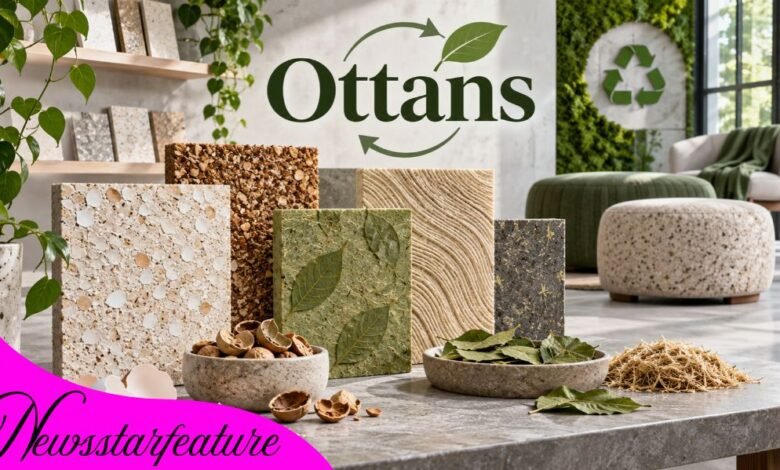
Sustainability has become an important consideration in modern architecture, furniture manufacturing, and interior design. As businesses and consumers seek alternatives to conventional materials, innovative waste-management approaches are gaining attention. One keyword in this discussion is Ottans, often associated with Ottan, a company developing materials from recovered food and agricultural waste.
Rather than letting valuable organic resources go to waste, this approach explores how discarded ingredients can become attractive, functional interior surfaces. It combines environmental responsibility with creativity, material science, and practical manufacturing.
However, understanding the terminology, benefits, and limitations is essential before choosing these materials for residential or commercial projects.
What Is Ottans?
Ottans is an ambiguous search term rather than an officially recognized category of construction materials. In sustainable design discussions, it is associated with Ottan, a documented material innovation company that develops bio-composite products from recovered organic resources.
These materials incorporate selected waste ingredients that can be transformed into decorative and functional surfaces.
The underlying concept focuses on reducing dependence on newly extracted resources while finding productive applications for existing waste.
Interestingly, the word also has a separate meaning in Swedish, where it is a grammatical form of a noun referring to dawn or early morning. This article focuses primarily on its sustainable design interpretation.
The Origin and Development of Ottan Materials
Ottan Studio emerged from efforts to address environmental challenges associated with conventional manufacturing and organic waste.
The company has attracted attention in the sustainable design industry for exploring alternative raw materials and developing products suited to modern interiors.
Its approach reflects a broader movement towards the circular economy, which encourages businesses to keep resources in productive use for longer.
Instead of relying exclusively on newly manufactured materials, circular design considers how discarded resources can contribute to new products.
Materials Used in Sustainable Bio-Composites
Ottan’s documented material collections incorporate ingredients such as eggshells, pistachio shells, hazelnut shells, leaves, and other agricultural or food-processing by-products.
These ingredients can contribute different colors, patterns, and textures to finished surfaces.
The Importance of Material Selection
Selecting appropriate organic ingredients is essential because different waste resources have different physical characteristics.
Manufacturers must consider strength, moisture sensitivity, consistency, and suitability for the intended application before developing commercial products.
How Ottans Materials Are Produced
Producing waste-based composite materials involves more than simply collecting and compressing discarded resources.
Although individual manufacturing techniques vary, bio-composite production generally begins with selecting suitable raw ingredients.
These materials may be cleaned, dried, and ground before being combined with an appropriate binding system.
The mixture can then be formed into panels or other shapes and finished according to its intended purpose.
Manufacturers must evaluate the resulting material’s physical properties to determine whether it meets relevant performance requirements.
The finished product may retain visible characteristics of the original organic ingredients, giving it a distinctive appearance.
Main Applications of Ottans in Modern Design
Waste-based composites offer several interesting possibilities for architects, furniture manufacturers and interior designers.
Interior Wall Panels
Decorative wall panels can introduce natural textures and visual character into residential and commercial environments.
Their distinctive appearance makes them worth considering for feature walls, reception areas and selected decorative installations.
Furniture Manufacturing
Recovered organic materials can be incorporated into selected furniture surfaces, including tables, cabinet fronts and decorative furniture components.
Each product’s suitability depends on its strength, surface finish, and intended use.
Commercial Interior Design
Retail stores, offices, restaurants and hospitality businesses may consider alternative materials when developing interior environments.
These materials can communicate a business’s commitment to responsible resource management while providing a distinctive visual identity.
Decorative Accessories
Waste-based composites also create opportunities for designing smaller decorative objects and customized interior accessories.
Their natural variation can give individual products a distinctive appearance that differs from conventional mass-produced finishes.
Key Benefits of Ottans Materials
Better Resource Utilization
One of the main advantages of this manufacturing approach is its ability to recover value from selected organic waste.
Materials that might otherwise be discarded can become useful ingredients in commercial products.
Distinctive Visual Appeal
Natural ingredients contribute different textures, patterns, and colors. This gives designers opportunities to create interiors with an individual character.
Reduced Dependence on Virgin Resources
Incorporating recovered ingredients can reduce the amount of newly extracted raw materials needed for certain products.
However, the overall environmental benefit depends on the complete manufacturing process.
Encouraging Sustainable Innovation
Developing alternative composites encourages manufacturers to reconsider traditional production methods and explore more responsible material choices.
Ottans and the Circular Economy
The circular economy aims to reduce unnecessary waste by extending the useful life of products and resources.
Ottan’s material development illustrates how selected food and agricultural by-products can re-enter manufacturing supply chains.
This approach challenges the traditional assumption that waste has little commercial value.
However, using recovered ingredients does not automatically make a product fully circular. Repairability, recyclability, durability, binding materials, and responsible disposal must also be considered.
A genuinely responsible material strategy examines the entire product lifecycle rather than focusing exclusively on its original ingredients.
Challenges and Limitations of Ottans
Despite their potential advantages, waste-based composites also present practical challenges.
Natural ingredients can vary between production batches, which can affect color and texture. Manufacturing consistency and reliable material sourcing are therefore important considerations.
Customers should also investigate moisture resistance, fire performance, maintenance requirements, and installation instructions.
Some materials may suit decorative walls but not demanding environments with frequent water exposure or heavy loads.
Environmental claims should also be supported by reliable product information, not assumptions based on natural ingredients alone.
What to Consider Before Choosing Ottans Materials
Before purchasing an alternative surface, determine whether it meets the requirements of your particular project.
Request technical specifications, physical samples, and appropriate safety documentation. Compare installation costs, expected durability and maintenance requirements with conventional alternatives.
For commercial projects in the UK, relevant building regulations and fire safety requirements should also be considered.
These checks can help customers make informed decisions based on practical performance rather than appearance alone.
The Future of Ottans and Sustainable Design
Growing interest in responsible manufacturing creates opportunities for innovative material developers.
Further research into waste-based composites could improve durability, manufacturing efficiency, and the range of available applications.
However, widespread adoption will depend on competitive pricing, reliable supply chains, verified environmental performance, and compliance with applicable standards.
The future of sustainable interior design will require materials that balance environmental considerations with functionality, affordability and attractive aesthetics.
Conclusion
Ottans introduces readers to an interesting area of sustainable material innovation through its documented work in recovering organic waste.
By exploring alternative uses for discarded resources, this approach demonstrates how creative design and responsible manufacturing can work together.
Although waste-based composites offer promising opportunities, their environmental benefits and practical suitability must be assessed individually.
As sustainable design continues to develop, informed material selection will remain essential for creating attractive, functional, and environmentally responsible interiors.
(FAQs)
1. What is Ottans?
Ottans is a search term associated with Ottan, a company developing bio-composite materials from recovered organic waste.
2. What are Ottans materials made from?
Documented ingredients include eggshells, nutshells, leaves, agricultural by-products, and other selected organic resources.
3. Are Ottan’s materials environmentally friendly?
They incorporate recovered resources, but their overall environmental impact depends on production methods, durability, transportation, and disposal.
4. Can Ottans materials be used in furniture?
Yes. Selected Ottan products are designed for furniture surfaces, interior panels, and decorative applications.
5. Is Ottans the official company name?
No. The documented company uses the name Ottan, without the final letter “s”.
6. Are Ottans materials waterproof?
Water resistance varies between products. Some surfaces require additional protective coatings for wet environments.
7. Why are Ottans’ materials important?
They demonstrate how discarded organic resources can gain renewed commercial value through innovative material development and circular design.