CIDNET: The Complete Guide to Secure Inmate Communication, Calls, and Video Visits
Discover how CIDNET helps incarcerated individuals stay connected with family and friends through modern digital communication technology.

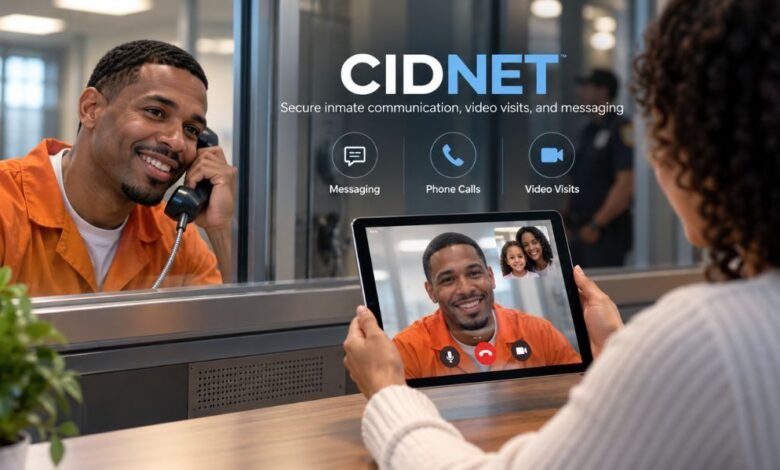
Staying connected with loved ones can be challenging when someone is incarcerated. Traditional communication methods often involve limited calling hours, complicated arrangements, and expensive services. CIDNET provides a modern solution by bringing several communication options together through an internet-based platform designed for correctional facilities.
Depending on the services available at the facility, families can use the service to exchange messages, participate in video visits, and receive phone calls from incarcerated relatives.
The platform also helps correctional institutions manage communications while maintaining security and operational oversight.
This article explains what CIDNET is, how it works, its main features, account registration, costs, security measures, and common questions families should understand before using the service.
What Is CIDNET?
CIDNET is a digital communication platform for correctional facilities that lets approved individuals stay in contact with incarcerated people through secure services.
Unlike traditional jail telephone systems, the platform uses internet-based applications to support voice calls, video visitation, and electronic messages.
The technology is designed for both correctional administrators and the public. Facility staff can manage communication permissions and review activity, while approved family members can access available services through personal accounts.
CIDNET is associated with Encartele, a technology provider serving the corrections industry. Its broader platform also includes tools for facility management, educational access, and digital services.
How Does CIDNET Work?
CIDNET connects correctional facilities, incarcerated individuals, and approved contacts through a controlled digital environment.
Users create accounts, connect to the appropriate facility, and purchase data as needed. Once their account is approved, they can access whichever communication services the facility permits.
Creating a CIDNET Account
Getting started generally involves a straightforward registration process.
- Open the official CIDNET customer platform.
- Choose the account registration option.
- Enter your name, email address, and requested information.
- Verify your email and establish your login credentials.
- Complete any required identity verification.
- Locate the correctional facility and add your incarcerated contact.
- Purchase data if necessary to use communication features.
Account Verification and Approval
Why Is Identity Verification Necessary?
Correctional facilities must know who is communicating with people in custody. Users may therefore need to provide identification details or verify their telephone numbers.
Approval requirements vary by facility. Completing registration does not automatically guarantee access to every communication feature.
Main Features of CIDNET
1. Inmate Phone Calls
CIDNET phone services allow incarcerated individuals to initiate calls to approved contacts.
Family members can receive calls on their registered telephone numbers, subject to facility rules and account requirements.
Outside contacts cannot call an incarcerated person directly through the platform. The individual inside the facility must initiate the conversation.
2. Video Visitation
CIDNET video visitation allows family members to communicate face-to-face without always traveling to a correctional facility.
Depending on facility policies, users may schedule remote video visits from compatible devices or participate through approved on-site equipment.
Video visitation can be especially useful for relatives living far away, although scheduling options, available hours, and session rules differ between institutions.
3. Digital Messaging
The platform supports electronic messaging between incarcerated individuals and approved contacts.
Users can exchange written messages through the available mail application. Some facilities also permit photographs, subject to content restrictions and approval.
Messages are not equivalent to private personal emails. Correctional staff may review communications and reject material that violates institutional policies.
4. Additional Digital Services
CIDNET extends beyond personal communication. Its broader correctional technology platform can support educational materials, electronic forms, facility announcements, and other operational applications.
Availability depends on the correctional institution and the services it chooses.
Understanding CIDNET Costs and Data Usage
CIDNET uses a data-based communication approach rather than relying solely on conventional telephone billing.
Users may need to purchase data to participate in calls, send messages, or use video visitation.
The total expense depends on the applicable service rates and the amount of communication used.
Before purchasing, users should examine the displayed charges, understand how their balance will be consumed, and check any relevant account conditions.
Not every facility offers the same pricing or services, so families should avoid assuming charges at one institution apply everywhere.
Is CIDNET Safe and Secure?
Security is central to communication technology used inside correctional institutions.
CIDNET gives administrators tools for monitoring communications, controlling access, and managing activity.
Ordinary messages, calls, and video sessions may be recorded or monitored according to facility rules. The platform also incorporates tools intended to help staff identify prohibited communications and potential security concerns.
For families, this means conversations should follow institutional policies. Users should avoid sharing sensitive information unnecessarily and should protect their account passwords.
Communication involving legal counsel may be subject to separate rules and protections, so users should confirm the approved procedures for confidential legal contact.
Common CIDNET Problems and Solutions
Account Login Problems
If you cannot access your account, check your email address and password. Use the available password recovery process instead of repeatedly entering incorrect credentials.
Unable to Find an Incarcerated Contact
Confirm the person’s facility and identifying information. A recent transfer, account restriction, or incorrect details may prevent a successful connection.
Video Visit Not Working
Check your internet connection, browser permissions, camera, and microphone. Also confirm that your appointment remains approved and that the facility supports the selected visitation method.
Messages Not Appearing
Messages may require correctional staff approval. Delivery delays can occur because of institutional screening, technical issues, or restrictions.
When troubleshooting does not resolve the problem, contact official CIDNET support.
Why Correctional Facilities Use CIDNET
Correctional institutions require communication systems that balance personal connection with security and administrative control.
CIDNET combines communication applications with centralized management tools, helping staff supervise approved interactions and administer facility services.
Digital messaging and video visits can also reduce dependence on some traditional communication processes.
For incarcerated individuals, access to loved ones can provide an important sense of connection during confinement.
However, the practical benefits depend on reliable technology, affordable usage, appropriate access policies, and consistent facility support.
Frequently Asked Questions About CIDNET
What is CIDNET used for?
CIDNET provides digital communication services connecting incarcerated individuals with approved family members and friends. Features include phone calls, video visits, electronic messages, and photographs.
Can I use CIDNET on my mobile phone?
Many customer-facing functions are available on compatible mobile devices. Specific capabilities depend on the available interface, device compatibility, and facility requirements.
Is CIDNET free to use?
Creating an account and using paid communication services are different activities. Voice calls, messaging, and video visits may require purchased data. Always review applicable charges.
Can I call an inmate directly through CIDNET?
No. Under CIDNET’s standard calling arrangement, the incarcerated individual initiates the phone call. Outside contacts can receive and accept eligible calls.
Are CIDNET messages private?
Ordinary communications are subject to correctional monitoring and review. Users should not assume messages, calls, or video visits are confidential.
Does every correctional facility support CIDNET?
No. CIDNET is available only at participating institutions, and individual facilities determine which communication services they provide.
Conclusion
CIDNET offers a modern approach to inmate communication, combining telephone calls, video visitation, and digital messaging within a correctional technology platform.
Its services can make maintaining family connections more convenient while allowing institutions to enforce communication rules and security requirements.
New users should understand registration, account approval, data charges, and facility-specific restrictions.
By checking available services and following the correct procedures, families can make better use of CIDNET and maintain meaningful contact with incarcerated loved ones.