Wondrand: Essential Guide to Wound Edge Healing, Warning Signs, and Proper Care
Understanding the meaning of Wondrand, its importance in wound assessment, and how healthy wound edges support skin recovery.

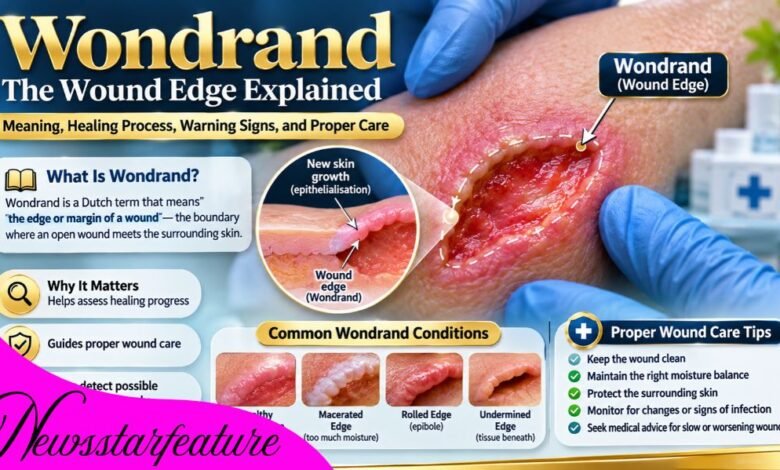
Wondrand is a Dutch medical term for the edge or margin of a wound. Although the word may be unfamiliar to English-speaking readers, it describes an important part of wound healing and clinical assessment. Healthcare professionals examine wound edges to understand whether damaged skin is recovering normally or developing complications.
The condition of a wound’s border can reveal changes involving inflammation, moisture, tissue growth, and delayed healing. Understanding Wondrand helps patients, nursing students, and healthcare professionals recognize why examining the entire wound, including its edges, is essential.
This article explains what Wondrand means, how wound edges heal, common warning signs, and practical wound-care principles. It also answers frequently asked questions about wound assessment and recovery.
What Is Wondrand?
Wondrand comes from the Dutch words wond, meaning wound, and rand, meaning edge or border. Together, they describe the boundary where an open wound meets the surrounding skin.
In English medical terminology, this area is commonly called the wound edge or wound margin.
Wondrand is not a disease, medication, or treatment. It is an anatomical description used to examine injuries and monitor tissue repair.
The term also appears in Dutch healthcare information standards, where WondRand identifies observations about the condition of a wound’s edges.
Why Is the Wound Edge Important?
The wound edge plays a significant role in skin recovery because new surface cells normally migrate across the injured area as healing progresses.
Healthcare professionals examine this region to see whether the wound is shrinking and whether surrounding tissue remains healthy.
Changes in the wound margin can sometimes indicate excessive moisture, irritation, underlying tissue damage, or delayed healing.
However, wound-edge appearance alone cannot establish a diagnosis.
How Wound Edges Change During Wound Healing
Wound healing involves several overlapping biological processes. The wound edge can change as damaged tissue repairs itself.
Inflammatory Stage
Following an injury, the body activates processes that help stop bleeding and protect damaged tissue.
Mild inflammation may occur during early healing, producing temporary redness, warmth, and swelling.
However, increasing redness, pain, or swelling may indicate a complication that requires medical assessment.
Tissue Formation Stage
During this stage, the body develops new tissue to help repair the injury.
New blood vessels and connective tissue support healing, while surface skin cells begin moving across the wound.
The Role of Epithelialization
Epithelialization is the process through which new epithelial cells cover a wound.
The wound margin is especially important because these cells commonly migrate inward from the edges.
Successful epithelialisation helps restore the skin’s protective barrier.
Remodelling Stage
After the wound closes, newly formed tissue gradually reorganizes and strengthens.
This process may continue long after the surface appears healed.
The appearance and strength of the resulting scar depend on several factors, including wound depth, location, and individual health.
Common Wondrand Conditions and Warning Signs
Wound edges do not always heal smoothly. Healthcare professionals assess their appearance, texture, moisture, and attachment to the underlying tissue.
1. Healthy Healing Edges
A healing wound may show a gradually advancing border of new skin.
The wound should generally become smaller as recovery progresses, although healing rates vary.
Improvement is assessed over time rather than through color alone.
2. Macerated Wound Edges
Maceration occurs when skin remains exposed to excessive moisture.
Affected tissue may appear unusually soft, pale, or wrinkled.
Excess wound fluid or unsuitable dressings can contribute to this problem.
Managing moisture appropriately is essential because prolonged maceration may damage surrounding skin.
3. Rolled Wound Edges
Rolled wound edges occur when the wound margin becomes thickened or curls inward.
This condition, sometimes called epibole, may interfere with normal epithelial migration.
Rolled edges are particularly relevant when assessing wounds that remain open for prolonged periods.
4. Undermined Wound Edges
Undermining develops when tissue beneath the wound margin is damaged, creating a space under the surrounding skin.
The visible wound opening may therefore appear smaller than the tissue area affected below the surface.
Professional assessment is important because undermining can complicate wound management.
5. Irritated or Inflamed Edges
Wound margins may become irritated because of friction, moisture, adhesive products, or other local factors.
Persistent irritation should be examined, especially when accompanied by increasing pain, discharge, warmth, or spreading redness.
How Healthcare Professionals Assess Wounds
Wound-edge assessment forms part of a broader clinical examination.
Visual Examination
Clinicians inspect the wound margin for changes in color, shape, moisture, tissue integrity, and new skin formation.
They also assess surrounding skin, wound depth, drainage, and possible infection.
Measuring Healing Progress
Repeated wound measurements can help healthcare professionals understand whether an injury is improving.
Measurements may include wound length, width, depth, and undermining.
Consistent documentation makes changes easier to recognize during follow-up appointments.
The TIME Framework
The TIME framework provides a structured approach to wound-bed preparation.
Its four components are:
T — Tissue: Assessing the condition of wound tissue.
I — Infection or Inflammation: Identifying factors that may delay healing.
M — Moisture Balance: Managing excessive moisture or inappropriate dryness.
E — Edge: Examining whether wound edges are advancing normally.
This approach encourages comprehensive assessment rather than focusing on a single visible feature.
Practical Wound Care and Prevention
Proper wound care depends on the injury’s severity, location, and medical circumstances.
Cleaning Minor Wounds
For a small, uncomplicated cut, gently clean it with clean running water to remove debris.
Hands should be washed before handling the injury.
A suitable sterile dressing can protect the wound while it heals.
Maintaining Suitable Moisture
Healthy wound healing requires an appropriate moisture balance.
Excess moisture can soften surrounding skin, while unsuitable dryness may interfere with tissue repair.
Different wounds require different dressings, so persistent or complicated injuries should receive professional advice.
Protecting Surrounding Skin
Reducing unnecessary friction, pressure, and repeated injury can help protect vulnerable tissue.
People with diabetes, circulation problems, or wounds that fail to improve should seek medical assessment rather than relying entirely on home treatment.
When Should You Seek Medical Attention?
Some wounds require prompt medical evaluation.
Warning signs include worsening pain, spreading redness, unusual swelling, pus, fever, or a wound that deepens or fails to improve.
Deep wounds, serious bites, injuries containing embedded objects, and bleeding that cannot be controlled require urgent attention.
Early medical assessment can help identify complications and determine appropriate treatment.
Frequently Asked Questions About Wondrand
What does Wondrand mean in English?
Wondrand is a Dutch term meaning wound edge or wound margin. It describes the boundary between an open wound and the surrounding skin.
Is Wondrand a medical condition?
No. Wondrand is an anatomical and clinical term, not a disease or diagnosis.
Why do wound edges become white?
White, softened skin may indicate maceration caused by excess moisture. However, appearance alone cannot confirm the cause.
Can damaged wound edges delay healing?
Yes. Conditions such as maceration, rolled edges, or undermining may interfere with normal wound closure and require professional management.
How can I tell whether a wound is healing?
A healing wound generally shows progressive tissue repair and a reduction in its open area. Increasing pain, discharge, swelling, or worsening appearance should prompt medical advice.
Is Wondrand used in nursing documentation?
Yes. WondRand appears in Dutch healthcare information standards and describes wound-edge findings.
Conclusion
Wondrand is a meaningful term in wound assessment because the condition of a wound’s edge provides important information about tissue repair.
Understanding epithelialization, moisture balance, irritation, undermining, and rolled edges can help explain why some wounds heal normally while others require additional care.
Although wound-edge appearance offers useful clues, accurate assessment requires consideration of the entire injury and the patient’s overall health. Proper wound protection, careful monitoring, and timely medical attention remain essential for safe recovery.