For decades, the ice cream in a commercial was mashed potato.
It had to be. Real ice cream collapses under studio lighting in under a minute, so food stylists built it from potato, shortening and icing sugar instead. Motor oil stood in for syrup because it pours slowly and does not soak in. Glue replaced milk in cereal shots so the flakes stayed afloat. Cardboard propped up burger layers, and a brush of shoe polish gave meat a grill-seared look.
All of that is documented industry history, and much of it is now restricted. The general principle in most advertising codes is that the product being advertised has to be the actual product, whatever is done to everything else in the frame.
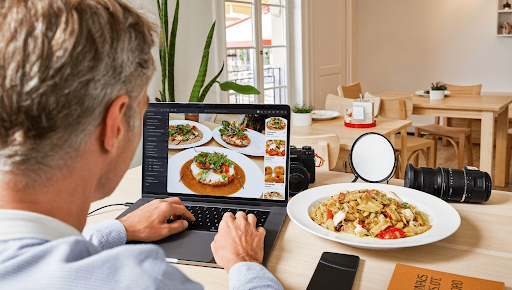
That distinction decides what is acceptable at every level, from a national campaign to a restaurant’s menu. An AI Image Editor fixes what the room did, and Higgsfield carries that alongside the rest of the tools, while the food itself stays what it was.
Where Exactly Is the Line?
Between the advertised product and everything around it.
- The advertised product must be the genuine item
- Supporting items may sometimes be substituted, within limits
- Nothing may materially mislead about what the buyer receives
- Portion size must reflect what is actually served
- An AI Image Editor adjustment must not change the product itself
The cereal example illustrates it. In an advertisement for cereal, substituting the milk is a question about a supporting element. In an advertisement for milk, substituting the milk is the problem itself.
Restaurant and menu photography sits at the strict end, because the image is a direct representation of what arrives on a plate. A customer comparing the photograph to the dish is making exactly the comparison the rules exist to protect.
Photograph the dish as it leaves the kitchen. That is both the safe position and considerably easier than styling.
What Must Never Be Changed?
Anything a customer would notice at the table.
- Never show a larger portion than is actually served
- Never add ingredients the dish does not contain
- Never remove something that always comes with it
- Never use another establishment’s photograph
- Never let an AI Image Editor alter the food itself
The portion size misrepresentation is the most common and the most resented. Somebody receiving visibly less than the picture showed feels misled, says so in a review, and is correct.
Adding a garnish that does not come with the dish is the subtler version. It changes how appetising the plate looks and it is not what the kitchen sends out.
Using a supplier’s or another restaurant’s image is straightforward copyright infringement alongside the misrepresentation.
What Actually Makes Food Photograph Well?
Light from the side or behind, never from the front.
- Side light reveals texture, which no AI Image Editor can add afterwards
- Backlight suits anything translucent, including drinks and sauces
- Never use direct flash, which flattens everything
- Avoid overhead restaurant lighting, which is warm and unflattering
- A window does more than any equipment
Front lighting kills food photography. It removes every shadow, and shadows are what communicate texture, moisture and depth. A dish lit from the front looks like a diagram of a dish.
Backlighting is the technique that transforms drinks, soups and anything with translucency. Light passing through the subject gives it life that no amount of front illumination produces.
Move the plate to the window. That single action improves more food photographs than any other.
Which Angle Suits Which Dish?
Three angles cover almost everything.
- Forty-five degrees for most plated food, which is how you see it
- Overhead for flat, colorful or multi-item spreads
- Straight on for anything layered, including burgers and cakes
- Never from standing height, which is nobody’s view
- Match the angle across a set in an AI Image Editor workflow
The standing-height shot is the default mistake, taken by somebody holding a phone over a table without thinking. It compresses the food, shows the whole table and flatters nothing.
Layered food needs a straight-on angle because the layers are the point. A burger shot from above is a bun.
Pick the angle for the dish rather than using one for everything, and stay consistent within a category so a menu reads as a set.
How Quickly Does Food Fail?
Faster than most people prepare.
- Have the shot set up before the food arrives
- Shoot the hero dish first, within the first minute
- Expect steam to vanish almost immediately
- Watch for sauces separating and greens wilting
- Never try to revive a dish in an AI Image Editor
Hot food looks hot for about sixty seconds. After that the surface dulls, the steam goes, and the colors shift toward grey.
Set up the frame with an empty plate, check the light and the composition, then bring the real dish in and shoot immediately.
Real steam rarely photographs. Professionals light it from behind against a dark background, and even then it is unreliable. Adding it afterward crosses into altering the product.
What Can an AI Image Editor Legitimately Fix?
The conditions, not the contents.
- White balance, corrected from warm restaurant lighting
- Exposure, where the metering misread a dark table
- Consistency, across a set shot at different times
- Background cleanup, including crumbs and table marks
- Straightening and cropping, within reason
Higgsfield keeps this beside the other tools as part of an AI creative suite, which matters for a publication processing a set of images rather than one at a time.
Restaurant lighting is the recurring problem. Warm tungsten casts an orange tint that makes everything look like it was photographed in a cave, and correcting back to neutral is restoration rather than alteration.
The crumb on the table is a fair removal. The crumb on the plate is part of the dish as served.
Does This Change for Recipe Content?
It does, because the photograph is a claim about an outcome.
- Show what the recipe actually produces, at home
- Never photograph a professional version of a home recipe
- Include process shots, which are more useful than the hero
- Show the real yield, not an idealized portion
- Never present an AI Image Editor result as a cooked outcome
The home-versus-professional gap is where recipe photography misleads most often. A dish made by a food stylist with professional equipment looks nothing like what the recipe produces in a domestic kitchen, and readers conclude they did something wrong.
Process shots matter more than the finished photograph. Showing what the mixture should look like at a particular stage answers questions no amount of hero imagery does.
Regional dishes benefit particularly from honest process imagery, since readers meeting a preparation for the first time, as with something like a traditional Peruvian stew, have no reference point for what a stage should look like.
What About Restaurant and Menu Photography?
The strictest case, with one practical complication.
- Photograph the actual menu item, prepared normally
- Reshoot when the dish changes, including portion changes
- Date the photographs, so stale ones are visible
- Get the kitchen’s agreement on which plating is representative
- Keep an AI Image Editor correction limited to lighting
The complication is that kitchens plate slightly differently on different days, which is normal. The photograph should show a typical plate rather than the best one anybody ever sent out.
Ask the chef which version is representative. They will usually tell you honestly, because they are the ones handling the complaint when a customer compares.
Reshooting after a recipe change is the step that gets skipped. A menu photograph showing a dish that no longer exists in that form is misleading regardless of when it was taken.
Does Drink Photography Need Anything Different?
It does, and backlighting matters more there than anywhere else.
Anything translucent lives on light passing through it. A cocktail, a beer, a tea or a soup lit from the front is a flat coloured circle, and the same drink lit from behind glows.
What to handle differently:
- Light from behind, with something soft to diffuse it
- Watch condensation, which reads as cold and vanishes fast
- Shoot at glass height, not down into the drink
- Mind the background, which is visible through the liquid
- Correct the colour in an AI Image Editor, never the level
The condensation point is a timing problem rather than a styling one. A cold glass beads for about two minutes in a warm room, and the beads are what communicate temperature.
Shooting down into a glass shows a disc of liquid and nothing else. At glass height you get the colour, the clarity, the layers and the head, which is the entire reason anybody photographs a drink.
Whatever sits behind a transparent glass becomes part of the picture, distorted through the liquid. A busy background turns into visual noise inside the glass itself.
Never top up the level afterward to make a measure look more generous. That is the drinks equivalent of enlarging a portion.
Are There Disclosure Obligations?
Where a commercial relationship exists, yes.
- Disclose hosted meals and comped dishes, whatever the AI Image Editor did
- Disclose any payment, including product
- Disclose affiliate arrangements in the same place
- Say when images were supplied by the restaurant
- State clearly if an image is not your own photograph
The supplied-image case is the one publications handle inconsistently. A restaurant’s own photograph used in an article is a promotional image, and readers reasonably assume otherwise unless told.
Disclose in the body of the piece, not only in a tag at the foot of the page. Readers skim, and a disclosure that nobody actually encounters has disclosed precisely nothing.
How Should the Images Be Managed?
By dish and date, with the originals kept.
- Name by dish and date before the AI Image Editor stage, not by camera default
- Record which establishment and which visit, outside the AI Image Editor project
- Keep the originals unedited and outside Higgsfield
- Store the Higgsfield project holding the correction settings
- Review annually, retiring anything that has changed
The dating matters for food more than most subjects, because menus change constantly. An image three years old may show a dish that has been reformulated twice.
Keeping the correction settings means a later addition to a set matches the earlier photographs, which is what makes a menu or an article look coherent.
What Would One Shoot Involve?
An hour, mostly setting up before anything is cooked.
- Find the light and set the frame with an empty plate
- Decide the angle for each dish type
- Have the dish brought out only when you are ready
- Shoot immediately, hero shot first
- Capture process and detail alongside the plate, before Higgsfield
- Correct lighting only in an AI Image Editor
- Save the Higgsfield settings for the rest of the set
Then compare the photograph against the dish in front of you before anybody edits anything.
If the picture promises more than the plate delivers, the picture is wrong.
Conclusion
Was food styling really that extreme?
Yes. Mashed potato for ice cream, glue for milk and motor oil for syrup are all documented practices, and many are now restricted.
Where is the line in advertising?
The advertised product must be genuine. Substituting supporting items is a different question from substituting the thing being sold.
Why does food look bad in restaurant photos?
Warm overhead lighting and front-on flash. Move the plate toward a window and light it from the side.
Can an AI Image Editor fix a dish that looks dull?
It can correct white balance and exposure. Changing the food itself is altering the product.
Does a menu photo need updating?
Yes, whenever the dish or the portion changes. An image showing something no longer served is misleading.
Conclusion
Food photography has a long history of elaborate substitution, and the rules that followed drew a clear line: the thing being sold has to be the thing in the picture.
An AI Image Editor corrects what the room did to the light, which is most of what goes wrong, and Higgsfield keeps those settings consistent across a set.
Shoot by a window, light from the side, work fast, and photograph the plate the kitchen actually sends. The customer comparing the two is the only critic that matters.