SP I C: Powerful Guide to the German Light Tank, History, Features and Winning Strategies
Discover the fascinating history, battlefield strengths, technical characteristics, and effective gameplay tactics of the SP I C in World of Tanks.

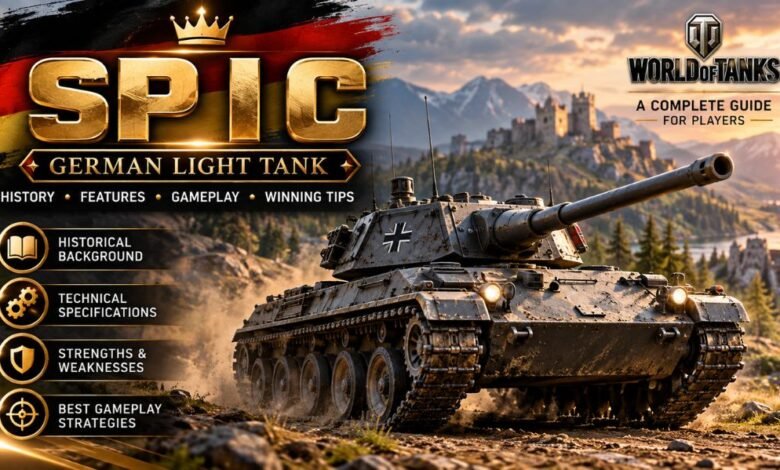
The SP I C, officially known as the Spähpanzer SP I C, is a German light tank featured in the popular multiplayer game World of Tanks. Known for its compact design, concealment, and versatile battlefield role, this vehicle offers an engaging experience for players who enjoy reconnaissance and tactical combat.
Unlike heavily armored vehicles, this German reconnaissance tank relies on careful positioning, mobility, and intelligent decision-making. Its unusual mix of scouting potential and a 90 mm gun makes it especially appealing to players looking for a different approach to tank warfare.
Understanding its historical background, technical characteristics, and gameplay mechanics can help players recognize its advantages and avoid common mistakes.
This article explores the SP I C, a German Tier VII light tank featured in World of Tanks. It covers the vehicle’s historical background, development, technical specifications, firepower, mobility, strengths, and weaknesses. Readers will also find practical gameplay strategies, equipment recommendations, and tips to improve reconnaissance, positioning, and overall battlefield performance.
What Is the SP I C?
The SP I C is a Tier VII German light tank in World of Tanks. Its full name, Spähpanzer SP I C, reflects its origins as a German reconnaissance vehicle project.
In the game, it sits in the German light tank tech tree between the VK 28.01 and the HWK 12.
Its primary responsibilities include detecting enemy vehicles, supporting teammates, and exploiting opportunities created by battlefield movement.
The vehicle is classified as a versatile light tank, meaning it can perform reconnaissance duties while contributing fire support when conditions permit.
History and Development of the SP I C
Origins of the German Reconnaissance Project
The vehicle’s development dates to the Cold War.
Between 1956 and 1962, Hotchkiss and Klöckner-Humboldt-Deutz worked on a reconnaissance tank destroyer intended to improve the anti-tank capabilities of reconnaissance battalions.
The proposed vehicle was designed around the idea of combining a relatively compact platform with a powerful weapon.
A 90 mm anti-tank gun was planned, potentially allowing reconnaissance forces to engage enemy armor more effectively.
Why Was the Project Canceled?
Despite its intended capabilities, the development program was eventually abandoned.
The historical reference published by World of Tanks confirms that the project was rejected. However, the exact number of prototypes constructed remains unknown.
This distinction matters because the vehicle’s in-game characteristics should not be mistaken for fully verified specifications of an operational military tank.
SP I C Technical Specifications
The vehicle combines several characteristics that define its battlefield performance.
SpecificationDetails
Vehicle name Spähpanzer SP I C
Country Germany
Classification Light tank
Game tier VII
Primary role Versatile light tank
Main armament 90 mm gun options
Top speed Approximately 58 km/h
Purchase cost 1,360,000 credits
Research requirement 53,200 experience
Technology tree successor HWK 12
Specifications refer to World of Tanks PC and may change through game updates.
Firepower and Weapon Performance
The tank’s 90 mm armament lets it deal meaningful damage against vulnerable opponents.
Its effectiveness depends on ammunition choice, accuracy, positioning, and the target’s armor.
Players should prioritize exposed sides, lightly armored vehicles, and opportunities to fire without attracting unnecessary attention.
Armor and Survivability
The German light tank has extremely thin armor compared with most medium and heavy tanks.
Why Protection Matters
Its defensive strength comes primarily from avoiding enemy fire rather than absorbing damage.
Exposing the vehicle to multiple opponents can destroy it quickly. Concealment, terrain, and escape routes are therefore essential to survival.
How to Play the SP I C Effectively
Successful gameplay requires patience, observation and an understanding of reconnaissance mechanics.
Early-Game Scouting
Early on, players should focus on gathering information about enemy positions.
Use bushes, terrain features, and protected observation points to spot enemy vehicles without confrontation.
Avoid charging into unknown areas simply because the tank is relatively mobile.
Mid-Game Support
As the battle develops, the vehicle can shift between reconnaissance and supporting fire.
Players should identify distracted opponents, maintain distance from heavily armored enemies, and relocate when their position becomes dangerous.
The ability to change flanks helps the tank remain useful as the battlefield evolves.
Late-Game Opportunities
During the final stages, surviving light tanks can become particularly valuable.
With fewer opponents remaining, reconnaissance becomes easier, and isolated enemies may offer opportunities for controlled attacks.
Preserving hit points earlier in the match increases the chances of contributing during these decisive moments.
Best Equipment and Crew Priorities
Choosing suitable equipment can improve reconnaissance and combat performance.
For a scouting-focused setup, players may consider Coated Optics, Low Noise Exhaust System, and other compatible equipment that improves observation or concealment.
Equipment availability and benefits depend on the game’s current rules.
Crew development should support camouflage, awareness, vehicle handling, and overall survivability.
A well-prepared crew can make a noticeable difference when operating near enemy spotting positions.
Strengths and Weaknesses
Main Strengths
The vehicle offers useful advantages for experienced light tank players:
- Compact dimensions that support concealed positioning.
- Good opportunities for reconnaissance and battlefield observation.
- Mobility suitable for repositioning between flanks.
- A 90 mm gun that provides supporting firepower.
- Flexible gameplay that combines scouting with tactical attacks.
Main Weaknesses
Its limitations are equally significant:
- Very thin armor and limited protection.
- High vulnerability when detected in exposed positions.
- Dependence on careful positioning and support.
- Difficulty surviving confrontations with stronger vehicles.
Recognizing these weaknesses is essential for consistent performance.
SP I C in World of Tanks Blitz
The vehicle also appears in World of Tanks Blitz, where it is represented as a German Tier VII light tank.
However, the two games use different balancing systems, equipment arrangements, and vehicle characteristics.
Players should avoid assuming that statistics or effective strategies are identical across both versions.
Conclusion
The SP I C remains an interesting example of how an abandoned Cold War reconnaissance concept can become a recognizable vehicle in a modern tank game.
Its historical background, compact construction and distinctive gameplay role give it appeal beyond its technical specifications.
In World of Tanks, success depends less on aggressive frontal attacks and more on concealment, positioning, timing, and teamwork.
For players willing to develop their scouting skills, the German light tank offers a rewarding tactical challenge.
Frequently Asked Questions (FAQs)
1. What does SP I C mean in World of Tanks?
It refers to the Spähpanzer SP I C, a German Tier VII light tank inspired by a Cold War reconnaissance vehicle project.
2. Is the SP I C a real historical tank?
It was based on a genuine German development project from 1956 to 1962. The project was canceled, and the number of prototypes built is not established.
3. What is the SP I C’s main advantage?
Its compact profile, concealment potential, and flexible reconnaissance role let players gather information while supporting their team.
4. What is the biggest weakness of the SP I C?
Its extremely thin armor makes it vulnerable to enemy fire, especially inespecially in close-range engagements and during exposed movement.
5. Is the SP I C suitable for beginners?
Beginners can use it, but effective play requires understanding spotting mechanics, camouflage, map positioning, and when to retreat.