Uecht: Discover Switzerland’s Remarkable Hilltop Destination for Astronomy, Nature, and Innovation
Explore Uecht's fascinating history, its famous observatory, breathtaking Swiss countryside, and growing importance as a destination for scientific discovery.

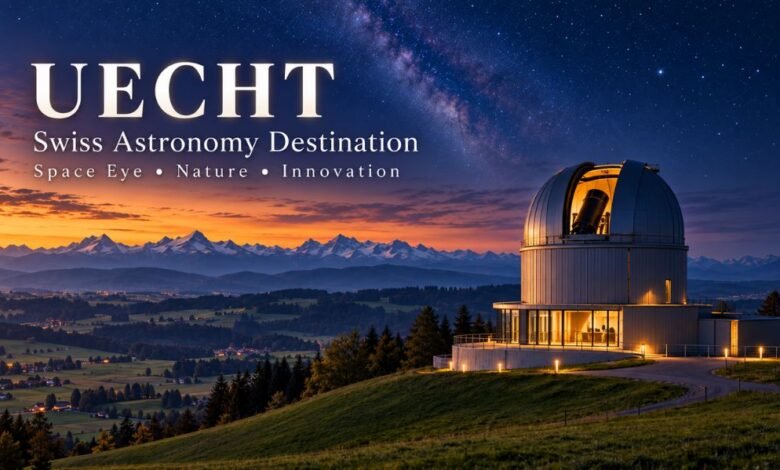
Uecht is a distinctive hilltop location near Niedermuhlern in the canton of Bern, Switzerland. Surrounded by peaceful countryside and located within the Gantrisch Regional Nature Park, it is best known for its connection to astronomy. Its elevated position, relatively dark skies, and longstanding scientific heritage make it an interesting destination for visitors who appreciate nature, technology, and space exploration.
The area gained international attention through Space Eye, a modern observatory and educational center that opened in September 2023. Designed by renowned Swiss architect Mario Botta, the facility combines astronomical observation with interactive learning experiences.
Uecht represents an unusual meeting point between the natural environment and scientific innovation. Its story stretches from a private astronomical observation station established in 1951 to a contemporary center that makes discoveries about the universe accessible to the public.
What Is Uecht?
Uecht is a hill in the municipality of Niedermuhlern, southwest of the Swiss capital, Bern. It forms part of the Längenberg area and lies within the scenic Gantrisch region.
The observatory site sits at about 1,000 meters above sea level, offering favorable conditions for observing the night sky. Its rural surroundings reduce exposure to the intense artificial lighting common in larger cities.
Although the name may be unfamiliar to international travelers, Uecht has an established place in Swiss astronomical history.
Where Is Uecht Located?
Uecht is situated in Switzerland’s Bern region, within the municipality of Niedermuhlern. Visitors can reach Niedermuhlern from Bern using public transport or private vehicles.
The surrounding landscape features agricultural fields, wooded hills, and views towards the Bernese Alps. Its location within the Gantrisch Regional Nature Park also connects it to an extensive network of outdoor recreational opportunities.
The Fascinating History of Uecht
Early Astronomical Development
Uecht’s modern scientific history began in 1951, when Bernese engineer and industrialist Willy Schaerer established a private astronomical observation station on the hill.
Schaerer recognized the advantages of the elevated location for observing celestial objects. The site offered opportunities for astronomical work away from the strong light pollution that affects urban environments.
In 1965, astronomers built a replacement observatory, allowing astronomical activities to expand further.
One notable milestone occurred in 1974, when astronomer Wilhelmine Burgat discovered the supernova designated 1974G. This achievement became an important part of the observatory’s history.
Establishment of the Observatory Foundation
In 1982, the foundation associated with the private Uecht Observatory was established to support its continued operation and development.
Public guided tours began in 1993, helping introduce astronomical knowledge to a broader audience.
Over subsequent decades, equipment and educational facility improvements helped transform the observatory from a private research site into a center for public engagement.
Space Eye: The Modern Landmark of Uecht
The opening of Space Eye in September 2023 marked a significant new chapter for Uecht.
The facility is an observatory dedicated to astronomy, space science, and environmental education. Its programs encourage visitors to understand the universe while considering the relationship between technological progress and the natural world.
Architecture Designed by Mario Botta
Swiss architect Mario Botta designed the distinctive Space Eye building.
Its striking cylindrical structure, rounded forms, and carefully organized spaces make it a recognizable architectural landmark in the rural landscape.
The building brings together sophisticated scientific equipment and facilities intended for public education.
The Largest Public Telescope in Switzerland
One of Space Eye’s principal attractions is its powerful astronomical telescope, described as Switzerland’s largest publicly accessible telescope.
The instrument supports observation of celestial objects and gives visitors opportunities to learn how astronomers study the universe.
Actual viewing conditions depend on weather, cloud cover, and what’s visible in the sky at a given time.
The 8K Planetarium
Space Eye also features an advanced 8K planetarium that uses high-resolution visuals to explain astronomical subjects.
Planetarium experiences can introduce visitors to planets, stars, galaxies, and the wider universe without requiring favorable outdoor viewing conditions.
The center additionally includes interactive exhibitions and educational activities addressing space exploration and environmental issues.
Why Uecht Is Important for Astronomy
Uecht’s scientific value is closely connected to its geographical location.
Astronomical observations benefit from clear skies, stable atmospheric conditions, and minimal artificial light pollution. The hill’s rural setting offers advantages over densely populated urban areas.
Dark Skies and Environmental Protection
Uecht lies within Gantrisch Regional Nature Park, an area recognized for its commitment to protecting natural darkness.
In 2024, DarkSky International recognized the Gantrisch Dark Sky Zone.
This recognition highlights efforts to reduce unnecessary artificial lighting and protect nighttime environments.
Preserving dark skies benefits astronomical observation while also supporting nocturnal wildlife and the wider natural environment.
Scientific Education and Public Awareness
Space Eye gives Uecht an important educational role.
Visitors can explore topics such as satellite technology, Earth observation, astronomy, and sustainability.
By presenting scientific concepts through exhibitions and guided experiences, the center helps make complex research topics more understandable to people without specialist backgrounds.
Exploring the Natural Beauty Around Uecht
Uecht offers more than astronomical attractions.
The surrounding Gantrisch region is known for its rolling landscapes, forests, agricultural countryside, and outdoor activities.
Walking and cycling are popular ways to explore the broader nature park.
Walking Trails and Scenic Experiences
Visitors traveling to Space Eye can follow an educational adventure trail from Niedermuhlern.
The designated experience route takes approximately 45 minutes on foot, while a more direct route takes around 25 minutes.
The adventure trail includes interactive digital stations that introduce scientific and environmental topics along the way.
This combination of outdoor exploration and educational content makes the journey part of the experience.
How to Visit Uecht
Travelers interested in astronomy or the Swiss countryside can include Uecht in a visit to the Bern region.
Public transport connects Bern with Niedermuhlern, from where visitors can walk to the observatory or use the designated shuttle service when available.
Private parking is available in Niedermuhlern, with parking immediately beside the observatory generally reserved for eligible visitors with mobility impairments.
Planning an Observatory Visit
Space Eye is not a conventional attraction with unrestricted daily admission.
Visits require participation in scheduled public events or advance arrangements for guided tours and group experiences.
Visitors should confirm the relevant program, availability, and transport arrangements before traveling.
For nighttime astronomical observation, clear weather offers better opportunities, although indoor educational experiences provide alternatives when conditions are unsuitable.
Frequently Asked Questions About Uecht
1. What is Uecht famous for?
Uecht is best known for its astronomical heritage and the Space Eye observatory near Niedermuhlern, Switzerland.
2. Where is Uecht situated?
Uecht is a hill in the municipality of Niedermuhlern, in the canton of Bern, within the Gantrisch Regional Nature Park.
3. When was the first observatory established at Uecht?
Willy Schaerer established the original astronomical observation station in 1951.
4. What can visitors experience at Space Eye?
Visitors can enjoy astronomy presentations, an 8K planetarium, interactive exhibitions, and telescope-related experiences depending on the program and observing conditions.
5. Is Uecht suitable for a family visit?
Yes. Its educational exhibitions, planetarium experiences, and nature trail provide activities that can appeal to families interested in science and outdoor exploration.
Conclusion
Uecht is a remarkable example of how a rural Swiss location can develop an important scientific identity without losing its connection to the surrounding landscape.
From Willy Schaerer’s pioneering observatory in 1951 to the opening of the modern Space Eye center in 2023, the hill has remained strongly associated with astronomical discovery.
Today, Uecht combines scientific heritage, contemporary architecture, environmental awareness, and natural beauty. For visitors interested in the universe, educational travel, or Switzerland’s lesser-known attractions, it offers an opportunity to explore the relationship between the Earth and the wider cosmos.