Planed All Round: A Complete Guide to Smooth, Accurate and Ready-to-Use Timber
Understanding PAR timber, its sizes, benefits, applications, finishes, and how it differs from rough-sawn wood

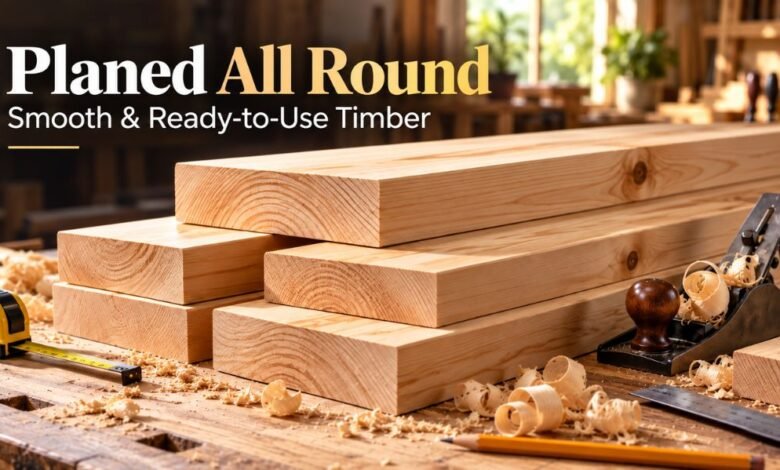
Planed All Round timber is a popular choice for woodworking, furniture making, interior joinery, shelving, decorative projects, and many other applications where a clean and smooth timber surface is required. Usually shortened to PAR timber, it has been machined to remove the rough texture normally found on freshly sawn wood.
For builders, carpenters, DIY enthusiasts, and furniture makers, the main attraction of planed timber is convenience. Much of the preparation is already complete before the timber reaches the workshop or building site. Its smoother faces and cleaner edges make it easier to measure, cut, join, paint, stain, or varnish.
Understanding what Planed All Round means is especially important when ordering timber because the finished dimensions can differ from the original nominal size.
What Does Planed All Round Mean?
Planed All Round describes timber that has undergone a machining process designed to create smoother, more consistent surfaces. Rather than retaining the rough finish from initial sawing, the wood passes through planing equipment that removes a thin layer of material.
The result is timber that is easier to handle and better suited to applications where the wood will remain visible.
PAR is especially useful when appearance and dimensional consistency matter. A rough timber board may need considerable preparation before it can be used in furniture or decorative joinery. In contrast, properly prepared planed timber can often move much more quickly into the construction stage.
Why Is Timber Planed?
Planing improves timber’s usability and appearance. Rough-sawn wood can have irregular surfaces, saw marks, uneven edges, and small fibers that make finishing more difficult.
By machining these surfaces, manufacturers create a cleaner piece of wood that is easier to work accurately.
Planing can also make marking and measuring easier because the carpenter has straight, smooth surfaces to work from.
Planed All Round vs Rough-Sawn Timber
One of the easiest ways to understand PAR timber is to compare it with rough-sawn timber.
Rough-sawn wood generally retains the texture created when the timber is initially cut. It may suit applications where appearance is not important or where additional machining will take place later.
Planed All Round timber has already undergone additional preparation.
Surface Quality
The biggest difference is surface texture. PAR timber has a much smoother appearance and feel, while rough-sawn timber normally looks more natural, coarse, and unfinished.
This makes smooth timber particularly attractive for visible interior projects.
Preparation Time
Rough timber may require planing, sanding, trimming, or additional finishing before it is ready for use.
PAR wood reduces some of this preparation. Light sanding may still be desirable for high-quality furniture or decorative finishes, but the starting surface is considerably more refined.
Understanding Planed All Round Timber Sizes
Timber dimensions deserve careful attention when purchasing Planed All Round material.
Planing removes wood from the faces and edges. As a result, the finished dimensions of a piece of PAR timber may be smaller than its original sawn or nominal dimensions.
Nominal Size vs Finished Size
Nominal size generally refers to the size associated with the timber before final machining, while finished size describes its dimensions after processing.
This difference matters for precision woodworking.
For example, someone building a cabinet frame, shelf, fitted unit, or door component may require very specific finished dimensions. Assuming a nominal timber measurement is the exact finished measurement can cause fitting problems.
Always Check the Supplier’s Measurements
There is no reason to guess.
Before ordering timber, check whether the measurements shown are nominal or finished. Different timber suppliers may use slightly different machining allowances and terminology.
This simple check can prevent costly mistakes.
Common Uses of Planed All Round Timber
PAR timber is remarkably versatile. Its combination of smooth surfaces, clean appearance, and easy workability makes it useful in both professional and DIY projects.
Furniture Making
Planed timber works well for tables, cabinets, wardrobes, benches, storage units, and furniture frames.
Because furniture often exposes the wood’s natural surface, starting with accurately prepared material makes a professional finish much easier.
Shelving and Storage
Planed timber is often chosen for shelving because it provides a clean appearance without extensive preparation.
Depending on the wood species and intended style, you can paint, stain, oil, or finish shelves with a clear protective coating.
Interior Joinery
PAR timber can also be used for numerous interior joinery projects, including trims, frames, battens, boxing, linings, and decorative woodwork.
Always select the exact timber grade and species to meet the project’s requirements.
Hardwood and Softwood PAR Timber
Planed All Round describes the timber’s finish, not a specific species.
Both hardwood and softwood can therefore be supplied in a planed form.
Softwood
Softwoods are commonly selected for general-purpose joinery and many interior projects. They can be relatively easy to cut and machine and are often chosen where the finished timber will be painted.
Hardwood
Hardwoods such as oak, ash, beech, walnut, and maple may be chosen for furniture and decorative work where grain, color, durability, and visual character are important.
Different hardwood species behave differently, so the right choice depends on the project, not appearance alone.
Benefits of Planed All Round Timber
The greatest advantage of PAR timber is that it provides a prepared starting point.
Its benefits include smoother surfaces, reduced preparation time, cleaner edges, easier handling, improved appearance, and better suitability for accurate joinery.
It can also simplify finishing because you apply paint, stain, oil, or varnish to a much more controlled surface than untreated rough wood.
Does PAR Timber Need Sanding?
Planed timber is smooth, but planed does not necessarily mean completely finish-ready.
Machining can occasionally leave minor planer marks or surface imperfections. For decorative furniture, fine joinery, or high-quality painted work, you may still need to sand.
Preparing PAR Timber for Finishing
Inspect every piece before finishing. Lightly sand where necessary, remove dust, and ensure the timber is clean and dry before applying the chosen coating.
The required preparation depends on the wood species, intended finish, and the quality expected from the completed project.
How to Choose the Right Planed Timber
Start by considering where the timber will be used.
For visible furniture, grain pattern and appearance may matter considerably. For painted interior joinery, consistency and workability may matter more.
Also consider moisture exposure, required strength, finished dimensions, timber grade, durability, and whether the wood suits indoor or outdoor conditions.
Do not select timber purely because it has a smooth PAR finish. Planing improves the surface, but it doesn’t automatically make every timber species suitable for every application.
Conclusion
Planed All Round timber offers a practical solution for projects that require smooth, clean, accurately prepared wood. From furniture and shelving to interior joinery and decorative woodworking, PAR timber can reduce preparation time and provide a more refined starting surface than rough-sawn material.
The most important point when buying planed timber is to understand its actual finished dimensions. Because planing removes material, nominal and final measurements may not be identical. Checking the supplier’s specifications, choosing an appropriate wood species, and preparing the surface correctly will help ensure that Planed All Round timber delivers the appearance, accuracy, and performance required for the finished project.
(FAQs)
What does Planed All Round mean?
Planed All Round, commonly abbreviated as PAR, refers to timber machined to produce smooth faces and edges, making it easier to use for joinery, furniture, shelving, and decorative woodworking.
Is PAR timber ready to use?
It is generally much closer to being ready for use than rough-sawn timber. However, fine furniture and decorative projects may still require light sanding before finishing.
Is Planed All Round the same as PSE?
The terminology can vary between timber merchants. PAR and PSE are sometimes used for very similar prepared timber products, particularly in the UK. Buyers should therefore check the supplier’s exact specification rather than relying on the abbreviation alone.
Why is planed timber smaller than its nominal size?
The planing process removes material from the timber surfaces. As a result, its final dimensions can be smaller than the original sawn dimensions.
Can Planed All Round timber be painted?
Yes. PAR timber can normally be painted, stained, varnished, or oiled when the selected species and preparation method are appropriate. Proper sanding, cleaning, priming, and finishing can improve the final result.