Jiajing Guan: The Inspiring Journey of an Applied Mathematician Advancing Artificial Intelligence
Discover Jiajing Guan's education, scientific achievements, innovative research, professional background, and contributions to computational mathematics.

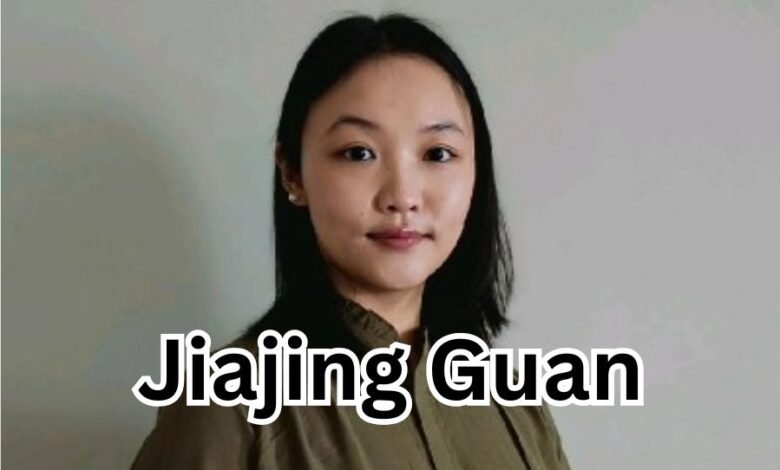
Jiajing Guan is an applied mathematician and researcher whose academic work connects mathematics, artificial intelligence, scientific computing, and numerical analysis. Known for research involving physics-informed neural networks and differential equations, Guan has explored how advanced computational techniques can solve challenging mathematical problems.
With academic experience at George Mason University and the University of Maryland, Guan has developed expertise in mathematical modeling, machine learning, and computational methods. The research reflects a growing interest in combining traditional mathematics with modern artificial intelligence.
In 2025, Guan completed a doctorate at the University of Maryland, focusing on improving neural-network methods for difficult physical simulations.
This article explores Jiajing Guan’s biography, education, academic achievements, research contributions, and professional career, highlighting the scientific importance of this work.
Who Is Jiajing Guan?
Jiajing Guan is a mathematics researcher specializing in applied mathematics, computational science, and machine learning.
Guan’s academic work focuses on using mathematical principles and computational algorithms to understand complex scientific systems better. A particularly important area of this research involves physics-informed neural networks (PINNs), which combine mathematical equations with artificial intelligence.
Unlike conventional machine-learning approaches that primarily learn patterns from available data, physics-informed methods incorporate governing physical equations into the learning process.
This approach is particularly relevant to engineering simulations, environmental modeling, and other scientific applications where accurate numerical predictions are essential.
Guan’s research also includes dynamical networks, numerical differential equations, and computational accuracy.
Jiajing Guan’s Early Education and Academic Background
Undergraduate Studies at George Mason University
Jiajing Guan studied mathematics at George Mason University, where an interest in advanced mathematical research developed into recognized academic achievements.
During undergraduate studies, Guan participated in mathematical research programs and received recognition for academic performance.
George Mason University records identify Guan as a participant in its EXTREEMS mathematical research initiative and document acceptance into the University of California, Los Angeles, Research in Industrial Projects for Students program.
These opportunities provided exposure to applied mathematical research and computational problem-solving.
Academic Awards and Recognition
Guan received an honorable mention in the Goldwater Scholarship competition, a prestigious American recognition program for undergraduate students pursuing scientific research careers.
In 2019, Guan also received George Mason University’s Mary Cabell Award, recognizing outstanding achievement in mathematics.
The university additionally reported that Guan had received a National Science Foundation Graduate Research Fellowship.
Importance of the NSF Fellowship
The National Science Foundation Graduate Research Fellowship supports promising researchers pursuing advanced studies in scientific and technical disciplines.
For Guan, this recognition supported the transition into doctoral research at the University of Maryland.
Doctoral Studies at the University of Maryland
Jiajing Guan pursued doctoral studies in the Applied Mathematics, Statistics, and Scientific Computation program at the University of Maryland, College Park, beginning in 2019.
The university officially identified Guan among its Spring 2025 doctoral degree recipients.
Guan completed a PhD under the supervision of Professor Howard Elman.
The doctoral dissertation was titled Resolving Steep Gradients for Physics-Informed Neural Networks: Richards’ Equation and Convection-Diffusion Equation.
The dissertation investigated how machine-learning models could become more accurate and reliable when solving complicated mathematical equations.
Understanding Physics-Informed Neural Networks
Physics-informed neural networks represent an important development in scientific machine learning.
Traditional computational methods often solve physical equations using numerical grids and established approximation techniques. However, these methods can become computationally demanding for certain complex problems.
Physics-informed neural networks offer an alternative by training artificial neural networks to satisfy mathematical relationships that describe physical processes.
Why Accuracy Matters
One major difficulty arises when mathematical solutions change rapidly within a small region.
These rapid changes, called steep gradients, can be difficult for standard neural networks to approximate accurately.
Guan’s doctoral research examined methods for addressing these weaknesses through improved network structures, mathematical transformations, and training strategies.
Jiajing Guan’s Scientific Research Contributions
Research on Richards’ Equation
A key part of Guan’s doctoral research examined Richards’ equation, which describes water movement through unsaturated porous materials.
This equation is relevant to scientific fields involving soil moisture, groundwater movement, and environmental modeling.
Guan investigated physics-informed methods incorporating surface flux information and training techniques designed to respect the time-dependent behavior of the governing equation.
The goal was to improve computational accuracy when modeling challenging nonlinear processes.
Research on Convection-Diffusion Equations
Another major research area involved convection-diffusion equations.
These mathematical equations describe systems where substances or quantities move through a combination of transport and diffusion.
Such processes appear in fluid dynamics, environmental science, and engineering.
Guan examined why conventional physics-informed neural networks may struggle to capture sharp transition regions.
Improved Neural Network Techniques
The dissertation explored input transformations, an auxiliary-input neural-network architecture, and successive training strategies.
These methods were designed to help models concentrate their computational capacity on difficult regions without always requiring advance knowledge of their locations.
This work contributes to research on making scientific machine-learning methods more dependable.
Published Research and Academic Publications
Jiajing Guan’s research career includes contributions to peer-reviewed mathematical science and publicly available academic manuscripts.
In August 2018, Guan co-authored Limits on Reconstruction of Dynamics in Networks with Tyrus Berry and Timothy Sauer.
Published in Physical Review E, the paper examined the mathematical challenges of reconstructing network behavior from incomplete and noisy observations.
The research introduced an observability condition number to help determine when reliable reconstruction is possible.
In 2024, Guan and Howard Elman also released a research preprint titled Transformed Physics-Informed Neural Networks for the Convection-Diffusion Equation.
The study investigated methods for improving neural-network approximations in mathematical problems involving steep boundary layers.
Together, these works demonstrate a progression from understanding dynamical systems to developing advanced computational techniques.
Professional Experience and Quantitative Research
Jiajing Guan’s publicly indexed LinkedIn profile identifies an association with Balyasny Asset Management L.P., an investment management firm.
The profile also lists the University of Maryland as part of Guan’s educational background and a University of Pennsylvania Finance & Quantitative Modeling for Analysts Specialization certification issued in August 2024.
This professional information suggests a connection between advanced mathematical training and quantitative applications.
However, specific employment responsibilities and current position details should not be assumed without additional confirmation.
The mathematical skills developed through scientific computing, numerical optimization, and machine learning are relevant to multiple industries, including quantitative finance, engineering, and technology.
Why Jiajing Guan’s Research Matters
Guan’s academic work matters because it addresses a key challenge in artificial intelligence: making computational predictions mathematically reliable.
Modern machine-learning systems can approximate complex relationships, but scientific applications require more than convincing predictions.
Researchers must also consider physical consistency, numerical stability, and the ability to handle difficult mathematical conditions.
Guan’s research demonstrates how established mathematical knowledge can guide machine-learning development.
Rather than treating artificial intelligence as a replacement for traditional mathematics, the work explores ways to combine both disciplines effectively.
This perspective is valuable as scientific computing continues to evolve across research institutions and technology-driven industries.
Personal Life and Public Information
Although Jiajing Guan has a documented academic and professional background, relatively little verified information is publicly available concerning personal life.
Details such as exact age, date of birth, parents, marital status, and private family relationships have not been reliably established through the sources reviewed.
Similarly, verified information is insufficient to report personal wealth or net worth.
A responsible professional biography should distinguish confirmed achievements from unverified personal claims.
Conclusion
Jiajing Guan’s academic journey demonstrates the growing relationship between advanced mathematics and artificial intelligence.
From undergraduate research recognition at George Mason University to completing a doctorate at the University of Maryland in 2025, Guan has built a research record focused on complex mathematical and computational challenges.
Contributions involving physics-informed neural networks, differential equations, and dynamical systems illustrate the importance of combining mathematical theory with modern computational tools.
Guan’s documented achievements clearly show how specialized mathematical research can contribute to the broader development of scientific machine learning.
Frequently Asked Questions (FAQs)
1. Who is Jiajing Guan?
Jiajing Guan is an applied mathematician and researcher known for work involving scientific computing, physics-informed neural networks, differential equations, and mathematical modeling.
2. Where did Jiajing Guan complete a PhD?
Jiajing Guan completed a PhD at the University of Maryland in 2025 through its Applied Mathematics, Statistics, and Scientific Computation program.
3. What is Jiajing Guan’s main research field?
The primary research areas include applied mathematics, numerical differential equations, machine learning, scientific computing, and physics-informed neural networks.
4. What academic awards has Jiajing Guan received?
Guan’s documented recognitions include a Goldwater Scholarship honorable mention, George Mason University’s 2019 Mary Cabell Award, and an NSF Graduate Research Fellowship.
5. What is Jiajing Guan known for professionally?
Jiajing Guan is known for mathematical research addressing challenging computational problems, particularly improving neural-network methods for solving physical equations. A publicly indexed LinkedIn profile also lists an association with Balyasny Asset Management L.P.