Philip Torr: The Visionary Scientist Advancing Computer Vision and Artificial Intelligence
Inside Philip Torr's influential career, groundbreaking computer vision research, academic leadership, industry impact, and contribution to the future of machine learning and responsible AI.

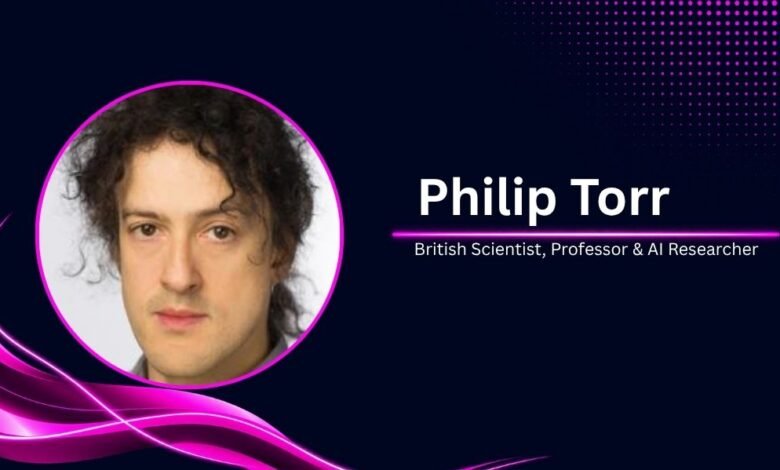
Philip Torr is a distinguished British scientist, researcher, and professor whose work has helped shape modern computer vision, machine learning, and artificial intelligence. Through decades of academic research and practical innovation, he has contributed to technologies that allow computers to interpret images, recognize objects, understand scenes, and analyze visual information.
His career stretches across world-leading universities, Microsoft Research, technology collaborations, and scientific organizations. Today, Philip Torr is particularly associated with the University of Oxford, where his research continues to explore some of the most important problems in computer vision and AI.
Beyond academic recognition, his work demonstrates how mathematical research can influence practical technology. From visual geometry and image segmentation to deep learning and object recognition, Torr has worked on areas that have become central to modern artificial intelligence.
Quick Bio
| Field | Details |
|---|---|
| Full Name | Philip H. S. Torr |
| Profession | Scientist, Professor, AI Researcher |
| Known For | Computer Vision, Machine Learning, Artificial Intelligence |
| Nationality | British |
| Education | University of Southampton, University of Oxford |
| Current Position | Professor of Engineering Science |
| University | University of Oxford |
| Research Group | Torr Vision Group |
| Former Workplace | Microsoft Research |
| Major Research Areas | Object Recognition, Image Segmentation, Visual Geometry, Deep Learning |
| Royal Society Fellow | Yes, elected in 2021 |
| Royal Academy of Engineering Fellow | Yes, elected in 2019 |
| Notable Award | Marr Prize |
| Field | Computer Science, Engineering, Artificial Intelligence |
Who Is Philip Torr?
Philip Torr is a Professor of Engineering Science at the University of Oxford and a prominent researcher specializing in computer vision and machine learning. He leads the Torr Vision Group, which conducts advanced research into how machines can understand visual information.
Computer vision aims to enable computers to interpret images and videos in meaningful ways. Rather than simply recording pixels, an intelligent system must identify objects, understand their relationships, recognize movement, estimate depth, and interpret complex scenes.
Torr has spent much of his career addressing these difficult problems.
His academic work connects mathematics, engineering, computer science, robotics, and artificial intelligence. This multidisciplinary approach has allowed his research to influence both scientific Understanding and commercial applications.
Philip Torr’s Education and Early Academic Career
Studying Mathematics Before Entering Computer Vision
Before becoming known for artificial intelligence research, Philip Torr studied pure mathematics at the University of Southampton.
His mathematical background became particularly valuable when he moved into computer vision, a field that relies heavily on geometry, probability, statistics, optimization, and mathematical modeling.
Torr later completed his DPhil at the University of Oxford, working within Oxford’s Robotics Research Group.
Developing an Interest in Machine Vision
His doctoral research introduced him deeply to the challenge of automated image understanding.
During this period, computer vision was considerably less advanced than it is today. Researchers were attempting to develop mathematical methods to enable computers to interpret visual environments reliably.
These early foundations eventually became important to areas including robotics, augmented reality, autonomous technology, image recognition, and modern AI systems.
Philip Torr’s Career at Microsoft Research
An important chapter in Philip Torr’s career began when he joined Microsoft Research.
He spent approximately six years as a research scientist, initially working in Redmond, United States, before moving to Microsoft Research in Cambridge, England.
Building Expertise in Computer Vision and Machine Learning
At Microsoft, Torr worked on computer vision while the field was undergoing rapid development. He later helped establish the vision component of the Machine Learning and Perception Group in Cambridge.
Working in industrial research allowed him to connect advanced academic ideas with technological applications.
This experience became an important feature of his later career. Rather than viewing academic science and commercial innovation as completely separate domains, Torr has repeatedly worked across both.
Philip Torr at Oxford Brookes University
Following his time at Microsoft Research, Philip Torr became a Professor of Computer Vision and Machine Learning at Oxford Brookes University.
There, he developed a research group focused on advanced visual computing problems.
The group gained recognition for both scientific and industrial work, strengthening Torr’s reputation within the international computer vision community.
Return to the University of Oxford
In 2013, Philip Torr returned to the University of Oxford as a full professor.
He subsequently established the Torr Vision Group, which became part of Oxford’s wider computer vision, machine learning, robotics, and artificial intelligence research environment.
The group brings together researchers working on mathematical theory while also examining how computer vision and AI can address real-world problems.
Philip Torr’s Computer Vision Research
Philip Torr’s research covers several major areas of computer vision.
These include object recognition, image segmentation, visual geometry, tracking, scene understanding, 3D reconstruction, deep learning, and machine learning.
Object Recognition and Image Segmentation
Object recognition involves teaching machines to identify objects in an image or video.
Segmentation goes further by identifying which individual regions or pixels belong to particular objects or categories.
These capabilities are important because intelligent machines must understand not only that visual information exists but also what different parts of a scene represent.
Visual Geometry and 3D Understanding
Torr has also made significant contributions to visual geometry, including research connected with estimating camera motion from video.
Understanding geometry is essential when machines need to reconstruct three-dimensional environments from two-dimensional images.
Such ideas have applications in robotics, augmented reality, navigation, visual effects, mapping, and other technologies that depend on spatial Understanding.
Philip Torr’s Awards and Scientific Recognition
Philip Torr has received significant recognition for his scientific contributions.
In 1998, he received the Marr Prize, one of the best-known awards associated with major research in computer vision.
He has also received a Royal Society Wolfson Research Merit Award.
Fellow of the Royal Academy of Engineering
In 2019, Torr was elected a Fellow of the Royal Academy of Engineering, in recognition of his achievements and influence in engineering and technology.
Fellow of the Royal Society
In 2021, he was elected a Fellow of the Royal Society, one of the most respected forms of scientific recognition in the United Kingdom.
His election recognized his contributions to computer vision and the influence of his research on both scientific development and practical applications.
Philip Torr’s Impact Beyond Academic Research
Torr’s career is notable because his research has not remained limited to academic papers.
He has been involved with technology companies, research collaborations, and spin-out ventures connected to artificial intelligence and computer vision.
His work has also contributed to technologies associated with visual effects, augmented reality, accessibility, intelligent systems, and automated image understanding.
Connecting Research With Real-World Technology
One example of this wider impact is his involvement in algorithm development related to Boujou, computer vision software used for camera tracking in visual-effects production.
He has also worked with technology companies and advised or participated in businesses emerging from advanced AI research.
These activities illustrate how theoretical research can eventually become part of useful commercial technology.
Philip Torr and the Future of Artificial Intelligence
Modern computer vision has changed dramatically with the growth of deep learning and increasingly powerful artificial intelligence models.
Systems can now recognize objects, generate images, interpret videos, analyze environments, and perform tasks that would have appeared extremely difficult only a few decades ago.
However, greater capabilities also create greater responsibilities.
AI Safety and Responsible Development
Powerful AI technologies can produce enormous social and economic benefits, but researchers must also consider reliability, security, fairness, misuse, and unintended consequences.
Computer vision is especially important in this discussion because visual AI can be used in robotics, autonomous systems, healthcare technology, security applications, accessibility tools, and many other sensitive environments.
Responsible development therefore requires both technical progress and careful consideration of how systems behave outside laboratory conditions.
Why Philip Torr’s Work Matters
Philip Torr’s career reflects the evolution of computer vision from a specialized academic discipline into a central part of contemporary artificial intelligence.
His contributions span mathematics, visual geometry, segmentation, recognition, deep learning, academic leadership, and commercial innovation.
Perhaps most importantly, his work demonstrates that important advances often emerge when theoretical research and practical problems are studied together.
As artificial intelligence continues developing, researchers such as Torr remain important because understanding the visual world is one of the fundamental challenges facing intelligent machines.
Career Timeline
| Year / Period | Career Milestone |
|---|---|
| Early Career | Philip Torr studied pure mathematics at the University of Southampton before moving into computer vision and artificial intelligence research. |
| DPhil Years | He completed his DPhil at the University of Oxford, working with the Robotics Research Group under Professor David Murray. |
| Post-DPhil | Torr remained at Oxford for another three years as a research fellow, continuing his work in computer vision. |
| Microsoft Research | He spent around six years as a research scientist at Microsoft Research, first in Redmond, USA, and later in Cambridge, UK. He helped establish the vision side of the Machine Learning and Perception Group. |
| Oxford Brookes University | Torr became a Professor of Computer Vision and Machine Learning at Oxford Brookes University, building an influential research group in the field. |
| 2013 | He returned to the University of Oxford as a full professor and established the Torr Vision Group. |
| 2019 | Philip Torr was elected a Fellow of the Royal Academy of Engineering (FREng) in recognition of his contributions to engineering and computer vision. |
| 2021 | He was elected a Fellow of the Royal Society (FRS) for his outstanding contributions to computer vision. |
| 2021 | Torr was named a Turing AI World-Leading Researcher Fellow, focusing on making deep neural networks more reliable and robust. |
| 2025 | He received a Schmidt Sciences AI2050 Senior Fellowship, supporting research involving advanced AI systems and their wider applications. |
| Present | Philip Torr serves as Professor of Engineering Science at the University of Oxford and continues to lead influential research in computer vision, machine learning, AI safety, and intelligent systems. |
Frequently Asked Questions About Philip Torr
Who is Philip Torr?
Philip Torr is a British scientist and Professor of Engineering Science at the University of Oxford. He is widely known for research in computer vision, machine learning, and artificial intelligence.
What is Philip Torr famous for?
He is best known for his influential contributions to computer vision, particularly in object recognition, image segmentation, visual geometry, tracking, scene understanding, and machine learning.
Where does Philip Torr work?
Philip Torr works at the University of Oxford, where he is a Professor of Engineering Science and leads the Torr Vision Group.
Did Philip Torr work at Microsoft?
Yes. He spent around six years as a research scientist at Microsoft Research, working first in Redmond, United States, and later in Cambridge, England.
Is Philip Torr a Fellow of the Royal Society?
Yes. Philip Torr was elected a Fellow of the Royal Society in 2021 for his contributions to computer vision. He was also elected a Fellow of the Royal Academy of Engineering in 2019.
Final Thoughts on Philip Torr
Philip Torr has established an influential career at the intersection of computer vision, machine learning, engineering, mathematics, and artificial intelligence. From early mathematical research and Microsoft Research to professorships and internationally recognized scientific work, his career illustrates the long path through which fundamental research becomes useful technology.
As AI systems gain increasingly sophisticated visual capabilities, the research areas that Torr has spent decades studying are becoming more relevant than ever. His academic achievements, leadership, industry involvement, and commitment to advancing computer vision have secured his place among the notable researchers contributing to the development of modern artificial intelligence.