Fam corp: The Ultimate Guide to Building a Successful Family Corporation
Understanding Family Business Ownership, Corporate Management, Growth Strategies, and Long-Term Success

Introduction
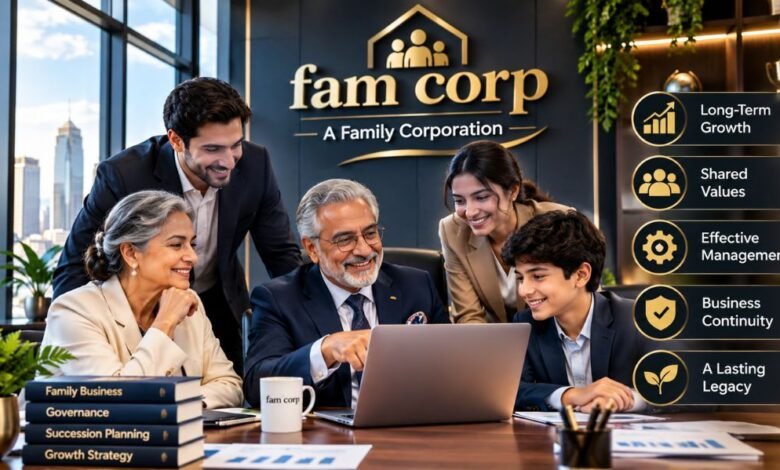
Fam corp is a term commonly used to describe a family corporation, a business in which family members own a significant stake or exercise substantial influence over important decisions. Such companies bring together family relationships, entrepreneurial ambitions, financial responsibilities, and long-term planning.
Family-owned businesses exist in almost every industry, including manufacturing, retail, agriculture, technology, construction, and professional services. Some remain small local operations, while others grow into large enterprises spanning several generations.
What makes a successful family corporation distinctive is its ability to combine shared values with professional business practices.
Understanding how these organizations operate can help entrepreneurs establish stronger companies, develop responsible leadership, and prepare for future generations.
This article explains what a fam corp is, its ownership structure, major advantages, management challenges, financial responsibilities, and practical strategies for sustainable business growth.
What Is a fam corp?
Fam corp generally refers to a family-owned or family-controlled corporation. It describes a business where relatives hold ownership interests, influence strategic decisions, or participate in company management.
The expression itself is not a separate legal classification. Businesses described this way may use different legal structures depending on their country, ownership arrangements, and commercial requirements.
A family corporation can involve parents, children, siblings, or extended relatives. However, family members do not necessarily need to manage every department.
Many established family enterprises employ professional executives, accountants, legal advisers, and other specialists.
How Does a Family Corporation Work?
A family corporation operates through a combination of ownership, governance, and daily management.
Family shareholders may determine the organization’s long-term direction, while executives and employees manage its commercial activities.
For example, a family might own a manufacturing company while appointing an experienced operations director to supervise production.
The family retains ownership, but professional managers handle responsibilities requiring specialized expertise.
Understanding Family Ownership
Ownership arrangements depend on the company’s legal structure.
Shareholding and Voting Rights
In a corporation, ownership is generally represented by shares. Shareholders may have voting rights, financial entitlements, and other responsibilities determined by applicable laws and company documents.
Clear ownership agreements help prevent uncertainty about authority, profit distribution, and future share transfers.
Key Benefits of a Family Corporation
Family corporations can offer several advantages when personal relationships are supported by effective business systems.
Long-Term Business Vision
Family owners may prioritize sustainable development instead of concentrating entirely on short-term financial performance.
A company established with future generations in mind can invest in employee development, customer relationships, and gradual expansion.
Shared Values and Commitment
Relatives involved in the same enterprise often share an understanding of its history and purpose.
These connections can encourage commitment, particularly during difficult economic periods.
However, shared values should complement professional accountability, not replace it.
Faster Decision-Making
Businesses with clearly defined ownership and leadership responsibilities may respond quickly to opportunities.
When decision-makers agree on commercial priorities, they can often act without lengthy negotiations.
Business Continuity
A carefully managed family enterprise may preserve its knowledge, customer relationships, and business identity across generations.
This continuity depends on preparation, financial stability, and developing capable future leaders.
Common Challenges Facing Family Corporations
Family ownership provides opportunities, but it can also create problems when personal relationships affect professional judgment.
Family Disagreements
Differences concerning investments, expansion, salaries, or leadership can become emotionally complicated.
Without clear decision-making procedures, ordinary business disagreements can damage family relationships.
Unclear Responsibilities
Problems arise when multiple relatives assume they have authority over the same business activity.
Written job descriptions, reporting structures, and performance expectations help establish accountability.
Favoritism in Employment
Hiring relatives without considering their qualifications can discourage experienced employees and weaken operational performance.
A stronger approach evaluates family and non-family employees against appropriate professional standards.
Leadership Succession Problems
Unexpected leadership changes can disrupt operations when no successor has been prepared.
Begin succession planning well before a retirement, ownership transfer, or major management transition.
How to Establish a Successful Family Corporation
Creating an effective family enterprise requires more than registering a company and bringing relatives into the workplace.
Develop a Clear Business Plan
A comprehensive business plan should explain the company’s products or services, target customers, competitive position, operating expenses, and financial objectives.
It should also identify potential risks and practical ways to respond.
Choose an Appropriate Legal Structure
Depending on local laws, entrepreneurs may consider incorporating a company or using another recognized business structure.
Registration obligations, liability protection, taxation, and administrative requirements vary by jurisdiction.
Professional legal and accounting guidance can help families select arrangements appropriate to their circumstances.
Define Ownership and Management Roles
A strong organizational structure distinguishes between three responsibilities:
- Ownership: Who holds shares or other ownership interests.
- Governance: Who oversees major decisions and business strategy.
- Management: Who supervises daily operations and employees.
Keeping these responsibilities distinct reduces confusion and supports better decision-making.
Create Written Business Policies
Establishing Professional Standards
Family corporations benefit from documented policies covering recruitment, compensation, financial approval, conflict resolution, and ownership transfers.
Apply these rules fairly and review them as business requirements change.
Financial Management and Business Growth
Financial discipline is fundamental to a corporation’s long-term survival.
Family businesses should maintain accurate accounting records, monitor cash flow, and separate company finances from personal spending.
Regular financial reviews help decision-makers understand profitability, operating costs, outstanding obligations, and investment requirements.
Managing Business Investments
Expansion decisions should be based on realistic financial projections, not personal enthusiasm.
Before opening new branches, introducing products, or purchasing equipment, management should assess expected demand, financing costs, operational capacity, and potential risks.
Using Technology Effectively
Digital accounting systems, inventory management software, customer relationship tools, and data analysis can improve efficiency.
Technology also helps family businesses communicate more effectively and maintain consistent records as operations become more complex.
Why Corporate Governance Matters
Corporate governance describes the systems used to direct, oversee, and hold a business accountable.
A growing family corporation may establish a formal board, shareholder agreements, and regular management reporting.
Some enterprises also create family councils to discuss ownership expectations, family participation, and future leadership.
Good governance helps companies separate personal interests from organizational responsibilities.
It also provides a structured process for addressing disagreements before they become serious disputes.
Succession Planning for Future Generations
Succession planning is among the most significant responsibilities facing a family-controlled enterprise.
A successful transition involves more than choosing the next family member to become chief executive.
Future leaders need relevant experience, financial knowledge, management skills, and an understanding of the company’s customers and employees.
Preparing the Next Generation
Younger family members can develop their abilities through education, professional training, and practical business experience.
Working outside the family enterprise may also provide valuable perspectives.
Leadership appointments should reflect competence and business requirements rather than family seniority alone.
Planning Ownership Transfers
Ownership succession and management succession are different processes.
A family member may inherit shares without taking responsibility for day-to-day operations.
Formal planning helps clarify these arrangements while accounting for applicable inheritance, corporate, and tax laws.
The Future of Family-Owned Corporations
Modern family enterprises face changing consumer expectations, technological developments, and increasing competition.
Companies that preserve their founding values while embracing professional management may be better prepared to adapt.
Sustainable growth requires investment in capable employees, reliable financial systems, responsible decision-making, and innovation.
Family ownership can provide continuity, but continued success depends on meeting customer needs and staying competitive.
Conclusion
A family corporation connects family interests with commercial responsibility and long-term planning.
Its potential strengths include shared commitment, continuity, and a lasting organizational vision. However, unclear authority, financial disagreements, and inadequate succession planning can undermine these advantages.
A successful family corporation combines professional governance, transparent financial management, qualified leadership, and clearly documented ownership arrangements.
By balancing family traditions with modern business practices, these enterprises can build sustainable organizations that serve customers, employees, and future generations.
Frequently Asked Questions (FAQs)
1. What does fam corp mean?
Fam corp commonly refers to a family corporation or family-controlled business. However, different organizations also use FAM Corp as a company name, so its meaning depends on the context.
2. What is the main purpose of a family corporation?
Its purpose is to operate a business while allowing family members to retain ownership interests or significant influence over its long-term direction.
3. Can people outside the family work in a family corporation?
Yes. Family corporations can employ non-family workers, professional managers, directors, accountants, and other specialists.
4. What are the biggest challenges of family corporations?
Common challenges include family disagreements, unclear responsibilities, favoritism, financial disputes, and difficulties transferring leadership between generations.
5. How can a family corporation achieve long-term success?
Long-term success requires effective governance, financial discipline, clear ownership agreements, competent management, succession planning, and the ability to adapt to changing market conditions.