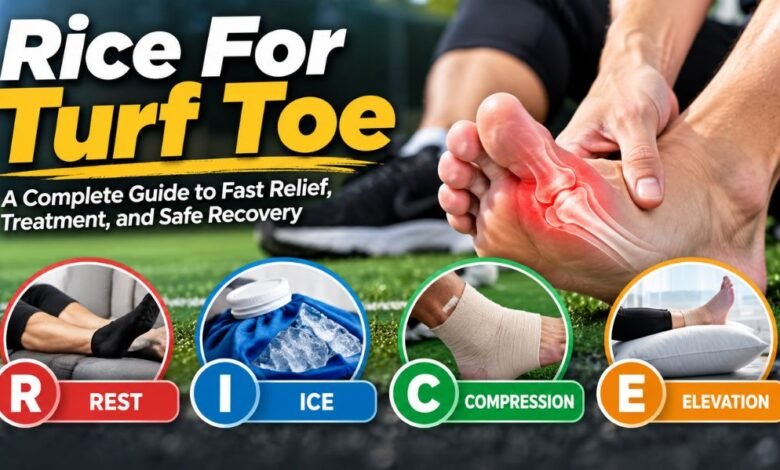
Rice For Turf Toe: A Complete Guide to Fast Relief, Treatment, and Safe Recovery
Discover how rest, ice, compression, and elevation can help manage turf toe pain, reduce swelling, and support a safer return to everyday activities and sports.

Introduction
RICE for Turf Toe is a widely recommended first-aid approach for managing pain and swelling after an injury to the big toe joint. Turf toe commonly affects athletes, especially those who play football, basketball, run, or do other activities that require sudden movements or powerful push-offs.
Although turf toe may sound minor, it can make walking, running, and even standing uncomfortable. Proper early treatment helps protect the affected joint while injured tissues begin recovering.
The RICE method, Rest, Ice, Compression, and Elevation, offers a practical starting point for managing symptoms. However, more serious injuries may require medical evaluation, supportive footwear, immobilization, or rehabilitation.
This article explains how to use the RICE method for turf toe, recognize key symptoms, avoid common recovery mistakes, and know when to seek professional medical care.
What Is Turf Toe?
Turf toe is a sprain affecting the metatarsophalangeal (MTP) joint at the base of the big toe. The injury usually occurs when the big toe bends too far upward, stretching or tearing the ligaments and other supporting tissues around the joint.
This condition is especially common in sports involving rapid acceleration, jumping, and directional changes.
Common symptoms include:
- Pain around the base of the big toe.
- Swelling and tenderness.
- Bruising near the injured joint.
- Difficulty bending the big toe.
- Pain when pushing off while walking.
- Reduced flexibility and joint stability.
Symptoms can range from mild discomfort to severe pain, depending on the injury’s severity.
What Does RICE Mean for Turf Toe?
The RICE treatment method includes four measures designed to help manage symptoms immediately after a soft-tissue injury.
1. Rest: Protect the Injured Toe
Rest reduces unnecessary stress on the damaged structures surrounding the big toe joint.
Avoid running, jumping, sprinting, and movements that force the toe upward. If walking causes significant pain, reduce weight-bearing and seek guidance about protective footwear or crutches.
Rest does not necessarily mean complete inactivity throughout recovery. Once the injury becomes stable, carefully introduced movement may help prevent stiffness.
2. Ice: Reduce Pain and Swelling
Applying ice can provide temporary pain relief and help control swelling.
Use a cold pack wrapped in a thin towel for approximately 15–20 minutes per session, several times daily during the initial 48–72 hours.
Never place ice directly on the skin, as prolonged exposure can cause cold-related skin injury.
Avoid sleeping with an ice pack attached to the foot.
3. Compression: Support Swelling Management
Compression involves applying gentle pressure around the affected area using an elastic bandage or suitable medical wrap.
The purpose is to limit excessive swelling without restricting blood circulation.
How to Apply Compression Safely
Wrap the forefoot comfortably and supportively, but don’t pull it too tight.
Remove or loosen the bandage immediately if the toes develop numbness, tingling, unusual coldness, increasing pain, or color changes.
Compression supports healing but does not replace proper joint stabilization.
4. Elevation: Help Control Swelling
Elevation involves positioning the injured foot above heart level while resting.
Place pillows beneath the lower leg to support the foot comfortably.
This position may help reduce fluid accumulation and throbbing around the injured joint.
Elevation is particularly useful when swelling increases after walking or standing.
How to Use RICE for Turf Toe at Home
For a suspected mild turf toe injury, start with this approach.
During the First 24–48 Hours
Stop the activity that caused the injury and protect the big toe from additional bending.
Apply wrapped ice periodically, use gentle compression when appropriate, and elevate the foot during rest.
Choose supportive footwear and avoid walking barefoot if doing so increases pain.
During the Following Days
Continue symptom management as needed.
Monitor whether pain, swelling, and walking ability are improving.
Avoid testing the injury through repeated sprinting, forceful stretching, or jumping.
If symptoms remain significant, arrange a medical examination rather than assuming the injury is minor.
Understanding the Three Grades of Turf Toe
Doctors commonly classify turf toe injuries into three grades.
Grade 1: Mild Sprain
A Grade 1 injury involves stretching of the supporting tissues without a major tear.
Symptoms usually include mild tenderness, limited swelling, and relatively preserved joint movement.
RICE treatment and protective footwear are commonly recommended. Some mild injuries improve sufficiently for activity within one or two weeks.
Grade 2: Moderate Sprain
Grade 2 turf toe involves partial tearing of supporting tissues.
Pain, swelling, bruising, and difficulty walking may be more noticeable.
Treatment can involve a walking boot, taping after the acute phase, and rehabilitation. Recovery may take several weeks.
Grade 3: Severe Sprain
Grade 3 injuries involve complete tearing of important supporting structures.
Significant swelling, bruising, joint instability, and difficulty bearing weight may occur.
These injuries require professional assessment and may involve prolonged immobilization, rehabilitation, or occasionally surgery.
Recovery can take months in severe cases.
Additional Treatments That May Help
RICE helps control initial symptoms, but it does not repair every injured structure on its own.
Stiff-Soled Shoes and Protective Inserts
Stiff-soled shoes can reduce excessive bending of the big toe during walking.
Some healthcare professionals recommend rigid inserts or turf toe plates to protect the joint while it heals.
Pain Relief Medication
Over-the-counter pain relievers may relieve symptoms.
Nonsteroidal anti-inflammatory medicines, including ibuprofen, are sometimes recommended, but they are unsuitable for certain people, including those with particular kidney, stomach, or bleeding conditions.
Ask a healthcare professional or pharmacist before using them if you have medical conditions or take other medications.
Physical Therapy
Rehabilitation may involve carefully guided exercises to improve flexibility, strength, balance, and walking mechanics.
Start exercises when medically appropriate, and don’t force a painful or unstable joint.
Common Mistakes That Can Delay Recovery
Several habits can aggravate an injured big toe.
Returning to sport before pain and swelling improve may expose the tissues to repeated stress.
Wearing highly flexible footwear can allow excessive bending during push-off.
Applying compression too tightly can interfere with circulation.
Forcing the joint to stretch during the early inflammatory stage may worsen discomfort.
Another mistake is assuming every painful big toe is turf toe. Fractures, dislocations, and other joint problems can produce similar symptoms.
When Should You See a Doctor?
Seek prompt medical assessment if you experience severe pain, substantial swelling, visible deformity, or difficulty bearing weight.
Numbness, unusual color changes, and significant loss of movement also require urgent attention.
A clinician may recommend X-rays to investigate possible fractures or MRI when significant ligament damage is suspected.
Seek medical advice if symptoms worsen or don’t improve with initial self-care.
How Long Does Turf Toe Take to Heal?
Recovery depends on injury severity, activity demands, and individual healing progress.
Mild sprains may improve within one or two weeks. Moderate injuries often require several weeks, while severe ligament injuries may take months.
A safe return to sports generally requires comfortable walking, adequate joint movement, restored strength, and the ability to perform sport-specific movements without significant pain.
Conclusion
RICE for turf toe provides a practical starting point for managing early pain and swelling after a big toe sprain. Rest protects the injured joint, ice offers temporary pain relief, compression helps control swelling, and elevation provides additional support.
However, RICE is only one part of recovery. Appropriate footwear, gradual rehabilitation, and professional assessment when symptoms are significant are equally valuable.
Taking the injury seriously and avoiding premature activity can help protect long-term joint function.
Frequently Asked Questions (FAQs)
1. Is RICE effective for turf toe?
Yes. RICE is commonly recommended to manage initial pain and swelling, particularly in mild turf toe injuries. More severe injuries may require additional treatment.
2. How often should I ice turf toe?
Apply a wrapped cold pack for approximately 15–20 minutes several times daily during the first 48–72 hours, as needed. Never apply ice directly to the skin.
3. Can I walk with turf toe?
You may be able to walk with a mild injury, especially in supportive, stiff-soled footwear. Avoid weight-bearing through pain and seek medical advice if walking is difficult.
4. Should I massage turf toe during recovery?
Avoid forceful massage around a newly injured or significantly swollen joint. A healthcare professional can advise whether gentle soft-tissue treatment is appropriate during rehabilitation.
5. Can turf toe heal without surgery?
Yes. Most turf toe injuries improve with nonsurgical treatment, including activity modification, protection, and rehabilitation. Severe tears or persistent joint instability may occasionally require surgery.