Chris Lemons: The Incredible True Story of a Deep-Sea Diver Who Survived Against All Odds
How a Scottish saturation diver survived a devastating North Sea accident and inspired the acclaimed film Last Breath.

Introduction
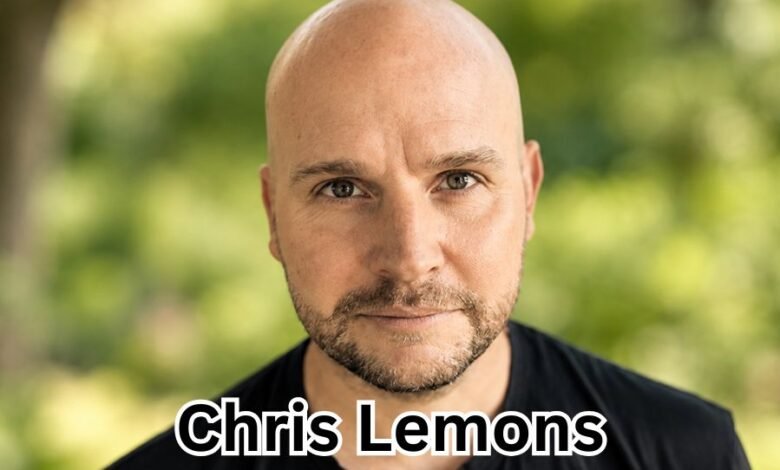
Chris Lemons is a Scottish-born commercial saturation diver whose extraordinary survival in the North Sea became one of the most remarkable stories in modern diving history. In September 2012, he became stranded about 90 meters underwater after a catastrophic equipment failure cut off his breathing supply, communications, lighting, and heating.
With only a limited emergency gas supply, Lemons faced conditions that appeared almost impossible to survive. His rescue took approximately 35 to 40 minutes, far longer than his backup breathing gas was expected to last.
His experience later inspired the documentary and feature film Last Breath, bringing international attention to commercial diving and the importance of teamwork in dangerous environments.
This article explores Chris Lemons’ early life, professional diving career, North Sea survival, rescue operation, personal life, and the true events behind Last Breath.
Quick Bio
| Details | Information |
|---|---|
| Full Name | Chris Lemons |
| Birthplace | Edinburgh, Scotland |
| Raised In | Cambridge, England |
| Nationality | British |
| Profession | Commercial Saturation Diver and Diving Supervisor |
| Famous For | Surviving the 2012 North Sea diving accident |
| Accident Date | 18 September 2012 |
| Documentary | Last Breath (2019) |
| Feature Film | Last Breath (2025) |
| Residence | South of France |
| Children | Two daughters |
Early Life and Background
Chris Lemons was born in Edinburgh, Scotland, and grew up around Cambridge, England. Although his early education and childhood activities are not well documented, his later career shows a strong commitment to technically demanding work.
Unlike recreational scuba diving, commercial deep-sea diving requires specialist training, physical preparation, and the ability to remain calm in potentially dangerous situations.
Lemons eventually established himself in the offshore oil and gas industry, where professional divers inspect, maintain, and repair underwater infrastructure.
Chris Lemons’ Career as a Saturation Diver
Before becoming internationally recognized, Lemons worked as a professional diver on industrial projects beneath the North Sea.
His responsibilities involved maintaining underwater equipment and supporting operations essential to offshore energy production.
What Is Saturation Diving?
Saturation diving allows professionals to work at considerable depths while living in specially pressurized chambers.
Divers may remain under pressure for several weeks, traveling to their underwater workplaces inside diving bells.
This approach reduces the need for repeated decompression after every shift, although a lengthy decompression process is still necessary before returning to normal atmospheric pressure.
Why the Profession Is Dangerous
Commercial saturation divers depend on sophisticated equipment for breathing, heating, communication, and transportation.
Their helmets deliver a carefully controlled breathing gas mixture, often containing helium and oxygen. Heated water circulates through their suits to protect them against extremely cold conditions.
The Importance of an Umbilical Cable
An umbilical is the diver’s essential connection to the diving bell. It carries breathing gas, communications, and other life-support services.
If that connection fails, the diver must depend on emergency equipment until rescue arrives.
The North Sea Diving Accident of September 2012
On September 18, 2012, Lemons was working near the Huntington oilfield beneath the North Sea.
He was part of a three-person team aboard the diving support vessel Topaz, alongside Dave Yuasa and Duncan Allcock.
Lemons and Yuasa were carrying out underwater maintenance while Allcock remained inside the diving bell.
How the Accident Happened
The vessel’s dynamic positioning system, which kept it over the divers, failed seriously.
As the vessel drifted, it pulled the diving bell away from its original position.
Lemons attempted to return, but his umbilical became trapped against an underwater structure. Increasing tension eventually severed the cable.
Suddenly, he was alone in darkness, without his main breathing supply, communication system, or heating.
Stranded on the Seabed
Lemons activated his emergency breathing gas and struggled to find a safe location.
He eventually reached the underwater structure and positioned himself where rescuers might locate him.
Accounts describe his emergency supply as lasting only a few minutes. Lemons later estimated that it contained approximately eight or nine minutes of gas under the conditions he faced.
He understood that reaching the surface independently was impossible because of the extreme pressure and decompression risks.
How Chris Lemons Survived Without His Main Breathing Supply
As his emergency supply dwindled, Lemons recognized that his chances of rescue were shrinking.
He later described experiencing sadness and thinking about the life he expected to lose.
Eventually, he became unconscious.
The rescue operation lasted roughly 35 to 40 minutes, although this does not mean he spent that entire period without breathable gas. Reports indicate that he survived more than 25 minutes after his usable gas supply was exhausted.
His survival without reported permanent neurological damage remains medically extraordinary.
The Rescue That Saved His Life
While Lemons remained underwater, the Topaz crew worked urgently to restore the vessel’s positioning system.
Once the ship returned to the correct location, Dave Yuasa left the diving bell to retrieve his colleague.
Lemons was unconscious when he was brought back.
Inside the bell, Duncan Allcock provided rescue breaths, and Lemons began breathing again.
Yuasa, Allcock, and the ship’s support crew worked together to save him.
Remarkably, Lemons later recovered sufficiently to return to saturation diving approximately three weeks after the accident.
The Science Behind His Extraordinary Survival
Doctors and diving specialists have considered several possible explanations for Lemons’ survival.
One possibility is that the cold water reduced his body’s metabolic demands. Another concerns the unusual effects of pressure and the breathing gases used during saturation diving.
Researchers have also considered whether elevated carbon dioxide levels affected his physiological response.
However, no single medical explanation has been conclusively established.
His case remains an unusual example of survival during prolonged interruption of breathing-gas supply.
Chris Lemons and the Last Breath Documentary
The accident became the subject of the 2019 documentary Last Breath, directed by Richard da Costa and Alex Parkinson.
The production combines interviews, original underwater footage, and reconstructed sequences to explain the emergency and rescue.
Its presentation drew attention by showing the professionalism required in saturation diving, rather than treating the incident as a simple adventure story.
The 2025 Last Breath Film
In 2025, director Alex Parkinson brought the story to cinemas in a dramatic feature adaptation.
The cast includes:
- Finn Cole as Chris Lemons
- Simu Liu as Dave Yuasa
- Woody Harrelson as Duncan Allcock
The film introduced the events to a wider audience while highlighting the critical decisions made during the rescue.
Chris Lemons’ Personal Life and Family
Lemons has generally maintained a relatively private family life despite receiving international attention.
At the time of the accident, he was engaged and planning his future.
He later married, though that relationship ended.
According to his published professional biography, he now lives in the south of France with his partner and two daughters.
His public interviews suggest that surviving the accident strengthened his appreciation for family, ordinary experiences, and life’s uncertainty.
Chris Lemons’ Life and Career Today
After recovering, Lemons continued working in the commercial diving industry and advanced to a role as a diving supervisor.
He also became a public speaker, sharing lessons from his experience with businesses, industry professionals, and international audiences.
His presentations address workplace safety, leadership, decision-making, resilience, and teamwork.
Rather than presenting himself as the sole hero, Lemons consistently acknowledges the professionalism and determination of the colleagues who rescued him.
His experience also contributed to wider discussions about emergency breathing equipment and diving safety procedures.
Conclusion
Chris Lemons’ survival story is an extraordinary example of human endurance, professional preparation, and cooperation under extreme pressure.
What began as a routine underwater assignment in September 2012 became an emergency that challenged expectations about survival without a continuous breathing supply.
Today, his story reaches audiences through documentaries, cinema, and public speaking. Beyond its dramatic circumstances, it demonstrates why teamwork, effective emergency procedures, and trust are essential in dangerous professions.
Frequently Asked Questions
1. Who is Chris Lemons?
Chris Lemons is a Scottish-born commercial saturation diver and diving supervisor best known for surviving a catastrophic underwater accident in the North Sea in September 2012.
2. How long was Chris Lemons without oxygen?
His rescue took approximately 35 to 40 minutes after the emergency began. His backup breathing gas lasted only a small portion of that time, and reports indicate he survived more than 25 minutes without a usable breathing-gas supply.
3. How did Chris Lemons survive the accident?
His colleagues rescued him and restored his breathing inside the diving bell. The exact physiological reasons he survived for so long without breathable gas remain uncertain.
4. Is the movie Last Breath based on Chris Lemons’ true story?
Yes. The 2025 film Last Breath is based on the real 2012 North Sea accident. Finn Cole portrays Lemons, while Simu Liu and Woody Harrelson portray his fellow divers.
5. Where is Chris Lemons now?
According to his professional biography, Chris Lemons lives in the south of France. He has worked as a diving supervisor and continues to share his survival experience through public speaking engagements.